

X Warning Signs of Plumbing Problems Homeowners Should Never Ignore
Critical Plumbing Warning Signs Every Homeowner Should Know
The plumbing problems homeowners should never ignore range from slow drains and persistent leaks to discolored water and unusual pipe noises — and catching them early can mean the difference between a quick fix and a costly emergency repair.
Here are the most critical warning signs to watch for:
| Warning Sign | Why It Matters |
|---|---|
| Slow or clogged drains | Can signal deep blockages or sewer line issues |
| Persistent leaks | Lead to mold, structural damage, and wasted water |
| Discolored water | May indicate pipe corrosion or water heater failure |
| Low water pressure | Can point to hidden leaks or main line problems |
| Unusual pipe noises | May signal water hammer, trapped air, or worn parts |
| Running toilet | Can waste hundreds of gallons of water per day |
| Water stains or damp spots | Often reveal hidden leaks behind walls or ceilings |
| Foul drain odors | May indicate sewer gas or a backed-up sewer line |
| Multiple drains backing up | A strong sign of a main sewer line blockage |
Most homeowners don’t think much about their plumbing — until something goes wrong. That’s partly because plumbing systems are hidden behind walls and under floors, quietly doing their job day after day. But that reliability can create a false sense of security.
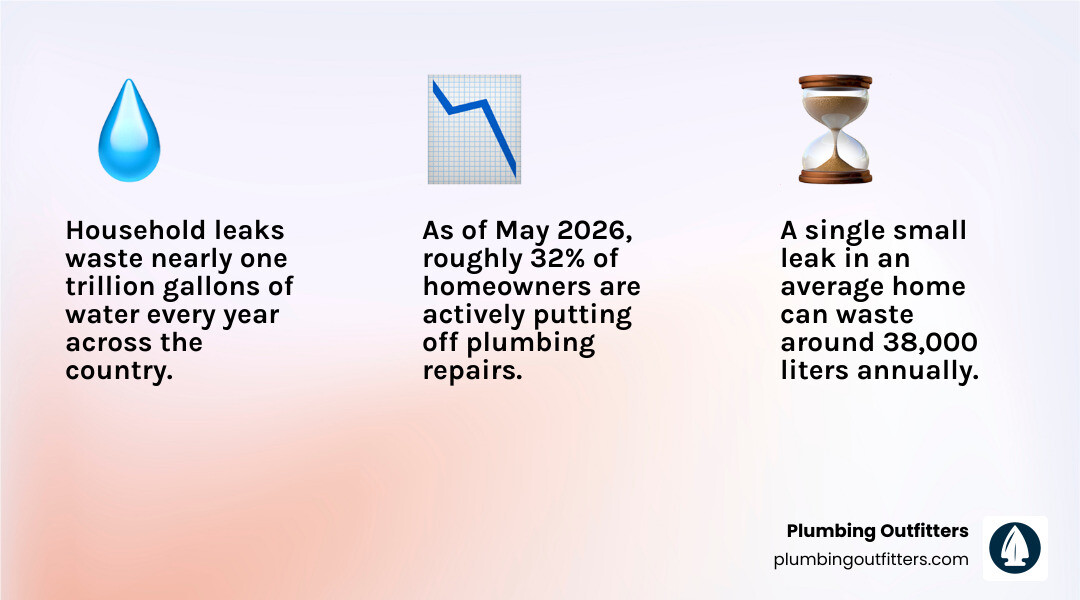
The truth is, plumbing problems rarely fix themselves. A slow drain that’s easy to ignore today can turn into a full sewer backup tomorrow. A small drip under the sink can quietly rot the cabinet floor, feed mold growth, and compromise indoor air quality — all before you ever notice a problem. According to the EPA, household leaks waste nearly one trillion gallons of water every year across the country, and a single small leak in an average home can waste around 38,000 liters annually.
As of May 2026, roughly 32% of homeowners are actively putting off plumbing repairs — often because the early signs seem minor. But plumbing systems are deeply interconnected, and one unresolved issue can quickly ripple through the entire system.
The good news? Most plumbing emergencies are preventable. Knowing what to look for — and acting on it early — is the single most effective thing you can do to protect your home.
Plumbing problems homeowners should never ignore word guide:
- plumbing issues that require a licensed plumber
- when a plumbing problem is an emergency
- when should you call a plumber vs diy
The Most Common Plumbing Problems Homeowners Should Never Ignore
Plumbing systems are the lifeblood of our homes in Central Illinois, but because most of the components are tucked away, we tend to adopt an “out of sight, out of mind” attitude. However, your plumbing system often tries to communicate with you before a catastrophe strikes.
One of the most frequent indicators is a spike in your water bill. If your habits haven’t changed but the meter is spinning faster, you likely have a silent leak. Learning the important signs that you have a water leak is essential for every homeowner from Austin to Round Rock.

The Danger of Hidden Leaks and Water Stains
Persistent leaks are more than just a nuisance; they are a threat to your home’s skeletal structure. If you notice brown spots on your ceiling, it might be faulty piping leaking from an upstairs bathroom or an attic unit. These stains indicate that water has already saturated your drywall and is likely affecting the wooden joists.
Understanding why leak detection is important if you see water marks on your walls comes down to health and safety. Moisture intrusion is a leading cause of residential construction failure. Within 24 to 48 hours of a leak starting, mold can begin to colonize, which severely compromises indoor air quality and can trigger respiratory issues for your family.
Furthermore, while we often focus on water, homeowners must also be vigilant about other utility lines. Knowing the five signs you have a gas leak is a life-saving skill, as gas leaks can lead to fires or carbon monoxide poisoning.
Why Discolored Water is One of the Plumbing Problems Homeowners Should Never Ignore
When you turn on the tap, the water should be crystal clear. If it appears brown, red, or yellow, you are likely looking at rust. This often happens in homes built before 1970 that still use galvanized steel pipes, which corrode from the inside out over time.
Discolored water can also be a cry for help from your water heater. Sediment buildup at the bottom of the tank can swirl into your hot water supply, or a failing anode rod could be allowing the tank itself to rust. If you see rust-colored water or puddles near the unit, check out these five signs it’s time to replace your hot water heater. If the tank is actively failing, you’ll need to know what to do when your water heater is leaking to prevent a flood in your garage or utility closet.
Unusual Pipe Noises and Other Plumbing Problems Homeowners Should Never Ignore
Does your house sound like it’s haunted? Banging, clanging, or whistling sounds in the pipes are not normal. A common culprit is “water hammer,” which occurs when water suddenly stops or changes direction, creating a pressure shock that makes pipes vibrate violently. This can eventually loosen connections and lead to a burst pipe.
Drains can also get “noisy.” Is your sink trying to tell you something? Gurgling sounds usually mean there is a venting issue or a partial clog that is trapping air. If your sink is “ghosting” you — meaning it drains so slowly you’ve forgotten what the bottom of the basin looks like — it’s time to learn why your sink is ghosting you and how to fix it.
Finally, never ignore a toilet that won’t stop running. A faulty fill valve or a worn flapper can waste hundreds of gallons of water a day. If your toilet won’t flush but isn’t clogged, the internal components have likely failed, and you’re literally flushing money down the drain.
Drain and Sewer Line Warning Signs
Clogged drains and sewer line issues are no joke — they account for roughly 60% of all plumbing-related emergency calls. While a single slow drain might just be a hair clog, multiple slow drains throughout the house indicate a much deeper problem in the main sewer line.
If you find yourself constantly reaching for the plunger, you need to ask: why does my toilet keep clogging? It could be root intrusion from those beautiful Central Illinois oak trees or a collapsed pipe.
For those with a slow draining sink, knowing when it’s time to call a pro is vital. Many homeowners use chemical cleaners, but these can actually eat away at older metal pipes. Professional plumbers use the “135 rule,” ensuring that horizontal drain pipes don’t have angles that are too sharp, which prevents debris from catching and causing chronic clogs. Don’t ignore the gurgle, or you might find yourself dealing with raw sewage in your bathtub.
Identifying Sewer Backups: Critical Plumbing Problems Homeowners Should Never Ignore
A sewer backup is one of the most unsanitary and expensive plumbing problems homeowners should never ignore. There are usually five common signs you’re having sewer problems, including multiple drains backing up at once and lush, green patches in your yard that appear even during a drought.
Odors are another major red flag. What’s that smell? If you smell rotten eggs (hydrogen sulfide) or a general sewage odor, your P-traps may have dried out, or your sewer line could be vented improperly. Sewer gas is not just unpleasant; it is toxic at high concentrations and methane gas is flammable.
Pay attention to your property after a storm. Rainy day revelations can show you exactly where your sewer line is failing if you see standing water or sinkholes forming over the line.
Hidden Dangers: Slab Leaks and Pressure Issues
In regions like Austin and Georgetown, the soil can shift significantly with the weather. This movement can lead to slab leak signs, where pipes under your concrete foundation crack or break. If you notice a wet spot in your yard when it hasn’t rained, or if a specific spot on your floor feels warm to the touch, you likely have a hot water line leaking under the slab.
Water pressure is another area where “more” isn’t always “better.”
| Pressure Level | Status | Effect on Plumbing |
|---|---|---|
| Below 40 PSI | Low | Poor shower quality; potentially hidden leaks |
| 40 – 60 PSI | Ideal | Perfect balance for fixtures and appliances |
| 60 – 80 PSI | High | Increased wear and tear on washers and seals |
| Above 80 PSI | Danger | Risk of burst pipes and voided appliance warranties |
Low water pressure is often caused by mineral buildup from our hard water in McLean County, but it can also signal a major leak in the main supply line. Conversely, high pressure is a silent killer for appliances like dishwashers and water heaters. Every water heater has a T&P (Temperature and Pressure) valve. If this valve is dripping, it’s a warning that the pressure or temperature inside the tank is reaching dangerous levels.
Lastly, we can’t forget our Central Illinois winters. Knowing the five signs you need help with frozen pipes can save you from a catastrophic burst when the thaw begins.
The High Cost of Delaying Professional Repairs
Despite the risks, 32% of homeowners continue to delay repairs. This is a gamble that rarely pays off. A leaking faucet might seem like a minor annoyance, but if you look for the six signs your faucet needs repair, you’ll find that a single drip can waste thousands of gallons over a year.
Wasted water is just the beginning. The structural deterioration caused by a slow, hidden leak can lead to thousands of dollars in mold remediation and drywall replacement. Emergency repairs, which often occur at the most inconvenient times (like 2:00 AM on a holiday), always cost more than a scheduled maintenance visit.
Proactive maintenance is the key to longevity. By addressing small issues today, you prevent the structural damage and health risks that come with neglected plumbing.
Frequently Asked Questions about Plumbing Maintenance
When is it necessary to call a licensed plumber instead of attempting DIY fixes?
While you might be able to handle a simple showerhead replacement or plunging a minor sink clog, you should call a professional for anything involving gas lines, main sewer lines, or work behind walls. DIY mistakes can void your homeowner’s insurance and may not meet local building codes, which creates massive headaches when you try to sell your home.
What causes a sudden drop in water pressure throughout the home?
A sudden whole-home pressure drop is usually a sign of a major problem. It could be a burst pipe, a failed pressure-reducing valve (PRV), or a problem with the municipal water main. If the drop is accompanied by discolored water, it’s a strong indicator of a pipe failure.
How does regular maintenance help prevent plumbing emergencies?
Regular maintenance allows a plumber to catch “silent” issues like minor corrosion on a water heater, small pinhole leaks in the attic, or high water pressure that is straining your fixtures. An annual inspection can prevent 99% of plumbing emergencies by identifying components that are reaching the end of their lifespan before they fail.
Conclusion
Your home is likely your biggest investment, and your plumbing system is what makes it functional and comfortable. From the historic homes in Bloomington-Normal to new constructions in Round Rock and Pflugerville, the plumbing problems homeowners should never ignore are universal.
At Plumbing Outfitters, we are dedicated to providing “Texas Class Service” to our neighbors throughout Central Illinois and McLean County. Whether you are dealing with a mysterious water stain on the ceiling or you want to schedule a preventative inspection to ensure your system is ready for the season, our experienced technicians are here to help. We offer upfront pricing and 24/7 availability because we know that plumbing disasters don’t wait for business hours.
Don’t wait for a small drip to become a major flood. Contact our team for professional plumbing services today and get the peace of mind that comes with a healthy home.