

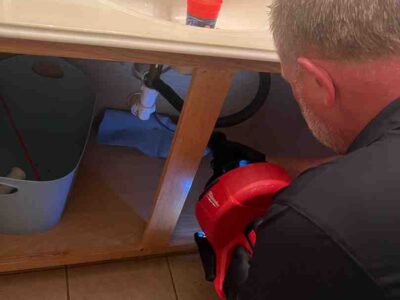
Don’t Ignore the Gurgle or You’ll Be in Deep Water
Why Spotting Drain Warning Signs Can Save Your Home
The signs your drain needs professional cleaning are often right in front of you — you just need to know what to look for.
Here’s a quick rundown if you need a fast answer:
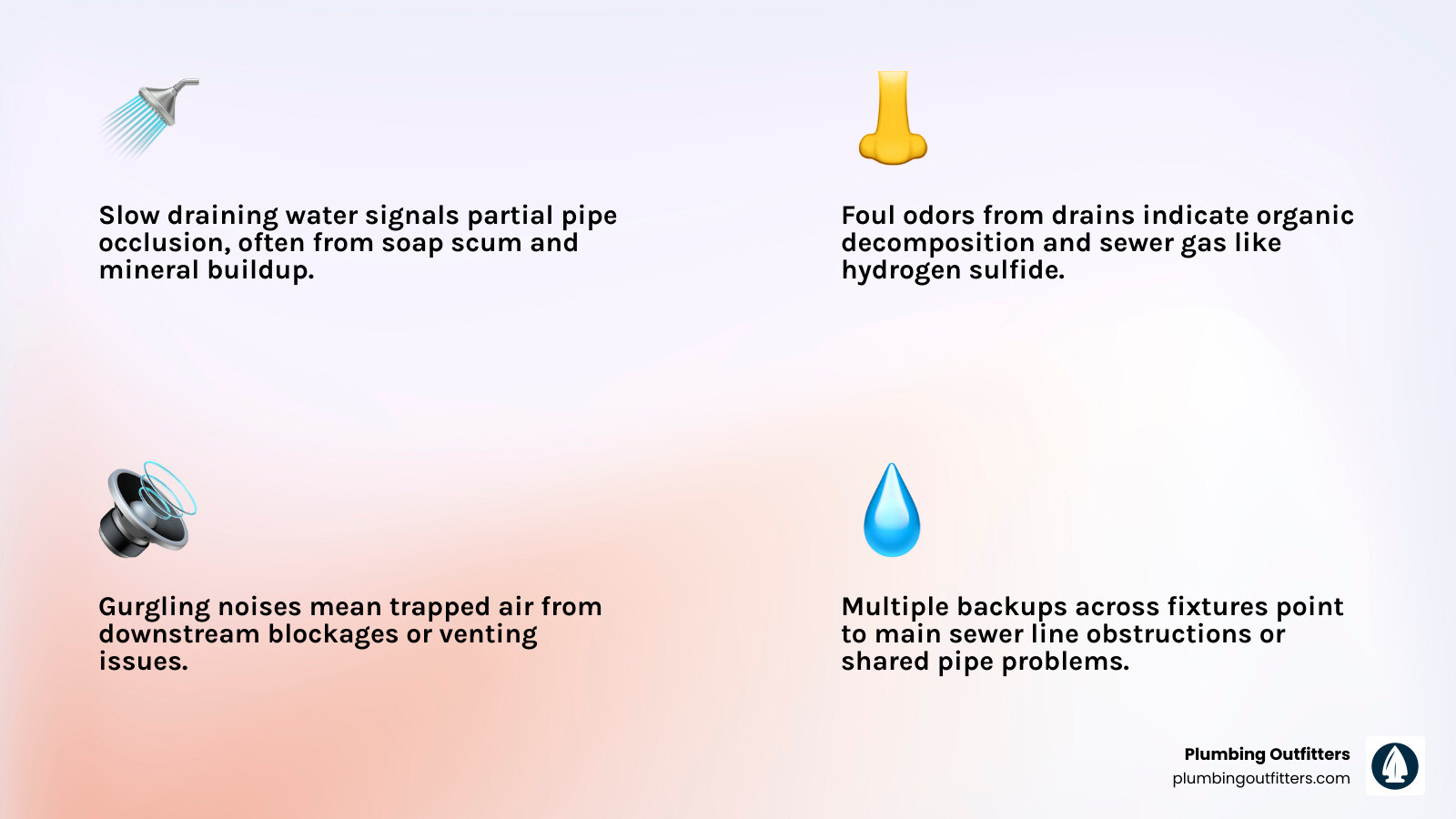
- Slow draining water in sinks, tubs, or showers
- Foul odors rising from drains or toilets
- Gurgling or bubbling noises coming from pipes
- Water backing up into other fixtures when you flush or run water
- Recurring clogs that keep returning despite DIY fixes
- Multiple fixtures draining slowly at the same time
- Fruit flies or drain flies appearing near drains
Any one of these is worth paying attention to. More than one at the same time? That’s your plumbing system telling you something is seriously wrong.
A well-functioning drain system runs quietly in the background — you never think about it. But the moment it starts acting up, the clock starts ticking. Ignored clogs don’t fix themselves. They build up, restrict flow, and can eventually cause water damage, mold growth, and costly pipe repairs. In older Austin-area homes especially, where aging pipes and hard water are common, small drainage problems can escalate faster than most homeowners expect.
5 Clear Signs Your Drain Needs Professional Cleaning
Your home’s drainage system is a complex network that relies on gravity and clear pathways to function. When things start to go sideways, the symptoms usually fall into three categories: hydraulic (how the water moves), acoustic (what you hear), and atmospheric (what you smell).
Understanding these signs your drain needs professional cleaning early on can be the difference between a simple maintenance visit and a full-blown plumbing emergency. By the time you see water pooling, your pipe might already be facing “occlusion” — a fancy plumbing word for the internal diameter of your pipe being narrowed by gunk. Research shows that once a pipe reaches 50% occlusion, the velocity of the water slows down so much that it actually accelerates the buildup of new debris.
Slow Draining Water and Standing Pools
If you find yourself standing in two inches of lukewarm water every time you take a shower, you’re looking at a classic hydraulic indicator. This isn’t just an annoyance; it’s a signal that the exit path for that water is partially blocked.
In the Greater Austin area, we deal with significantly hard water. In fact, water hardness here often exceeds 13 grains per gallon, which is classified as “very hard.” This mineral scale acts like cholesterol in an artery, slowly narrowing the pipe from the inside out. When you combine that scale with soap scum and hair, you get a stubborn, cement-like blockage. If you’re wondering why you have standing water in shower drain and how to fix it, the answer usually involves professional intervention to strip away those mineral layers.
A slow draining sink: when it’s time to call a pro is usually when the “plunger method” only works for a day or two before the sluggishness returns.
Foul Odors and Sewer Gas
Your nose is often the best diagnostic tool you have. Drains should not smell like anything. If you catch a whiff of rotten eggs or a general “swampy” scent, you’re likely smelling hydrogen sulfide or methane. These gases are produced by organic decomposition — basically, food, hair, and waste that have become trapped in a clog and started to rot.
Beyond the “gross factor,” these odors are atmospheric indicators of a failing system. They can signify a dried-out P-trap, a cracked vent pipe, or a deteriorating main line. Sometimes, the organic buildup becomes so significant that it attracts pests. If you’re seeing small, fuzzy insects hovering around your sink, you’ll need to learn how to get rid of drain flies, which usually involves removing the “bio-slime” they breed in through professional cleaning. For a deeper dive into the different scents of trouble, check out what’s that smell? different types of odors that can come from your pipes.
Unusual Gurgling Noises from Pipes
Does your toilet gurgle when you run the bathroom sink? Do you hear a “glug-glug” sound from the tub after the dishwasher finishes its cycle? These are acoustic indicators of a venting disruption.
When a pipe is partially blocked downstream, it creates a partial vacuum. As water tries to push past the obstruction, it pulls air through the nearest water-sealed trap to compensate, resulting in that tell-tale gurgling sound. It’s essentially your pipes gasping for air. If you ignore the gurgle, that trapped air will eventually have nowhere to go, leading to much more dramatic water backups.
Why Multiple Backups and Recurring Clogs Are Red Flags
If you have one slow sink in the guest bathroom, it might just be a localized hair clog. But if your kitchen sink, your master shower, and your laundry line are all acting up at once, the problem isn’t in the fixtures — it’s in the shared branch lines or the main sewer line.
When multiple fixtures are affected, it’s a definitive sign of a main sewer line obstruction. This is the “trunk” of your plumbing tree. If the trunk is blocked, every “branch” (your sinks and tubs) will eventually fail. We often see this in growing communities like Pflugerville and Hutto, where increased demand on older systems can lead to frequent issues.
Recognizing Signs Your Drain Needs Professional Cleaning in Austin Homes
Many homes in our service area, from Bastrop to Georgetown, were built during eras when cast iron pipes were the standard. While durable, cast iron has a typical lifespan of 50 to 75 years. As we move through 2026, many of these pipes are reaching the end of their functional life.
As cast iron ages, it undergoes internal corrosion, creating a rough surface that catches every bit of lint or grease that passes by. This leads to chronic, recurring clogs that no plunger can solve. If your home was built before the 1970s, those “random” clogs are likely a sign that your pipes need a professional deep clean or a structural evaluation.
Understanding the Signs Your Drain Needs Professional Cleaning vs. Pipe Repair
It is important to distinguish between a simple clog and structural damage. Sometimes, a “clog” is actually a collapsed pipe or an invasion of tree roots. In the Texas heat, tree roots are incredibly persistent in their search for moisture. They can find tiny cracks in your sewer line and expand inside the pipe, acting as a natural “filter” that catches everything.
How can you tell the difference? Look at your yard. If you notice a patch of grass that is unnaturally lush and green compared to the rest of your lawn, you might have a “fertilization effect” from a leaking sewer pipe. Similarly, if you see foundation cracks or unexplained sinkholes, the water might be escaping the pipe and eroding the soil beneath your home. In these cases, you’ll need to determine if a professional drain cleaning might be in order or if you’re looking at a more significant repair.
The Risks of Ignoring Plumbing Warning Signs
We get it — life is busy, and a slow drain feels like something that can wait until next weekend. But the risks of waiting are higher than you might think.
- Mold and Mildew: Mold can start growing on damp drywall within just 24 to 48 hours of a leak or backup. Because many drain pipes are hidden behind walls, a slow leak caused by a clog can lead to a massive mold colony before you even see a spot on the paint.
- Structural Damage: Stagnant water is heavy and corrosive. Over time, it can weaken floor joists and deteriorate the subfloor.
- Health Hazards: Sewer backups aren’t just messy; they are “Category 3” biohazards. They contain pathogens, bacteria, and viruses that can cause serious respiratory and gastrointestinal illnesses.
Professional Hydro Jetting vs. Temporary DIY Fixes
When most people see a clog, they reach for two things: a plunger or a bottle of chemical cleaner. While a plunger is great for a simple toilet blockage, it rarely addresses the root cause of a deep-seated clog. And those chemical cleaners? They often do more harm than good.
The Trouble With Liquid Drain Cleaners
We strongly advise our neighbors in Round Rock and Taylor to be careful with store-bought chemicals. Most of these products are highly acidic or alkaline. They work by generating heat to “melt” the clog, but that heat and chemical reaction can actually warp PVC pipes or accelerate the corrosion of older metal pipes.
Furthermore, these cleaners often only burn a small hole through the center of a clog, providing a week or two of relief before the debris closes back up. For a full breakdown of the risks, read about the trouble with liquid drain cleaners and why you should avoid them.
Benefits of Hydro Jetting for Long-Term Pipe Health
If you want the job done right, hydro jetting is the gold standard. Unlike a mechanical snake that just pokes a hole in the blockage, hydro jetting uses high-pressure water (between 1,500 and 4,000 PSI) to literally scrub the inside of your pipes clean.
| Feature | Mechanical Snaking | Hydro Jetting |
|---|---|---|
| Method | Metal cable breaks up solid objects | High-pressure water scrubs pipe walls |
| Effectiveness | Good for “soft” clogs (hair, paper) | Excellent for grease, scale, and roots |
| Pipe Health | Can scratch or scrape pipe interiors | Cleans thoroughly without abrasive metal |
| Longevity | Clogs often return quickly | Provides a “like-new” interior for years |
There are at least 5 advantages of hydro jetting, including its ability to clear out tree roots and stubborn mineral scale that a snake simply can’t touch. Whether you need hydro jetting in Austin or specialized hydro-jet drain cleaning in the surrounding suburbs, it’s the most effective way to ensure the longevity of your pipes.
Frequently Asked Questions about Drain Maintenance
How often should I schedule professional drain cleaning?
For most residential homes in the Greater Austin area, we recommend a professional cleaning every 18 to 24 months. However, if you live in an older home with original cast iron pipes or have many large trees on your property, an annual inspection and cleaning can prevent emergency backups.
Can a clogged drain cause a pipe to burst?
Yes. While we usually associate burst pipes with freezing weather, a severe clog can cause a massive buildup of pressure within the system. If the pipe is already weakened by age or corrosion, that pressure can lead to a rupture, especially during heavy usage periods.
What is the difference between drain clearing and drain cleaning?
“Drain clearing” is a reactive service — it’s what you do when the sink is already backed up. It involves removing the immediate blockage so water can flow again. “Drain cleaning” is a comprehensive process (like hydro jetting) that removes all the buildup, grease, and scale from the entire pipe system to prevent future clogs from forming.
Conclusion
At Plumbing Outfitters, we know that a “little gurgle” can quickly turn into a big headache. Whether you’re dealing with the hard water scale of Georgetown or the aging pipes of a historic Austin bungalow, our team is here to provide “Texas Class Service” with upfront pricing you can trust.
Don’t wait until you’re wading through a backup to take action. Recognizing the signs your drain needs professional cleaning today can save you thousands of dollars in repairs tomorrow. From drain services to advanced leak detection, we are your neighborly experts dedicated to keeping your home’s plumbing running smoothly.
If your pipes are trying to tell you something, we’re ready to listen. Give us a call today and let’s get those drains flowing freely again!