
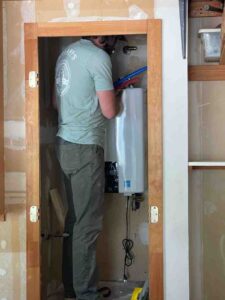
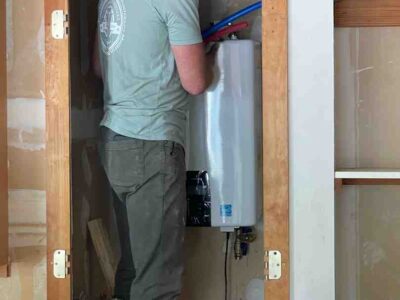
The Ultimate Guide to Tankless Water Heater Benefits for Homeowners
Why Tankless Water Heater Benefits for Homeowners Are Worth Understanding Before You Buy
The tankless water heater benefits for homeowners go well beyond just never running out of hot water mid-shower — they include real energy savings, a longer equipment lifespan, and more usable space in your home. If you’re weighing whether to switch from a traditional storage tank, here’s a quick look at what you’d gain:
Top benefits of tankless water heaters for homeowners:
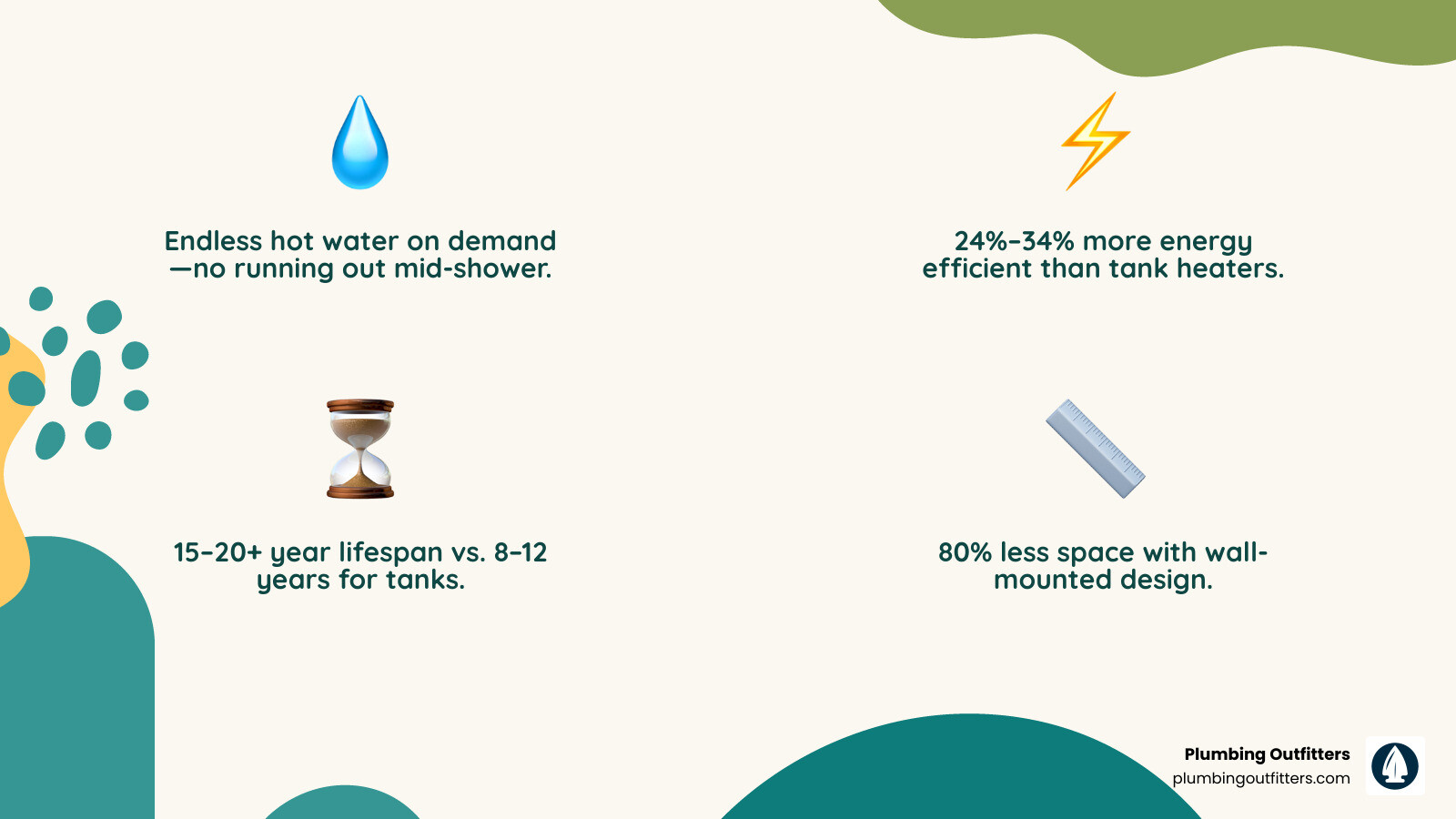
- Endless hot water — heats water on demand, so the supply never runs out
- Energy savings — 24%–34% more efficient for homes using 41 gallons or less per day
- Longer lifespan — 15–20+ years vs. 8–12 years for standard tank models
- Space savings — wall-mounted units take up roughly 80% less space than freestanding tanks
- Fresher water — no stored water means less risk of rust or mineral buildup in your supply
- Lower leak risk — no large tank means no risk of a sudden 40–50 gallon flood
Most homeowners don’t give their water heater a second thought — until they’re standing in a cold shower on a busy morning, or waiting 30 minutes for the tank to recover before the next person can wash up. Traditional storage tank heaters work by keeping a large supply of water hot around the clock, even when no one needs it. That constant reheating — called standby heat loss — quietly drains energy and money every single day.
Tankless water heaters take a different approach entirely. Instead of storing hot water, they heat it instantly as it flows through the unit. The result is a continuous supply of hot water on demand, without the energy waste of keeping a full tank warm 24/7.
This guide from Plumbing Outfitters covers everything you need to know about making the switch — from how these systems work to how to size one correctly for your home, what maintenance looks like, and whether the long-term savings justify the upfront investment.
What a Tankless Water Heater Is and How It Works
A tankless water heater, also called a demand-type water heater, heats water only when you need it. There is no storage tank sitting full of hot water in the garage, attic, closet, or utility room.
When you turn on a hot water tap, cold water enters the unit. A flow sensor detects that movement and activates either a gas burner or an electric heating element. Water passes through a heat exchanger, warms up quickly, and then heads to your shower, sink, dishwasher, or washing machine.
That is the basic magic trick. No tank. No waiting for a full tank to reheat. No keeping dozens of gallons hot all day long just in case someone wants a five-minute shower and then changes their mind.

What Homeowners Should Know About tankless water heater benefits for homeowners
The biggest difference is on-demand heating. A tankless unit does not store hot water, so it does not “run out” the same way a tank does. As long as the unit can keep up with the flow demand, it can keep heating continuously.
A few quick basics matter:
- Electric tankless units often provide around 2 to 5 gallons per minute
- Gas tankless units typically provide higher flow rates, often around 5 to 10 gallons per minute depending on the model and temperature rise
- The colder the incoming water, the harder the unit has to work to raise it to your desired temperature
- Whole-house units serve the entire home, while point-of-use units serve a single sink, bathroom, or appliance
So yes, tankless means continuous heating, but not unlimited capacity. That distinction matters when you’re sizing for real-life use.
Gas vs. Electric Tankless Basics
Gas and electric tankless systems both heat on demand, but they differ in installation requirements and performance.
Gas tankless units are usually the better fit for whole-home use because they can deliver higher flow rates. They require fuel supply, venting, and proper combustion setup. Condensing gas models are especially efficient and can reach UEF ratings up to 0.96. Because they capture more heat from exhaust, many condensing models can use less expensive venting materials where allowed by code.
Electric tankless units do not need venting, which simplifies installation in some homes. But they often require significant electrical capacity, dedicated circuits, and panel space. In many homes, that electrical load becomes the deciding factor.
Fuel type, venting path, gas line size, electrical panel capacity, and local code requirements all affect which option makes sense. If you want a deeper overview, see Everything You Need to Know About Going Tankless.
Top tankless water heater benefits for homeowners
The reason so many homeowners look into tankless systems is simple: the everyday advantages are easy to feel.
Core benefits include:
- Lower energy use from eliminating standby heat loss
- Continuous hot water for back-to-back showers
- Longer service life than many tank models
- Compact, wall-mounted design
- Less risk of catastrophic tank leaks
- Fresher hot water because it is not stored for long periods
- A cleaner, more modern utility-room setup
Why tankless water heater benefits for homeowners start with energy savings
Energy savings are usually the first reason homeowners start researching tankless systems, and for good reason.
Traditional tanks keep 40 to 50 gallons of water heated around the clock. Even when no one is showering, doing dishes, or running laundry, the heater cycles on to replace lost heat. Tankless systems avoid that standby loss by heating only when hot water is actually flowing.
Research consistently shows meaningful efficiency gains:
- Homes using 41 gallons or less of hot water daily may see tankless systems operate 24% to 34% more efficiently than conventional storage tanks
- Homes using around 86 gallons daily may still see gains of 8% to 14%
- Condensing tankless water heaters can be about 30% more energy efficient than conventional tank heaters
- ENERGY STAR certified tankless units can save a family of four about $95 per year on gas bills, or around $1,800 over the system’s lifetime compared with a standard gas storage model
That does not mean every home will save the exact same amount. Usage patterns matter. So do fuel type, installation quality, climate, and maintenance. But the general pattern is clear: if you stop heating water you are not using, efficiency improves.
For more on operating savings, read Will a Tankless Water Heater Actually Save You Money and Energy Efficiency Tankless Water Heaters.
Endless Hot Water, Longer Lifespan, and More Usable Space
This is the part homeowners love.
With a properly sized tankless unit, you can take back-to-back showers without waiting for recovery time. The dishwasher can run after dinner without someone announcing, “Nobody use hot water right now.” That sentence alone may be worth the upgrade.
Tankless units also tend to last longer. Many have life expectancies of 15 to 20 years, and some exceed 20 years with proper maintenance. By comparison, many storage water heaters last around 8 to 12 years, or roughly 10 to 15 years in broader industry estimates.
Space savings are another big win. Tankless units are typically wall-mounted and take up about 80% less space than bulky freestanding tanks. That can free up valuable room in a garage, utility closet, laundry area, or mechanical room.
If you want to explore those everyday advantages further, check out Top Benefits of Switching to a Tankless Water Heater and Tips on Why Tankless Water Heaters Are So Popular.
Performance in Real Homes: Can a Tankless Unit Keep Up?
Yes, a tankless unit can absolutely keep up in real homes, but only if it is selected and installed correctly.
The most common misunderstanding is thinking “endless hot water” means “infinite hot water for every fixture at once.” In reality, a tankless heater provides continuous hot water up to its rated capacity.
| Feature | Tankless Water Heater | Traditional Tank Water Heater |
|---|---|---|
| Hot water supply | Continuous while within flow capacity | Limited by tank size |
| Recovery time | No tank recovery cycle | Must reheat stored water |
| Energy use | Lower standby loss | Higher standby loss |
| Space required | Compact, wall-mounted | Larger floor footprint |
| Multiple simultaneous uses | Depends on sizing and GPM | Depends on tank size and recovery |
| Lifespan | Often 15 to 20+ years | Often 8 to 12 years |
Do Tankless Water Heaters Really Provide Endless Hot Water?
Yes, in the sense that the unit keeps heating water as long as there is demand and the flow stays within its capabilities.
What tankless does not do is make hot water travel through pipes instantly. If your bathroom is far from the heater, you may still wait for hot water to reach the tap. That is a plumbing distance issue, not a tankless issue.
A dedicated recirculation line can reduce wait times, and some systems use design features that help limit common comfort complaints. One example is the “cold-water sandwich” effect, where a brief burst of cool water sneaks in between hot water calls during rapid on-off use. Better system design, buffer features, and recirculation setups can help reduce that problem.
If fast delivery is one of your goals, read Tankless Water Heater Options Faster Hot Water for Every Household.
What Limits Performance During Multiple Uses
Performance comes down to sizing, especially peak demand.
A few common fixture flow ranges help explain this:
- Bathroom faucet: about 0.5 to 1.5 GPM
- Shower: about 1.0 to 2.0 GPM
- Dishwasher: about 1.0 to 2.5 GPM
- Washing machine: about 1.5 to 3.0 GPM
If two showers and a dishwasher may run at the same time, your heater must be able to support that combined demand at the required temperature rise.
Other factors that affect performance include:
- Incoming water temperature
- Desired output temperature
- Number of bathrooms
- Low-flow or high-flow fixtures
- Distance from heater to fixtures
- Whether the home uses one whole-house unit or multiple zones
In colder conditions, groundwater enters the system at a lower temperature, which reduces available GPM at a given output temperature. That is why sizing should never be based on bathroom count alone.
For a broader comparison, visit The Great Water Heater Debate Tankless vs Traditional and Tankless vs Tank Water Heater What’s the Difference.
Sizing and Selection Tips for Homeowners
Sizing is where a lot of tankless success stories are made… or where lukewarm regrets begin.
The right unit depends on your household’s real hot water habits, not just square footage or the fact that everyone swears they “take quick showers.”
How to Choose the Right Size for Your Home
Start with simultaneous demand. Ask what might realistically happen during the busiest part of the day.
For example:
- One shower plus a kitchen faucet
- Two showers at once
- Shower plus dishwasher
- Shower plus washing machine
Then add the likely flow rates together and match that total to a unit that can deliver enough GPM at your required temperature rise.
Also consider:
- Household size
- Number of bathrooms
- Typical shower habits
- Appliance usage patterns
- Winter groundwater temperature
- Whether you want whole-house coverage or a point-of-use solution
A whole-house gas unit may make sense for larger families or multi-bath homes. A point-of-use electric unit may make sense for a remote sink or a small accessory area where fast local hot water matters more than whole-home output.
Factors That Matter Most Before You Switch
Before switching, homeowners should think beyond the heater itself.
Key factors include:
- Water hardness and scale potential
- Fuel availability
- Existing gas line size
- Electrical panel capacity
- Venting path for gas units
- Installation location and maintenance access
- Permit and code requirements
- Future household changes, like additions or growing families
Hard water is especially important. Scale buildup can reduce efficiency and shorten component life if the unit is not maintained. In areas with hard water, adding a softener or scale-prevention approach may be smart, along with routine flushing.
Professional sizing and installation matter a lot with tankless systems. A poor setup can lead to short cycling, disappointing flow, venting issues, or warranty headaches. Learn more in Switching Tank Tankless Complete Guide and 10 Common Mistakes in Tankless Heater Installation.
Maintenance, Lifespan, and Potential Drawbacks
Tankless water heaters are efficient and durable, but they are not maintenance-free magic boxes. If only.
How Long Tankless Water Heaters Last and What They Need
One of the strongest arguments for tankless is lifespan. With proper care, many units last 15 to 20 years, and some can last more than 20 years. That is notably longer than the average storage tank.
Part of that longevity comes from design. Tankless units do not store water continuously, so they avoid many of the long-term rust and corrosion issues tied to standing water in a tank. Many also have replaceable parts, which can extend useful life.
Maintenance usually includes:
- Annual flushing or descaling
- Inspection of burners or heating elements
- Cleaning or checking inlet filters
- Verifying venting and combustion on gas units
- Checking for scale buildup in hard water conditions
- Reviewing manufacturer maintenance requirements for warranty compliance
In homes with harder water, more frequent service may be needed. Regular maintenance helps preserve efficiency, protect the heat exchanger, and keep hot water performance steady.
The Main Cons Homeowners Should Understand
A balanced guide should say this clearly: tankless water heaters are not perfect for every home.
Potential drawbacks include:
- More complex installation than a standard tank replacement
- Possible need for gas line, venting, or electrical upgrades
- Higher sensitivity to correct sizing
- Limited flow rate if too many fixtures run at once
- Minimum flow thresholds that may not trigger for tiny draws
- Power-related limitations during outages for many systems
- Maintenance needs, especially in hard water areas
There is also the human factor. Endless hot water can lead to longer showers. Great for comfort, less great if your teenager suddenly develops a 25-minute “hair routine.”
The key is realistic expectations. Tankless solves many problems, but it works best when the system is sized for your peak use, installed properly, and maintained over time.
Is Switching to Tankless Worth It for Your Home?
For many homeowners in Greater Austin, the answer is yes. But “worth it” depends on your home, your habits, and how long you plan to stay there.
When Tankless Makes the Most Sense
Tankless often makes the most sense when:
- Your current tank water heater is aging
- Your household frequently runs out of hot water
- You want to reduce standby energy waste
- Floor space is limited
- You are remodeling or adding bathrooms
- You expect to stay in the home long enough to benefit from the longer lifespan
- You want a more modern, compact setup
- Your family needs more reliable back-to-back hot water use
It can be especially appealing in homes where utility space is tight or where hot water demand is consistent and predictable.
Homeowners should also research current rebates, tax credits, and utility incentives available in their area before installation. Programs can change year to year, so it is best to confirm what is active in 2026 before making a decision.
Questions to Ask Before Installing
Before moving forward, we recommend asking:
- How many fixtures may need hot water at the same time?
- Does our home have hard water?
- Is gas or electric the better fit for our setup?
- Will the existing gas line, venting, or electrical service support the upgrade?
- Do we want one whole-house unit or multiple smaller units?
- How far are key fixtures from the installation location?
- Are we prepared for annual maintenance?
- Are any local incentives or credits available right now?
If your answers point toward high demand, limited space, a desire for efficiency, and long-term ownership, tankless may be an excellent fit.
Conclusion
The biggest tankless water heater benefits for homeowners are straightforward: better energy efficiency, longer lifespan, more usable space, and a steady hot water supply that fits busy daily life much better than an old-fashioned storage tank.
The right system, though, is never one-size-fits-all. Flow rate, water quality, fuel type, installation conditions, and household habits all matter. That is why an informed upgrade beats a rushed one every time.
At Plumbing Outfitters, we help homeowners across Greater Austin make smart plumbing decisions with Texas Class Service, upfront pricing, and the kind of neighborly guidance that makes the process a lot less stressful. If you are considering the switch, explore our tankless water heater services to learn more about installation, replacement, and expert help choosing the right setup for your home.