

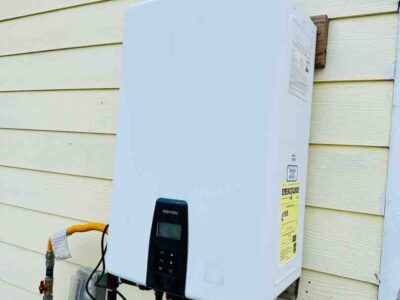
Everything You Need to Know About Going Tankless
Is a Tankless Water Heater Right for Your Austin Home?
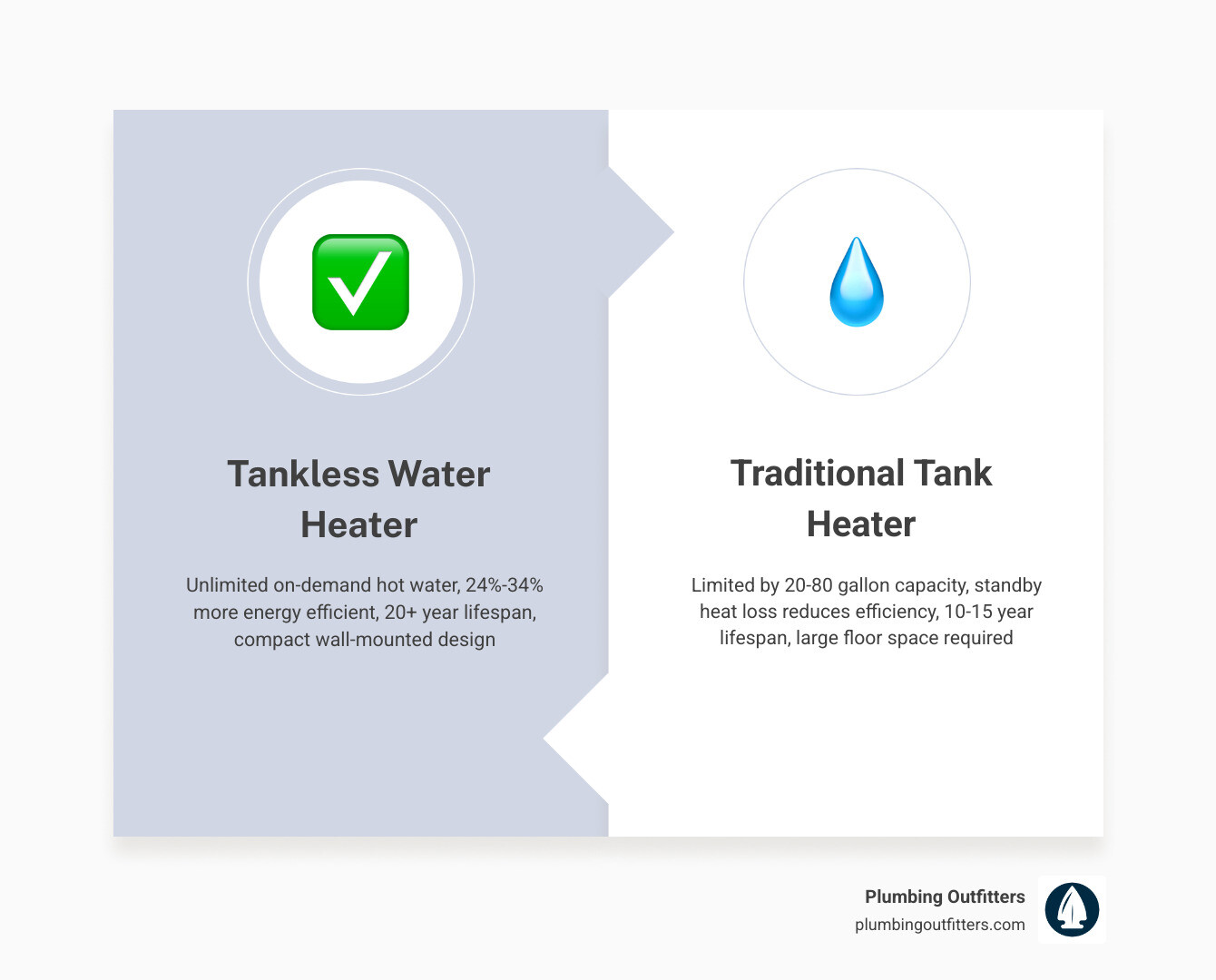
The pros and cons of tankless water heaters come down to this: they save energy, deliver endless hot water, and last twice as long as traditional tanks — but they cost more upfront and have limits on how much hot water they can produce at once.
Quick answer — here’s what you need to know:
| Tankless Water Heater | Traditional Tank Heater | |
|---|---|---|
| Hot water supply | Unlimited, on demand | Limited by tank size (20–80 gal) |
| Energy efficiency | 24%–34% more efficient | Loses energy to standby heat loss |
| Lifespan | Up to 20+ years | 10–15 years |
| Upfront cost | Higher | Lower |
| Space required | Wall-mounted, compact | Large floor footprint |
| Flow rate | 2–10 GPM depending on type | Not limited by flow rate |
| Installation complexity | Higher (may need upgrades) | Simpler |
| Power outages | No hot water | No hot water (most models) |
That quick snapshot covers the basics, but the right choice for your home depends on your household size, how you use hot water, and what your current plumbing and electrical setup can support.
For Austin homeowners in 2026, those factors matter more than ever. Energy costs are rising, space is at a premium in many local homes, and Central Texas hard water creates maintenance considerations that don’t apply everywhere. Whether you’re replacing a failing unit or planning a proactive upgrade, understanding both sides of the tankless equation helps you make a decision you won’t regret.
This guide walks you through everything — how these systems work, the real advantages and drawbacks, what Austin-specific conditions mean for your choice, and how to keep a tankless system running for the long haul.
How Do Tankless Water Heaters Work?
Unlike traditional units that keep 40 to 50 gallons of water hot 24/7, a tankless system only works when you ask it to. It’s often called an “on-demand” or “instantaneous” water heater because it stays idle until a hot water tap is opened somewhere in your home.
Here is the step-by-step magic:
- Flow Detection: When you turn on a shower or faucet, a flow sensor detects the movement of water entering the unit.
- Ignition/Activation: This sensor triggers the heating element. In a gas unit, a burner ignites; in an electric unit, high-voltage coils heat up.
- Heat Exchange: Cold water travels through a series of copper or stainless steel pipes called a heat exchanger. The heat is transferred directly to the water as it flows through.
- Delivery: Hot water exits the unit and travels to your fixture. This process continues until you turn the faucet off, at which point the unit shuts down.
There are different tankless water heater options to consider, specifically regarding how they handle exhaust. Non-condensing units vent hot exhaust gases through metal pipes, while condensing units capture extra heat from those exhaust gases to increase efficiency, allowing them to use cooler PVC venting. Because they produce “instant” heat, these units require specific gas line sizes and venting layouts to operate safely.
The Major Pros and Cons of Tankless Water Heaters
When we talk to neighbors in Round Rock or Georgetown about upgrading, we always emphasize that while these systems are high-tech, they aren’t a “one-size-fits-all” solution. There is a reason why tankless water heaters are so popular in 2026, but the transition involves a significant change in how your home handles energy and water flow.
Top Advantages: The Pros of Tankless Water Heaters
The biggest draw is, of course, the endless hot water. If you have a large family in Pflugerville or a household that loves back-to-back showers, you’ll never have to worry about the “last person gets a cold shower” scenario again.
- Energy Efficiency: According to the Department of Energy, tankless units can be 24%–34% more energy efficient for homes using 41 gallons or less of hot water daily. Even high-use homes see an 8%–14% boost in efficiency.
- Space-Saving Design: A standard tank takes up about 9 to 12 square feet of floor space. A tankless unit is roughly the size of a carry-on suitcase and mounts on the wall, freeing up space in your garage or utility closet.
- Extended Lifespan: While a traditional tank usually lasts 10–15 years, a well-maintained tankless unit can serve your home for 20 years or more. Many parts are also replaceable, meaning you don’t always have to replace the whole unit if one component fails.
- Reduced Risk of Flooding: Without 50 gallons of standing water, there is no tank to rust through and flood your home—a major relief for homeowners worried about water damage.
- Incentives: Many Energy Star-certified gas models qualify for federal tax credits (up to $600 in some cases), helping to offset the initial investment. You can explore more benefits of switching to see if it aligns with your long-term goals.
Potential Drawbacks: The Cons of Tankless Water Heaters
The pros and cons of tankless water heaters wouldn’t be complete without discussing the limitations. The most common hurdle is the limited flow rate.
- GPM Limits: Tankless units are rated by Gallons Per Minute (GPM). If your unit is rated for 5 GPM and you try to run two showers (2.5 GPM each) plus a dishwasher (1.5 GPM), the system may struggle to keep up, resulting in lukewarm water.
- Initial Investment: The upfront cost for the unit and the complex installation is significantly higher than a standard tank. This is often due to the need for new venting, larger gas lines, or electrical panel upgrades.
- “Cold Water Sandwich”: This happens when you turn the water off and back on quickly. A small pocket of unheated water stays in the pipes, leading to a brief “sandwich” of cold water between two bursts of hot.
- Power Dependency: Even gas units require electricity to run the control board and ignition. Unless you have a battery backup or generator, you won’t have hot water during a power outage.
- Maintenance: These units are sensitive to mineral buildup. To keep them running for 20 years, you must commit to annual descaling, especially given the hard water in Central Texas. Avoiding common installation mistakes is the first step toward a reliable system.
Comparing Tankless vs. Traditional Tank Systems
The fundamental difference between tank and tankless systems is how they handle standby energy loss. A traditional tank is like a pot of water simmering on the stove all day just in case you want tea; a tankless unit is like a high-powered electric kettle you only turn on when you’re ready to pour.
| Feature | Tankless | Traditional Tank |
|---|---|---|
| Standby Loss | None | Significant (constant heating) |
| Recovery Time | Instant (continuous flow) | 20–60 minutes after depletion |
| Physical Size | Approx. 28″ x 18″ x 10″ | Approx. 60″ x 20″ |
| Durability | High (replaceable parts) | Moderate (tank eventually rusts) |
| Installation | Complex / Specialized | Straightforward |
Traditional tanks are reliable and have a lower entry cost, but they are physically bulky and eventually succumb to corrosion. For some Austin households, the simplicity of a tank is preferred, but for those looking toward the future of home efficiency, tankless is the clear winner.
Key Considerations for Austin Homeowners in 2026
Living in the Greater Austin area—from Liberty Hill down to Buda—presents unique challenges for water heaters. As we move through 2026, here are the local factors we consider when helping you choose:
- Incoming Water Temperature: In the winter, our groundwater can get quite chilly. Tankless heaters have to work harder to raise the temperature of 50°F water to a comfortable 120°F compared to 70°F water in the summer. This can slightly lower your GPM capacity during cold snaps.
- Hard Water Issues: Austin is famous for its hard water. Minerals like calcium and magnesium love to hitch a ride in our water supply. Without a water softener or regular descaling, these minerals will “scale” the heat exchanger, drastically reducing energy efficiency and potentially damaging the unit.
- Household Demand: We look at your peak usage. Do you run the washing machine while the kids are in the shower? If so, you might need a high-capacity gas unit (5–10 GPM) or even two units plumbed in parallel.
- Infrastructure: Many older homes in Taylor or Bastrop may have 1/2-inch gas lines. Most high-powered tankless units require 3/4-inch lines. Similarly, electric models may require a 120-amp or 150-amp dedicated circuit, which might necessitate an electrical panel upgrade.
Maintenance and Longevity for On-Demand Systems
If you treat your tankless water heater well, it will return the favor for two decades. Because these units use intense heat to warm water instantly, mineral deposits can bake onto the internal components.
- Annual Flushing: This is the most critical task. We recommend a professional flush every 12 months using a food-grade descaling solution (like white vinegar) to dissolve calcium buildup. This service typically costs between $150 and $350 but can save you thousands in premature replacement costs.
- Filter Cleaning: Most units have a small screen filter to catch sediment. This should be checked and rinsed periodically to maintain proper flow.
- Venting Inspection: For gas units, it’s vital to ensure the exhaust and intake vents are clear of debris, bird nests, or obstructions to prevent carbon monoxide risks.
- Warranty Protection: Many manufacturers actually require proof of annual maintenance to honor their 12- to 15-year heat exchanger warranties.
Regular tankless maintenance ensures that the high-efficiency ratings you bought the unit for actually show up on your monthly utility bill.
Frequently Asked Questions about Tankless Water Heaters
Is it worth switching to a tankless water heater in Austin?
For most homeowners, yes—especially if you plan to stay in your home for at least 7 to 10 years. That is typically the “break-even” point where the annual energy savings (roughly $70–$110 depending on fuel type) and the longer lifespan offset the higher initial cost. Additionally, a tankless system can increase your home’s value by about 1% and is a major selling point for modern buyers.
How long does a tankless water heater last compared to a tank?
A tankless unit is designed to last 20 years or more. In contrast, traditional tanks usually start showing signs of failure (like slow leaks or popping sounds from sediment) between year 10 and 12. Because tankless units are made of modular, replaceable parts, we can often repair them rather than junking the whole system.
Can a tankless water heater handle multiple showers at once?
It depends on the unit’s GPM rating and the temperature of the incoming water. A high-output gas unit can usually handle two to three showers simultaneously. However, electric models often have lower flow rates (2–5 GPM) and might struggle with more than one shower at a time in the winter. If you have a massive home with five bathrooms, we might suggest multiple units or a “point-of-use” heater for the primary suite.
Conclusion
Making the move to an on-demand system is a big step toward a more efficient, modern home. While the pros and cons of tankless water heaters show there are trade-offs—specifically regarding upfront investment and maintenance—the long-term benefits of endless hot water and lower energy bills are hard to beat.
At Plumbing Outfitters, we provide “Texas Class Service” to our neighbors across Greater Austin. Whether you are in Cedar Park, Leander, or Hutto, our experienced plumbers can evaluate your home’s infrastructure and help you decide if going tankless is the right move for your family. We pride ourselves on upfront pricing and a neighborly experience that takes the stress out of home upgrades.
Ready to stop worrying about your old water tank? Contact us today to schedule a consultation and see how a tankless system can transform your home’s comfort.