
How Long Does a Tankless Water Heater Last on Average?
How long does a tankless water heater last is one of the most practical questions you can ask before investing in a new system — and the answer is better than most homeowners expect.
Here’s the short version:
| Water Heater Type | Average Lifespan | With Proper Maintenance |
|---|---|---|
| Tankless (gas or electric) | 15–20 years | Up to 25–30 years |
| Traditional tank | 8–12 years | Up to 15 years |
According to the U.S. Department of Energy, most tankless water heaters have a life expectancy of more than 20 years — nearly double that of a conventional storage tank unit. That gap exists for a simple reason: tankless heaters only fire up when you need hot water. They never sit full of standing water, which means they avoid the rust, sediment buildup, and corrosion that quietly kill traditional tanks from the inside out.
For homeowners in Round Rock, Georgetown, and across the Greater Austin area, that longer lifespan isn’t guaranteed. It depends on your water quality, how well the unit is maintained, and whether it was installed correctly in the first place. This guide walks through everything that affects how long your tankless system will actually last — and what you can do to get the most out of it.
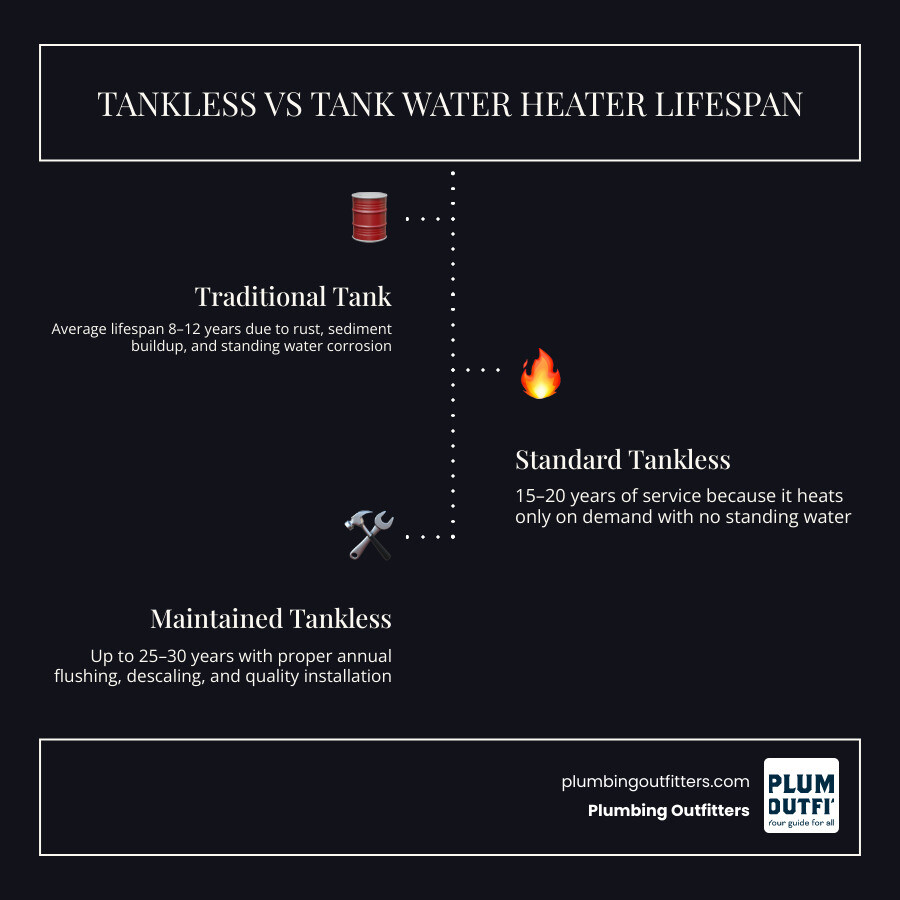
When you look at the average lifespan of a tankless water heater, you are looking at a system designed for the long haul. While a traditional tank-style water heater usually gives out after 8 to 12 years, a standard tankless unit routinely delivers dependable hot water for 15 to 20 years. If you are diligent about basic upkeep, it is not uncommon for a high-quality tankless system to reach 25 or even 30 years of reliable service.
The secret to this impressive longevity lies in how these systems operate. Traditional water heaters are constantly exposed to the destructive forces of standby energy loss and internal corrosion. They store 40 to 80 gallons of water at a high temperature all day, every day. Over time, the minerals in that standing water settle to the bottom, creating a thick layer of sediment that insulates the burner from the water. This forces the tank to overheat, weaken, and eventually crack.
Tankless systems completely bypass this issue. Because they heat water on demand using a high-powered heat exchanger, water only flows through the system when a hot water tap is opened. When the tap is closed, the system rests. This on-demand design means the internal components experience far less thermal stress and zero constant exposure to standing water.
To explore how these two styles match up in daily operation, take a look at our breakdown of Tankless vs Tank Water Heater: What’s the Difference? and read through our guide on The Great Water Heater Debate: Tankless vs Traditional.
In Central Texas, our seasonal shifts also play a role in how these systems age. During occasional winter freezes, the temperature of the groundwater entering your home drops significantly. This means your water heater must work much harder to raise the water temperature to a comfortable level. While a traditional tank can struggle to keep up with consecutive showers in freezing weather, a properly sized tankless unit handles the temperature rise with ease, provided it is protected from internal freezing.
| Feature | Traditional Tank Water Heater | Tankless Water Heater |
|---|---|---|
| Average Lifespan | 8 to 12 years | 15 to 20 years (up to 30 with care) |
| Primary Failure Cause | Tank rust, sediment buildup, corrosion | Mineral scale accumulation, neglected flushing |
| Component Replacement | Usually requires replacing the entire tank | Individual parts can be easily swapped out |
| Energy Waste | High (due to standby heat loss) | Extremely low (heats on demand) |
Key Factors That Determine Tankless Longevity
While tankless systems are inherently durable, they are not completely indestructible. Several environmental and operational factors dictate whether your system will glide past the 20-year mark or fail prematurely before its tenth anniversary.
To ensure your system is set up for success from day one, it is vital to avoid common installation traps. You can read about these in our summary of 10 Common Mistakes in Tankless Heater Installation.

How Water Quality Affects How Long a Tankless Water Heater Lasts
If there is a single “silent killer” of tankless water heaters, it is hard water. Central Texas, including Travis and Williamson counties and the Greater Austin area, is famous for having highly mineralized groundwater. Water hardness here often ranges from 250 to over 400 parts per million (ppm), which is classified as extremely hard.
When hard water is heated inside a tankless unit, the dissolved calcium and magnesium minerals solidify and cling to the hot surfaces of the heat exchanger. This creates a chalky white layer known as mineral scale. As the scale thickens, it acts as an thermal barrier. The heat exchanger has to get much hotter to transfer heat through the scale to the water. This chronic overheating causes the metal of the heat exchanger to warp, stress, and eventually develop microscopic cracks, leading to internal water leaks and system failure.
Without proper intervention, such as installing a whole-home water softener or scheduling regular descaling flushes, hard water can easily cut a tankless unit’s lifespan in half, causing it to fail in just 7 to 10 years.
Gas vs. Electric: How Fuel Type Impacts How Long a Tankless Water Heater Lasts
The fuel source you choose also influences how your system ages and the type of maintenance it will require over its lifetime.
- Gas Tankless Water Heaters: These units use powerful gas burners (natural gas or propane) to heat the water. Because they involve combustion, they require complex venting systems to safely expel exhaust gases. The combustion process creates condensation, which is highly acidic. If the venting is not pitched correctly, this acidic condensate can drip back into the unit, corroding the burners and heat exchanger. Gas units generally offer higher flow rates, making them ideal for larger homes, but they have more moving parts (such as gas valves, igniters, and fans) that require periodic inspection. To learn more about how these units utilize fuel so effectively, read up on Energy Efficiency: Tankless Water Heaters.
- Electric Tankless Water Heaters: Electric units are mechanically simpler than their gas counterparts. They use heavy-duty electric resistance elements submerged directly in the water path. Because there is no combustion, they do not require venting, venting maintenance, or condensate management. However, these heating elements are highly susceptible to scale accumulation. If scale coats the electric elements, they cannot dissipate heat properly and will quickly burn out. While replacing an electric element is relatively straightforward, chronic scale buildup will eventually wear down the internal plumbing of the unit.
Essential Maintenance to Maximize Your Investment
If you want your tankless water heater to last 20 to 30 years, you cannot treat it as a “set-it-and-forget-it” appliance. Regular preventative maintenance is the single most effective habit you can adopt to protect your investment.
To understand the full scope of making the switch and keeping your system running beautifully, check out our guide on Everything You Need to Know About Going Tankless.
A comprehensive tankless maintenance routine should include the following steps:
- Annual Descaling (Flushing): In hard water areas like Round Rock and Pflugerville, flushing your tankless water heater once every 12 months is essential. This process involves connecting a small utility pump to the unit’s isolation valves and circulating a food-grade descaling solution (like citric acid or food-grade white vinegar) through the heat exchanger for about an hour. This solution safely dissolves the accumulated calcium and magnesium scale, restoring optimal heat transfer and protecting the metal from overheating.
- Cleaning the Water Inlet Screen: Your tankless unit has a small mesh screen at the cold-water inlet designed to catch rust, debris, and large sediment particles before they enter the heat exchanger. If this screen becomes clogged, water flow drops, forcing the unit to work harder to maintain consistent temperatures. This screen should be checked and rinsed out every few months.
- Cleaning the Air Intake Filter: Gas tankless units require a steady supply of fresh air for clean combustion. An air intake filter prevents dust, pet dander, and insect debris from entering the burner chamber. Cleaning this filter annually keeps the burner operating cleanly and prevents fuel-efficiency loss.
- Professional Inspections: Having a professional plumber inspect your system annually ensures that all safety controls, electrical connections, gas pressures, and venting systems are working flawlessly. A technician can catch small issues, like a slowly failing sensor or a minor vent blockage, before they escalate into major, system-ending breakdowns.
Warning Signs Your System is Nearing the End of Its Life
Like any mechanical system, a tankless water heater will start showing signs of wear as it approaches the end of its operational life. Recognizing these warning signs early can help you plan for a replacement before you are left with an unexpected cold shower or a messy leak.
If you are starting to notice these issues, it is a great time to explore your options by reading Tankless Water Heater Options: Faster Hot Water for Every Household.
Keep an eye out for the following symptoms:
- Inconsistent Water Temperatures: If you frequently experience the “cold water sandwich” (where the water starts warm, goes freezing cold for a minute, and then warms back up) or if the system struggles to reach your set temperature, the heat exchanger or internal sensors may be failing.
- Reduced Water Flow: If your hot water pressure has dropped significantly while your cold water pressure remains strong, it is a sign that severe scale buildup has physically narrowed the plumbing channels inside the heat exchanger. If flushing the unit does not resolve the issue, the blockage may be permanent.
- Strange Noises: While tankless units are generally quiet, clicking, rumbling, or humming noises can point to a failing fan motor, a struggling burner assembly, or severe mineral scale popping off the heat exchanger walls.
- Frequent Error Codes: Modern tankless water heaters are equipped with advanced self-diagnostic computers. If your unit’s digital controller is constantly displaying error codes—especially those indicating ignition failure, venting issues, or heat exchanger overheating—it means the internal components are reaching their wear limits.
- Visible Rust or Leaks: Any sign of water pooling beneath the unit or rust forming on the external cabinet is a major red flag. This often points to an internal breach in the heat exchanger, which cannot be safely repaired and requires a complete system replacement.
Repair vs. Replace: Making the Right Decision
When an older tankless water heater starts acting up, you have to decide whether it makes more sense to repair the existing unit or invest in a brand-new system.
To help weigh the financial side of this decision, check out our resources on Switching Tank to Tankless: Complete Guide and learn more about the long-term return on investment in our article, Will a Tankless Water Heater Actually Save You Money?.
To make the right choice, plumbers often recommend using the 50% Rule:
- When to Repair: If your tankless water heater is under 12 to 15 years old, has been regularly maintained, and the repair is relatively minor compared to a full replacement, repairing it is usually the smartest path. Because tankless units are modular, individual parts like sensors, fan motors, and control boards can be easily swapped out without replacing the whole unit.
- When to Replace: If your system is over 15 years old, has a history of neglected maintenance, and is facing a major component failure (such as a cracked heat exchanger), replacement is almost always the better option. Additionally, finding replacement parts for units older than 15 years can be difficult as manufacturers phase out older designs.
Upgrading to a new unit also allows you to take advantage of modern technological advancements. Today’s tankless water heaters feature superior energy efficiency ratings, advanced scale-prevention technologies, and smart home integration that alerts you to maintenance needs before a breakdown occurs.
Frequently Asked Questions About Tankless Lifespans
Can a tankless water heater last 30 years?
Yes, it is entirely possible for a tankless water heater to reach a 30-year lifespan, but it requires a “perfect storm” of ideal conditions. To hit this milestone, the unit must be installed in a conditioned space (not a damp crawl space or freezing garage), run on softened water to eliminate scale, and receive meticulous annual maintenance, including professional flushes and component inspections. Choosing a premium model with a stainless steel heat exchanger also greatly increases the chances of reaching this exceptional age.
Do tankless water heaters work during power outages?
No. Even if you have a gas-fired tankless water heater, the system requires electricity to power the digital control board, electronic ignition, safety sensors, and the exhaust fan. During a typical Central Texas storm or power outage, your tankless unit will not produce hot water unless you have it connected to a home backup generator or a dedicated battery backup system.
Does a water softener extend the life of my tankless water heater?
Absolutely. Installing a whole-home water softener is the single best thing you can do for a tankless water heater in the Greater Austin area. By removing the calcium and magnesium minerals before they ever reach your water heater, you virtually eliminate scale accumulation. This protects the heat exchanger from thermal stress, maintains peak energy efficiency, and allows you to safely extend the time between manual descaling flushes.
Conclusion
Investing in a tankless water heater is a fantastic way to enjoy endless hot water while cutting down on your monthly energy footprint. With an average lifespan of 15 to 20 years—and the potential to reach up to 30 years with proper care—these systems offer incredible long-term value compared to traditional tanks.
However, maximizing that lifespan requires a commitment to proper installation, water quality management, and routine maintenance. Here at Plumbing Outfitters, we are proud to provide “Texas Class Service” to our neighbors throughout the Greater Austin area. Our experienced, trustworthy plumbers are always ready to help you with honest service, neighborly advice, and expert care.
Whether you need a routine annual flush, a fast repair, or are ready to discuss upgrading your home with our professional tankless water heater services, we are here to help. Contact us today to schedule your service and keep your home’s hot water flowing reliably for decades to come!