


Why Water Filtration Is One of the Smartest Investments for Your Family’s Health
Understanding how water filtration improves your family’s health starts with a simple truth: the water coming out of your tap may meet basic legal safety standards and still contain contaminants that quietly affect how your household feels every day. Lead from aging pipes, chlorine byproducts, bacteria, PFAS chemicals, and sediment can all make their way into the water your family drinks, cooks with, and bathes in — often without any obvious taste or smell warning.
How water filtration improves your family’s health — at a glance:
- Removes harmful contaminants like lead, chlorine, bacteria, PFAS, and heavy metals before they reach your glass
- Supports better hydration by improving taste so your family naturally drinks more water
- Protects vulnerable household members including children, seniors, and anyone with a weakened immune system
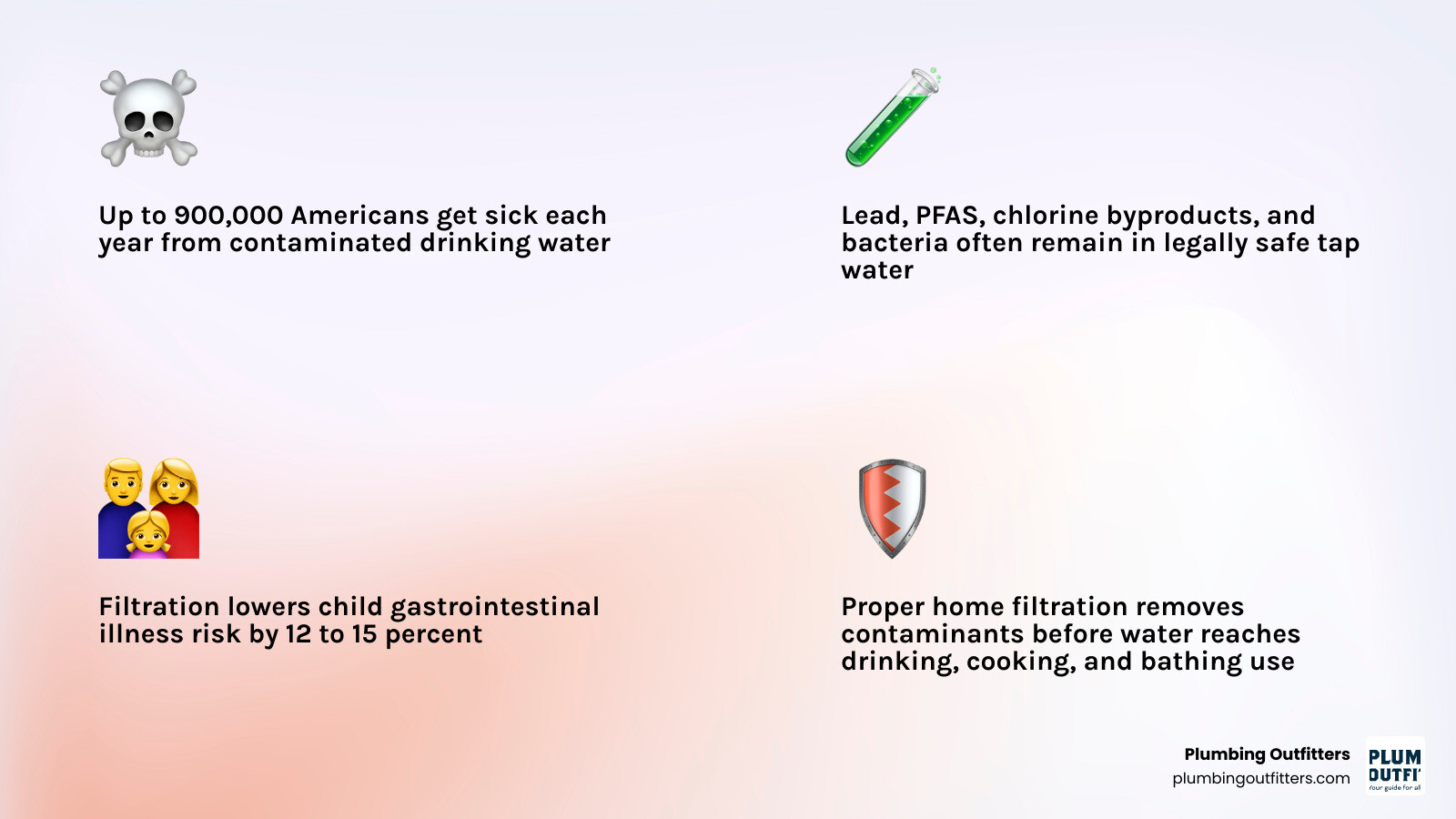
- Reduces GI illness risk — studies show proper filtration can lower gastrointestinal illness in children by 12 to 15%
- Improves skin, hair, and digestive comfort by reducing chlorine and hard minerals in bathing and drinking water
- Protects plumbing and appliances from scale buildup, extending their lifespan and efficiency
- Replaces bottled water with a safer, more consistent, and more environmentally responsible alternative
According to Physicians for Social Responsibility, up to 900,000 people get sick and 900 die in the United States every year from contaminated drinking water. A 2015 NRDC study found that 18 million Americans have public water supplies with lead violations or other EPA-restricted contaminants. Those numbers make clean water a real family health issue — not just a preference.
For Bloomington-Normal homeowners and families across McLean County and Central Illinois, the good news is that today’s home water filtration options are more effective, accessible, and professionally supported than ever. This guide walks you through everything you need to know — from what’s hiding in your tap water to which filtration systems actually work and how to keep them running properly.
What’s in Unfiltered Tap Water That Can Affect Family Health?
Unfiltered tap water can contain a mix of physical, chemical, and biological contaminants. Some come from the original water source. Others enter through treatment chemicals, aging water mains, older household plumbing, or private wells.
In Austin, Round Rock, Georgetown, Cedar Park, Pflugerville, Hutto, Leander, Bastrop, Temple, and surrounding Central Texas communities, water quality can vary by neighborhood, water source, plumbing age, and household fixtures. That is why we always recommend starting with testing instead of guessing.
Common concerns include lead, chlorine, chloramine, PFAS, bacteria, parasites, heavy metals, nitrates, arsenic, VOCs, sediment, rust, and hard minerals. Some contaminants affect taste and smell. Others can affect health without making the water look, taste, or smell unusual.
If chlorine is your biggest concern, we explain that topic in more detail here: Chlorine in Your Drinking Water: What You Need to Know and How a Water Filtration System Can Help.
Common Contaminants Families Should Know About
Here are the main contaminants homeowners should understand:
- Lead: Lead can enter water through old pipes, solder, fittings, and service lines. It is especially concerning for children because it can affect brain and nervous system development.
- Chlorine and chloramine: These disinfectants help public water systems control microbes, but they can create taste, odor, skin, and hair concerns. Chlorine can also react with organic matter to form disinfection byproducts.
- Disinfection byproducts: Compounds such as trihalomethanes and haloacetic acids may form when disinfectants react with natural organic material in water.
- Bacteria and pathogens: E. coli and other bacteria can cause stomach illness. Private wells and water systems affected by breaks, flooding, or poor maintenance may be more vulnerable.
- Parasites: Giardia and Cryptosporidium can cause digestive illness. Cryptosporidium is notable because it can resist standard chlorine treatment.
- PFAS chemicals: Often called “forever chemicals,” PFAS can persist in the environment and have become a growing concern in drinking water.
- Nitrates: Nitrates are especially important for households with infants or pregnant family members. They may come from agricultural runoff, septic systems, or other sources.
- Arsenic and other heavy metals: Certain metals can occur naturally or enter water through industrial, agricultural, or plumbing-related sources.
- VOCs and pesticides: Volatile organic compounds and pesticides can enter water through runoff, spills, or environmental contamination.
- Sediment and rust: These particles can make water cloudy, gritty, or discolored and can clog fixtures and filters.
- Iron and sulfur: Iron can leave rust-colored stains and metallic tastes. Sulfur can create a rotten egg odor.
- Hard minerals: Calcium and magnesium are not usually health hazards, but they can dry skin, leave residue, reduce appliance efficiency, and create scale buildup.
The tricky part? Clear water is not always clean water. If water safety were based only on appearance, plumbers would have much easier jobs.
Why Children, Seniors, and Immunocompromised Family Members Need Extra Protection
Water quality matters for everyone, but some family members need extra protection.
Children drink more water per pound of body weight than adults, and their developing bodies are more sensitive to contaminants like lead, nitrates, and certain chemicals. Research cited in filtration studies shows proper water filtration can reduce gastrointestinal illness in children by 12 to 15% by lowering exposure to microbial contaminants and chlorine byproducts.
Seniors may be more vulnerable to dehydration, digestive upset, and kidney strain. People with weakened immune systems may face greater risks from bacteria, parasites, and other pathogens that a healthy adult might tolerate more easily.
Pregnant people, infants, and family members with chronic illness may also benefit from a more protective approach to drinking and cooking water. For these households, filtration is not just about better-tasting ice cubes. It is about reducing daily exposure to contaminants that can add up over time.
How to Find Out What’s in Your Home’s Water
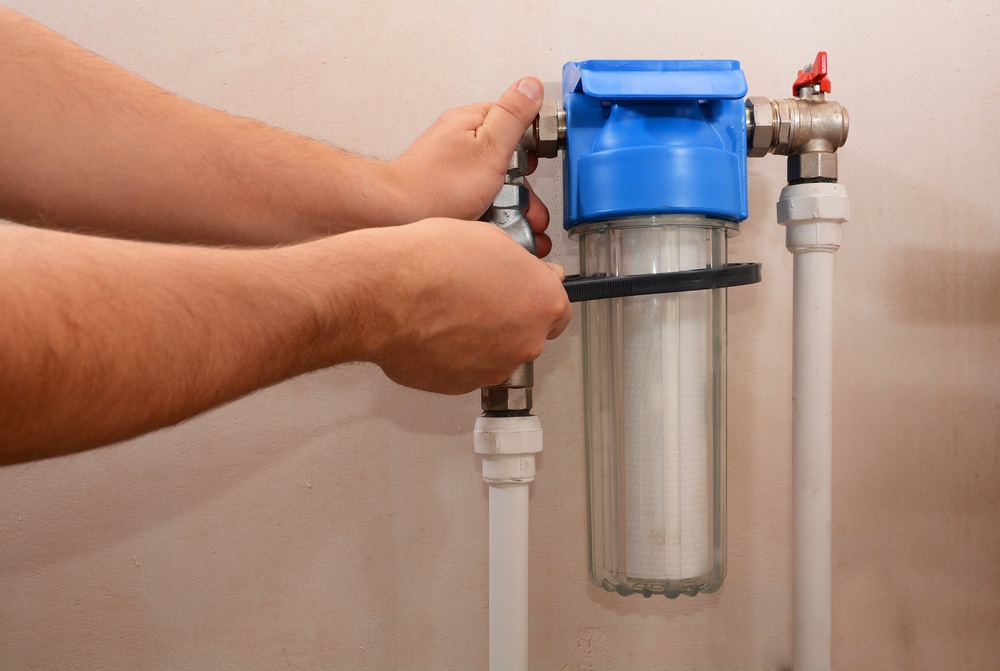
The best water filtration system is the one matched to your actual water. That starts with testing.
Here is how to get a clearer picture:
- Review your local water quality report: Public water systems publish annual Consumer Confidence Reports. These reports list detected contaminants and whether the system met legal limits.
- Test water at the tap: Water can pick up contaminants after it leaves the treatment plant, especially in older plumbing.
- Test private wells annually: If your home uses a private well, annual testing is important. Test sooner if water changes color, odor, or taste.
- Pay attention to warning signs: Metallic taste, chlorine smell, rotten egg odor, cloudy water, staining, or grit can point to specific water issues.
- Use certified lab testing when needed: For concerns like lead, nitrates, arsenic, bacteria, or PFAS, professional or certified lab testing gives better direction.
- Look for independent certifications: When selecting filters, check for NSF/ANSI standards that match the contaminants you want reduced.
At Plumbing Outfitters, we believe in upfront guidance. Before recommending a system, we want to understand what your home’s water is actually doing.
How Water Filtration Improves Your Familys Health at Home
At home, water touches almost everything: drinking glasses, coffee makers, baby bottles, soup pots, showers, laundry, pets’ bowls, and even the ice in your sweet tea. That is why how water filtration improves your familys health is not limited to drinking water alone.
A properly selected system can support safer drinking, better cooking, cleaner bathing, digestive wellness, skin comfort, and long-term peace of mind.
How Water Filtration Improves Your Familys Health by Reducing Lead, Chlorine, and Bacteria
Different filtration technologies target different contaminants. The right setup may include one or several of the following:
- Activated carbon filtration: Helpful for reducing chlorine, taste, odor, and certain VOCs.
- Catalytic carbon: Often used when chloramine reduction is needed.
- Reverse osmosis: Effective for many dissolved contaminants, including lead, arsenic, nitrates, fluoride, PFAS, and total dissolved solids, depending on system certification.
- Sediment filters: Capture dirt, rust, sand, and other particles that can affect water clarity and protect downstream filters.
- UV purification: Uses ultraviolet light to neutralize certain bacteria, viruses, and microorganisms when microbial control is needed.
- Specialty media: May target iron, sulfur, hardness minerals, or other specific issues.
For families, this means less exposure at the point where it matters most: the water you drink and cook with every day. If your water has lead concerns, for example, a filter certified for lead reduction is essential. If bacteria are a concern, a simple taste-and-odor carbon filter is not enough.
That is the heart of good water purification: match the treatment to the contaminant.
How Water Filtration Improves Your Familys Health Through Hydration, Skin, and Digestive Wellness
Clean water is easier to drink. That may sound simple, but it matters.
When water tastes like chlorine, smells odd, or leaves a metallic aftertaste, families often drink less of it or rely more on bottled drinks, soda, juice, or flavored beverages. Filtered water can make hydration feel effortless.
Better hydration supports:
- Digestion
- Temperature regulation
- Energy levels
- Focus and cognitive function
- Kidney function
- Healthy skin
- Overall wellness
Filtered water can also support better cooking. Coffee, tea, soups, pasta, rice, and washed produce all taste better when the water is cleaner and fresher. If your cooking water smells like a swimming pool, your soup is going to know. So will everyone at the table.
Bathing water matters, too. Reducing chlorine and hard minerals may help with:
- Dry, itchy skin
- Scalp irritation
- Hair dryness and breakage
- Soap residue
- General shower comfort
For families dealing with sensitive skin, eczema-prone skin, or frequent dryness, whole-home filtration or a filtration-and-softening combination may be worth considering.
Long-Term Health Benefits of Cleaner Water Every Day
The biggest benefit of water filtration is consistency. One glass of filtered water is nice. Thousands of glasses over years can meaningfully reduce exposure.
Long-term benefits may include:
- Lower exposure to contaminants such as lead, chlorine byproducts, PFAS, and heavy metals
- Fewer water-related stomach concerns when microbial risks are properly addressed
- Better hydration habits for kids and adults
- Support for children’s development by reducing neurotoxin exposure where present
- Less strain from avoidable contaminants on the body’s natural filtration systems
- Better routines around cooking, meal prep, and daily water intake
- Less reliance on bottled water
Clean water becomes a wellness multiplier. It supports the habits your family repeats every day: drinking, cooking, bathing, washing produce, filling bottles, and making ice.
Choosing the Right Water Filtration System for Family Health
There is no single “best” filter for every home. The right system depends on your water quality, plumbing, family health priorities, and where you want filtration.
A kitchen drinking water system may be ideal for one family. Another home may need whole-house filtration because chlorine odor, hard water, sediment, or skin irritation affects every fixture.
If hardness is part of the problem, this guide can help: What is the Difference Between Hard and Soft Water.
Why Reverse Osmosis May Be Recommended for Drinking Water
Reverse osmosis, often called RO, is one of the most effective options for drinking water filtration. It works by pushing water through a semi-permeable membrane that blocks many dissolved contaminants.
A typical RO system may include:
- Sediment prefilter
- Carbon prefilter
- Reverse osmosis membrane
- Storage tank
- Polishing filter
- Dedicated drinking water faucet
- Optional remineralization stage
RO may be recommended for reducing contaminants such as:
- Lead
- Arsenic
- Nitrates
- Fluoride
- PFAS
- Certain heavy metals
- Dissolved solids
- Some cysts and microorganisms, depending on system design
Reverse osmosis is especially useful under the kitchen sink, where families get water for drinking, cooking, coffee, tea, and ice. Some systems also connect to refrigerator lines.
One important note: RO can reduce beneficial minerals along with unwanted contaminants. Some families choose systems with remineralization stages or make sure they get minerals through food. As always, the right answer depends on your water and your goals.
Whole-House Filters vs. Point-of-Use Filters: Which Is Best for Family Health?
Whole-house filtration and point-of-use filtration solve different problems.
A whole-house system treats water as it enters the home. That means filtered water flows to showers, laundry, water heaters, dishwashers, bathroom sinks, and kitchen fixtures.
A point-of-use system treats water at one location, such as the kitchen sink or refrigerator. This is often the best choice for high-level drinking water treatment, such as reverse osmosis.
| Feature | Whole-House Filtration | Point-of-Use Filtration |
|---|---|---|
| Best for | Treating water throughout the home | Drinking and cooking water |
| Common location | Main water line | Kitchen sink, refrigerator, specific faucet |
| Helps with bathing water | Yes | Usually no |
| Helps with cooking water | Yes, depending on tap used | Yes, if installed at kitchen |
| Helps protect plumbing | Yes, depending on system type | Limited |
| Helps protect appliances | Yes, especially with sediment, carbon, or softening systems | Limited |
| Strong contaminant reduction for drinking | Good when properly designed | Often excellent with RO or certified drinking filters |
| Best family use | Whole-home comfort and protection | Targeted health protection at the glass |
For many families, the best setup is a combination: whole-house treatment for general water quality and a point-of-use RO system for drinking water.
When Water Softeners Support Health, Comfort, and Plumbing Protection
Water softeners are not the same as water filters. A softener removes hardness minerals, mainly calcium and magnesium, through ion exchange. It does not automatically remove lead, PFAS, bacteria, chlorine, or VOCs.
That said, softeners can still support comfort and home health routines by reducing:
- Scale buildup
- Soap scum
- Dry skin from mineral residue
- Stiff laundry
- Spots on dishes
- Water heater strain
- Fixture buildup
- Appliance wear
Hard water is common in many Central Texas homes. If you see white crust on faucets, cloudy glassware, rough laundry, or scale around showerheads, hardness may be part of the issue.
Learn more here:
- 5 Reasons Why You Are a Candidate for a Water Softener
- 5 Benefits of a Water Softener System for Your Home
Softening and filtration often work best together. The softener handles hardness. The filter handles targeted contaminants. Teamwork makes the dream work, even in plumbing.
Filtered Water, Plumbing, and Appliance Protection
Cleaner water does more than support your family’s health. It also helps protect the systems that deliver and use that water every day.
Whole-home filtration can reduce sediment, chlorine, scale, and other issues that contribute to fixture wear, appliance strain, and plumbing headaches. We cover more advantages here: 5 Benefits of Whole Home Water Filtration.
How Cleaner Tap Water Supports Everyday Family Use
Filtered water makes daily routines easier and more enjoyable.
Families often notice improvements in:
- Drinking water taste
- Ice clarity and flavor
- Coffee and tea quality
- Soups, sauces, pasta, and rice
- Rinsed fruits and vegetables
- Refillable bottle use
- Pet water bowls
- Bathroom sink water
- Shower comfort
Filtered water can also reduce reliance on bottled water. Compared to bottled water, a well-maintained home filtration system offers several advantages:
- Convenience: Clean water is available at home without hauling cases from the store.
- Less plastic waste: Fewer single-use bottles means less household waste.
- Consistency: You know which system is treating your water and when it was maintained.
- Better household coverage: Bottled water only helps with drinking. Home filtration can also help with cooking, bathing, and appliances.
Bottled water may seem simple, but it does not solve whole-home water quality problems. It also creates storage, waste, and consistency concerns.
How Filtration Helps Protect Plumbing, Fixtures, and Appliances
Water quality affects your plumbing system from the inside out.
Sediment can clog aerators, showerheads, cartridges, and appliance screens. Hard minerals can build scale inside pipes and water heaters. Chlorine and other chemicals may contribute to wear on certain plumbing components over time.
Filtration and softening can help protect:
- Faucets
- Showerheads
- Toilets
- Washing machines
- Dishwashers
- Ice makers
- Water heaters
- Tankless water heaters
- Pipes and valves
- Fixture finishes
Scale buildup can make water heaters work harder. Research cited by water quality organizations has found that using softened water can reduce the carbon footprint of an instantaneous gas water heater by 4.4% over a 15-year service life compared with hard water.
That means better water quality can support both comfort and efficiency. Your appliances work hard enough. They do not need to fight a mineral wrestling match every day.
Maintenance and Misconceptions That Determine Ongoing Health Benefits
A water filtration system is only as good as its design, installation, and maintenance. An expired filter can lose effectiveness, reduce flow, or even become a place where bacteria grows.
The goal is not just to install filtration. The goal is to keep it working.
How Often Water Filters Should Be Replaced or Maintained
Maintenance depends on the system type, water usage, contaminant levels, and manufacturer guidance. However, these general intervals are helpful:
- Activated carbon filters: Often replaced every 3 to 6 months.
- Sediment cartridges: Often replaced every 3 to 6 months, or sooner if water has heavy sediment.
- Reverse osmosis prefilters and postfilters: Often replaced every 6 to 12 months.
- Reverse osmosis membranes: Often replaced every 2 to 3 years.
- UV bulbs: Typically replaced annually, even if the bulb still lights up.
- Whole-house filter media: Replacement varies widely by system and water quality.
- Water softener salt: Refilled as needed based on household water use.
- Water softener maintenance: Checked periodically for salt bridging, resin condition, and proper operation.
- Water testing: Recommended annually for private wells and whenever taste, odor, color, or household health concerns change.
Maintenance needs increase when:
- Household water use is high
- The home has many occupants
- Water contains heavy sediment
- Filters are undersized
- Water quality changes seasonally
- The home uses well water
A simple reminder on your calendar can make a big difference. So can professional service from a plumbing team that knows what to look for.
Common Water Filtration Misconceptions to Avoid
Water filtration is helpful, but it is not magic. Avoid these common misunderstandings:
- “All filters remove all contaminants.” They do not. Carbon, RO, UV, sediment, and softening systems all do different jobs.
- “If water tastes fine, it is safe.” Not always. Lead, nitrates, PFAS, and bacteria may be present without obvious taste or smell.
- “A pitcher filter is enough for every problem.” Most pitcher filters improve taste and reduce some contaminants, but many do not remove germs or dissolved chemicals.
- “Chlorine reduction means bacteria protection.” Reducing chlorine does not automatically remove bacteria, viruses, or parasites.
- “A water softener is a water purifier.” A softener addresses hardness minerals, not most health-related contaminants.
- “Clear water is contaminant-free.” Clear water can still contain dissolved contaminants.
- “Tested to NSF standards means certified.” Look for actual certification, not vague marketing language.
- “Once installed, filters take care of themselves.” Filters need maintenance and replacement.
Useful NSF/ANSI standards include:
- NSF 42: Aesthetic effects such as chlorine taste and odor.
- NSF 53: Health-related contaminants such as lead and cysts, depending on certification.
- NSF 58: Reverse osmosis systems.
- NSF 401: Emerging contaminants, depending on system certification.
The label matters. The test results matter. The maintenance schedule matters. That is how filtration keeps delivering health benefits year after year.
Conclusion: Build a Healthier Home with Cleaner Water
Clean water supports healthier routines: better hydration, safer cooking, more comfortable bathing, improved taste, less bottled water waste, and reduced exposure to contaminants that can affect your family over time.
The key is choosing the right solution for your home. That may be a reverse osmosis system under the kitchen sink, a whole-house filtration system, a water softener, UV treatment, sediment filtration, or a combination of systems.
At Plumbing Outfitters, we bring Texas Class Service, upfront pricing, and neighborly guidance to homeowners across Austin, Bastrop, Cedar Park, Elgin, Georgetown, Granger, Hutto, Leander, Liberty Hill, Manor, Pflugerville, Rockdale, Round Rock, Taylor, Temple, West Lake Hills, and surrounding communities we serve. We help homeowners understand their water, choose practical solutions, and keep their plumbing systems working the way they should.
If you are ready for cleaner, better-tasting water and a healthier home routine, schedule water purification service with Plumbing Outfitters today.