

The Ultimate Guide to Faucet Repair vs Replacement
Why Knowing Faucet Problems Signs and When to Replace Matters for Your Home
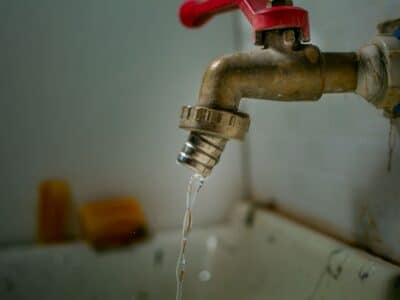
Faucet problems signs and when to replace your fixtures are things every homeowner needs to understand — because a small drip today can turn into a big, expensive headache tomorrow. A faucet dripping just once per second wastes over 3,000 gallons of water every year — roughly the equivalent of 150 showers. That’s water straight down the drain, and money right off your wallet.
Here’s a quick look at the most common faucet problem signs and what they typically mean:
| Sign | What It Means | Repair or Replace? |
|---|---|---|
| Constant dripping | Worn washer, O-ring, or cartridge | Repair (replace the part) |
| Leak at the base or handle | Damaged gasket or O-ring | Repair; replace if recurring |
| Low water pressure | Clogged aerator or limescale buildup | Repair (clean or replace aerator) |
| Spitting or spraying water | Blocked or damaged aerator | Repair (clean with vinegar) |
| Squeaking or screeching noise | Worn stem threads or loose washer | Repair; replace if persists |
| Visible rust or corrosion | Internal and external wear | Replace |
| Faucet over 15-20 years old | End of typical lifespan | Replace |
Most faucets last somewhere between 10 and 15 years with regular use, though newer models can go 20 to 25 years. When problems start showing up on an older unit — especially rust, recurring leaks, or low pressure that cleaning can’t fix — replacement is usually the smarter call.
Whether you’re dealing with a drip that won’t quit or wondering if that corroded kitchen faucet is worth fixing, this guide walks you through everything you need to know: how to spot the warning signs, when a simple repair will do the job, and when it’s time to replace the whole unit.
Common Faucet Problems: Signs and When to Replace Your Fixtures
When we step into a kitchen or bathroom in April 2026, we expect the fixtures to work flawlessly. However, faucets are the workhorses of the home, and they eventually wear down. Recognizing faucet problems signs and when to replace them starts with the most obvious symptom: the drip.
A faucet that drips once per second might seem like a minor annoyance, but it wastes approximately 7 gallons of water every single day. Over a month, that’s 210 gallons. If you ignore it, you aren’t just paying for water you aren’t using; you’re also risking structural damage. Constant moisture leads to Important Signs That You Have a Water Leak under the cabinet, which often results in mold growth and wood rot.
Leaks aren’t always at the spout. If you notice water pooling around the handle or the base of the fixture, you likely have a worn-out O-ring or a damaged gasket. While these are often 6 Signs Your Faucet Needs Repair, recurring leaks in these areas often signal that the internal housing is corroded. At Plumbing Outfitters, we often tell our neighbors that if you’ve fixed the same leak twice in one year, it’s time to stop patching and start shopping.
Identifying Internal Damage and Wear
In Central Illinois, our water quality plays a major role in fixture longevity. McLean County is known for hard water, which contains high levels of minerals like calcium and magnesium. Over time, these minerals settle inside your faucet, creating a “crust” that interferes with moving parts. If you’re looking for Faucet Services, it’s often because hard water has finally won the battle against your internal valves.
Recognizing faucet problems signs and when to replace for low pressure
If you turn on the tap and only get a weak stream, the issue is usually localized. If the rest of the house has great pressure, the problem is likely a 7 Common Bathroom Sink Problems staple: a clogged aerator.
Limescale builds up in the tiny mesh screen at the tip of the spout, restricting flow. You can often fix this by unscrewing the aerator and giving it a vinegar soak. However, if the pressure remains low after cleaning, the blockage might be deep within the faucet body or the supply lines. This is one of the key faucet problems signs and when to replace the unit becomes the only viable solution, as internal blockages can be impossible to clear without damaging the fixture.
Unusual noises and spitting water
Faucets should be seen and used, not heard. If yours is making a high-pitched screeching or a chattering “machine gun” sound, it’s a cry for help. Screeching usually indicates that the metal threads of the stem have become worn or that a washer is the wrong size and vibrating under pressure.
Spitting or “coughing” water is another sign of trouble. This usually means air is getting into the line or the aerator is so clogged that the water is struggling to escape. If you’re wondering, “Are Your Faucets Leaking? Here’s Why We Can Help,” it’s because these noises often precede a total mechanical failure.
Repair vs. Replacement: Making the Right Choice
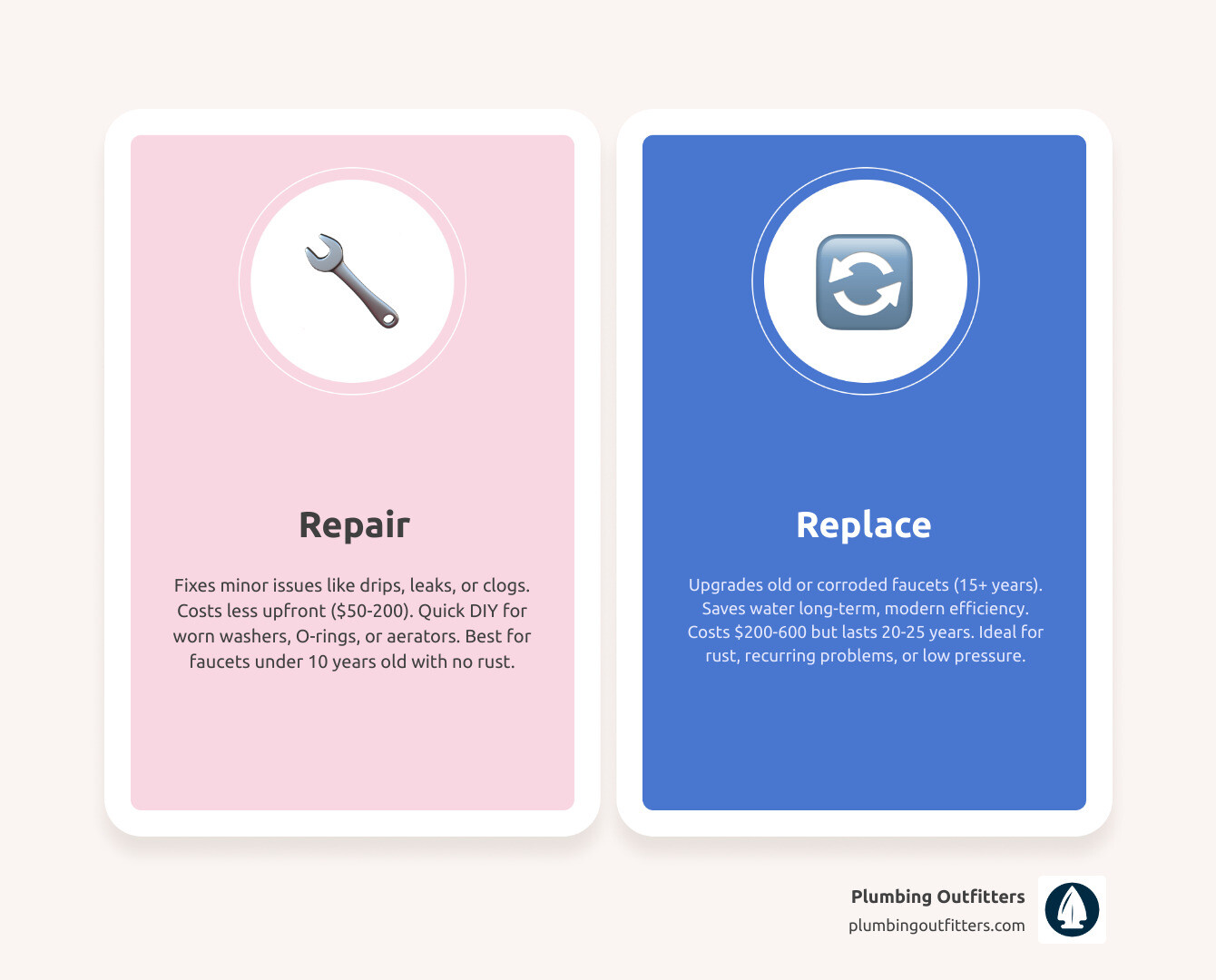
Deciding between a quick fix and a full upgrade depends on three factors: age, condition, and cost.
| Feature | Repair It If… | Replace It If… |
|---|---|---|
| Age | It’s under 8 years old | It’s over 15 years old |
| Parts | Only a washer or O-ring is needed | The cartridge or body is cracked |
| Appearance | Finish is clean and shiny | Visible rust or “pitting” is present |
| Frequency | This is the first issue | You’ve repaired it multiple times |
Faucets typically have a 10-15 year lifespan. If yours is approaching that “retirement age,” investing money into a repair is often throwing good money after bad. Modern 2026 fixtures are significantly more water-efficient and offer Kitchen Faucets: Innovations to Consider for Your Home like touchless operation and magnetic docking.
When dealing with Old House Plumbing Problems: Should You Repair or Replace?, we generally recommend replacement if you see visible rust or corrosion. Once the metal body of the faucet starts to pit or flake, it can contaminate your water and eventually lead to a catastrophic burst.
Troubleshooting and DIY Maintenance
Many faucet problems signs and when to replace discussions start with a simple DIY attempt. We encourage our Bloomington-Normal neighbors to handle basic maintenance to extend the life of their fixtures. You can find more tips in our Faucet Category.
DIY steps for common faucet problems signs and when to replace parts
- Aerator Maintenance: Unscrew the aerator by hand (use a rag and pliers if it’s stuck). Soak it in white vinegar for an hour, then use a toothbrush to scrub away mineral deposits.
- Handle Lubrication: If a handle is squeaking, you can sometimes silence it by applying a small amount of plumber’s grease to the stem threads.
- Part Matching: If you decide to replace an O-ring or a cartridge, always take the old part to the store with you. There are thousands of models, and “close enough” usually results in a leak.
Knowing the difference between a Local Plumber or DIY: When to Call a Professional is about recognizing your limits.
When to call a professional plumber
While cleaning an aerator is a great Saturday project, some issues require “Texas Class Service” from a pro. You should call us if:
- Under-sink pooling: If you see water standing in the cabinet, the leak could be in the supply lines or the drain assembly.
- Structural damage: If the sink or countertop feels soft or discolored, moisture has already penetrated the materials.
- Recurring clogs: If the faucet and the drain are both acting up, you might have a deeper issue in your Leak Services.
- Stubborn parts: If a screw is stripped or a nut won’t budge, don’t force it. Breaking a supply line can lead to an immediate flood.
Frequently Asked Questions
How much water can a dripping faucet waste?
As we mentioned, a single drip per second adds up to over 3,000 gallons per year. That is enough water to fill a small backyard pool or run 150 loads of laundry. If you have multiple leaky faucets in your home, you could be wasting enough water to double your monthly utility bill.
What is the typical lifespan of a kitchen or bathroom faucet?
Most experts agree that a standard faucet lasts 10 to 15 years. However, in Central Illinois, the hard water can shorten that lifespan by several years if you don’t have a water softener. High-end models made of solid brass or stainless steel can easily last 20 to 25 years with proper maintenance.
Why is my faucet making a high-pitched whistling noise?
Whistling is usually caused by a vibration. This could be a loose washer that is flapping as water rushes past it, or it could be a sign of significant scale buildup inside the pipes. In some cases, high water pressure (above 80 PSI) can cause fixtures to “scream” when they are turned on.
Conclusion
At Plumbing Outfitters, we believe in providing honest, neighborly advice to our community. Whether you are in Austin, Round Rock, Pflugerville, or right here in Taylor and Hutto, we want you to feel confident in your home’s plumbing.
Recognizing faucet problems signs and when to replace your fixtures is the first step in protecting your home from water damage and high bills. From simple cartridge swaps to full kitchen remodels, our team is here to provide the “Texas Class Service” you deserve. We offer 24/7 availability for those middle-of-the-night emergencies and upfront pricing so there are never any surprises.
Don’t let a “little drip” become a big problem. If you’ve noticed any of the signs we’ve discussed today, give us a call or Schedule Faucet Repair or Installation online. We’re ready to help you keep the water flowing exactly where it belongs!