

Drain Brain: How to Clean Your Pipes This Spring
Your Quick Guide to Spring Drain Cleaning and Leak Inspection Tips
Following spring drain cleaning and leak inspection tips is one of the smartest things you can do as an Austin homeowner. Winter puts real stress on your pipes — even in Texas. And by the time spring arrives, months of grease, hair, soap residue, and debris have quietly built up in your drains. Hidden leaks that started during cooler months are ready to make themselves known, often at the worst possible time.
The numbers tell a clear story: a leaking toilet alone can waste up to 200 gallons of water every single day, and water damage costs American homeowners an average of $3,000 per incident. The good news? Regular maintenance can prevent up to 70% of plumbing failures before they become emergencies.
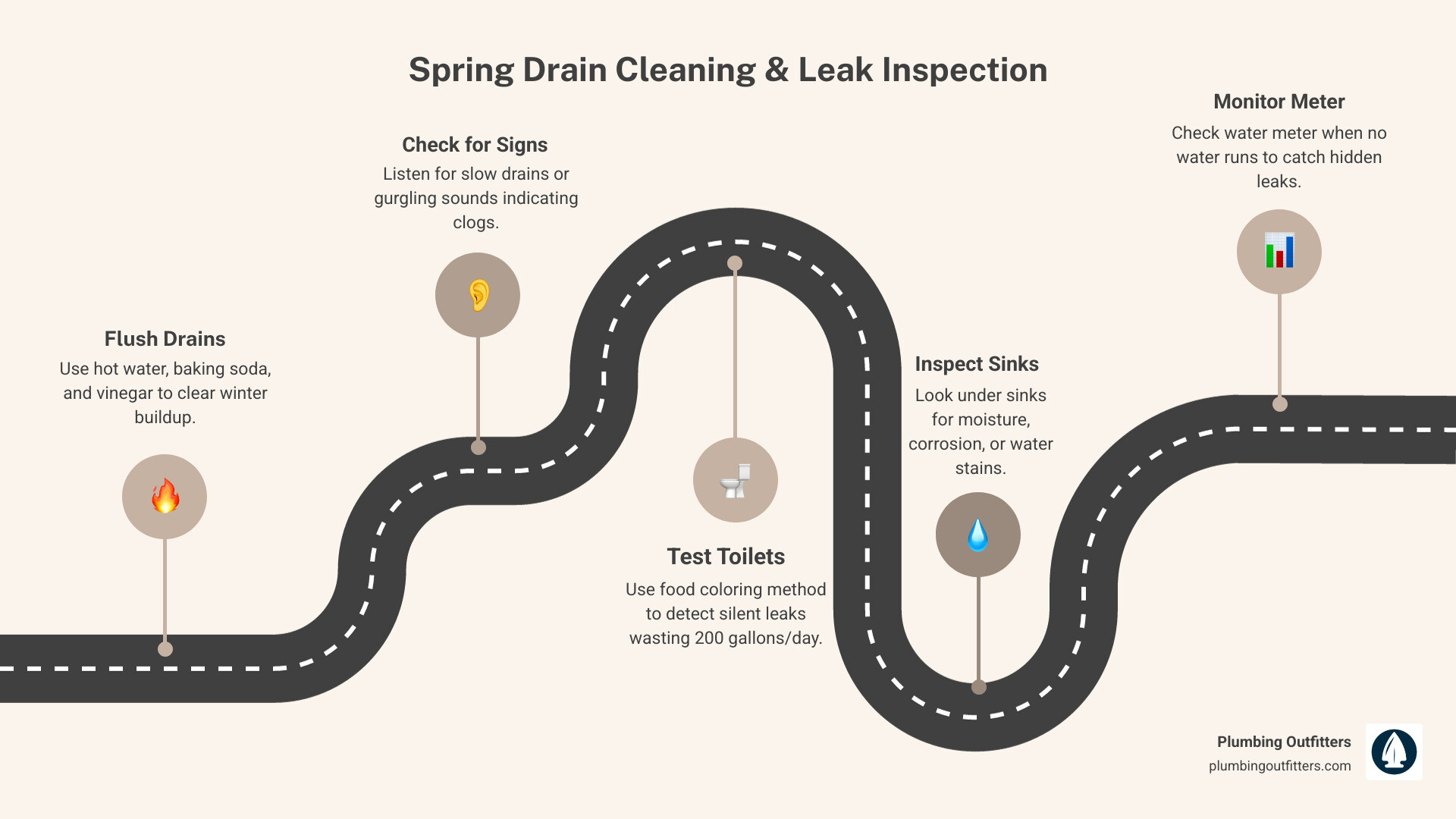
Here’s a quick overview of what to do this spring:
- Flush drains with hot water, baking soda, and vinegar to clear winter buildup
- Check for slow drains or gurgling sounds — early signs of a developing clog
- Test your toilets for silent leaks using the food coloring method
- Inspect under sinks for moisture, corrosion, or water stains
- Turn on outdoor faucets slowly to check for freeze damage or low pressure
- Monitor your water meter when no water is running to catch hidden leaks
- Test your sump pump by pouring a bucket of water into the pit
- Clear gutters and downspouts and make sure water drains away from your foundation
- Look for soft or unusually green patches in your yard — possible signs of a sewer line issue
- Schedule a professional inspection for persistent slow drains or recurring clogs
Whether you’re dealing with a stubborn clog or just want to get ahead of costly repairs, this guide walks you through everything — from simple DIY methods to knowing when it’s time to call in the pros.
Why is Spring 2026 the Best Time for a Plumbing Check-up in Austin?
As we move into April 2026, many of us in the Greater Austin area are focused on refreshing our homes. While you’re likely decluttering closets and power-washing the patio, your plumbing system deserves that same “fresh start” energy. Why now? Because the “yo-yo” weather of a Texas winter—where temperatures swing from a hard freeze to a humid 70 degrees in 48 hours—is incredibly taxing on your pipes.
These freeze-thaw cycles cause pipes to expand and contract repeatedly. This movement can loosen joints, degrade seals, and create hairline fractures that might not leak when the water is cold, but will certainly fail once the high-demand summer season kicks in. Furthermore, the shifting clay soil common in areas like Round Rock and Pflugerville can put immense pressure on underground supply and sewer lines during the transition from winter dampness to spring rains.
By tackling 6 Helpful Spring Plumbing Tips now, you’re performing proactive maintenance that can extend the lifespan of your plumbing system by up to 10 years. It’s much easier to fix a loose seal in April than it is to deal with a burst pipe in the middle of a July heatwave when your irrigation system and guest bathroom are working overtime. Spring is the “Goldilocks” window—the ground isn’t too hard yet, and you can catch small issues before they become full-blown emergencies. If you’re looking for a project list, consider these Five Plumbing Projects to Tackle This Spring to keep your home running smoothly.
Essential Spring Drain Cleaning and Leak Inspection Tips for Austin Homeowners
The first step in any spring inspection is using your senses. Walk through your home in Taylor or Hutto and look for the “smoking guns” of plumbing trouble. Are your sinks taking longer to empty? Do you hear a strange gurgling sound from the toilet when the shower is running? These aren’t just quirks of an older home; they are Important Signs That You Have A Water Leak or a significant blockage.
Warning Signs to Watch For:
- Slow Drains: If you have standing water in your shower drain, it’s usually a sign of hair and soap scum buildup.
- Foul Odors: A “rotten egg” or musty smell near drains often indicates organic matter decaying in the pipes or a dried-out P-trap.
- Water Stains: Check the ceilings below upstairs bathrooms. Any discoloration or “bubbling” paint is a sign of a persistent, hidden leak.
- Gurgling Noises: This often means air is trapped in your lines due to a partial clog or a venting issue.
Safe DIY Methods for Spring Drain Cleaning and Leak Inspection Tips
When you notice a slow drain, your first instinct might be to reach for a bottle of liquid drain cleaner. We strongly advise against this. The trouble with liquid drain cleaners is that they are highly corrosive. They generate heat to melt clogs, which can warp PVC pipes or eat through the solder in older metal pipes.
Instead, try these safer, more effective spring drain cleaning and leak inspection tips:
- The Baking Soda & Vinegar Flush: Pour half a cup of baking soda down the drain, followed by half a cup of white vinegar. Let it fizz for 10-15 minutes, then flush with a kettle of boiling water. This natural reaction breaks down grease and soap scum without damaging your plumbing.
- Enzyme Cleaners: These use natural bacteria to “eat” organic waste like hair and food. They are much safer for the environment and your pipes than harsh chemicals.
- Manual Cleaning: Sometimes the best solution is the simplest. Remove your sink stoppers and shower grates to manually pull out hair and gunk. Using mesh drain screens is one of the best ways to prevent clogged drains year-round.
How to Spot Hidden Issues with Spring Drain Cleaning and Leak Inspection Tips
Some of the most expensive plumbing problems are the ones you can’t see. A “silent” leak can waste thousands of gallons of water before you ever see a puddle.
The Water Meter Test This is the most effective way to confirm a hidden leak. Ensure all water-using appliances (dishwasher, washing machine) are off. Go to your water meter and look at the low-flow indicator (often a small red or blue triangle). If it’s spinning while no water is being used, you have a leak.
The Toilet Dye Test Toilets are notorious for wasting up to 200 gallons a day through a faulty flapper. Drop a few drops of food coloring into the toilet tank (not the bowl). Wait 20 minutes without flushing. If the color seeps into the bowl, your flapper valve is worn out and needs replacement. This simple fix can save a family of four over 16,000 gallons of water annually.
For more detailed guidance, check out The Homeowner’s Guide To Quick And Effective Leak Detection or our Top Tips For Detecting A Water Leak.
How Can I Protect My Home from Foundation Damage and Outdoor Leaks?
In Central Texas, the relationship between your plumbing and your foundation is critical. Leaky outdoor fixtures or poor drainage can cause the soil to expand unevenly, leading to “slab leaks” or foundation cracks.
Inspect Outdoor Faucets (Hose Bibs) If water was left in a hose over a Georgetown or Leander winter, it might have frozen and cracked the pipe inside the wall. To test this, turn on the outdoor faucet and place your thumb over the opening. If you can easily stop the flow of water, it’s likely leaking out of a crack inside your wall rather than coming out of the spout.
Gutter and Downspout Maintenance Clogged gutters force water to pour over the sides and pool at your foundation. This water can seep into your crawlspace or overwhelm your home’s drainage system. Ensure your downspouts direct water at least 5 to 6 feet away from the house. This protects your foundation and prevents the need to search for slab leak signs later.
Sump Pump Testing If your home has a sump pump, spring is the time to ensure it’s ready for those heavy Austin thunderstorms. Pour a bucket of water into the pit; the pump should activate, move the water out, and shut off automatically. If it makes a grinding noise or fails to start, it needs immediate attention. Proactive maintenance here can extend the unit’s lifespan and prevent a flooded basement or crawlspace. You can learn more about best ways to prevent a slab leak to keep your foundation secure.
When Should I Call a Professional for Advanced Sewer and Drain Care?
While DIY methods work for minor surface clogs, deeper issues in your sewer line require professional-grade tools. About 30% of all major clogs start with root intrusion—where thirsty tree roots find tiny cracks in your sewer pipes and grow inside them.
| Feature | DIY Snaking | Professional Hydro-Jetting |
|---|---|---|
| Method | Mechanical auger pokes a hole in the clog | High-pressure water scrubs pipe walls clean |
| Effectiveness | Temporary relief for hair/paper clogs | Removes grease, minerals, and tree roots |
| Risk | Can scratch or damage old pipes | Safe for most pipes when done by pros |
| Longevity | Clogs often return quickly | Provides a “like-new” interior for years |
If you have multiple slow drains or a foul odor in your yard, it’s time for a professional camera inspection. We use waterproof cameras to see exactly what’s happening inside your pipes, catching issues like joint separation or root growth before they cause a total backup.
If a blockage is found, hydro-jetting is often the best solution. There are many advantages of hydro-jetting, including its ability to clear out years of built-up sludge that a standard snake just can’t reach. Say goodbye to blockages with hydro-jet drain cleaning and enjoy the peace of mind that comes with a truly clean system. If you’re unsure if your situation warrants a call, read our guide on when it’s time to call a pro for a slow-draining sink.
Frequently Asked Questions about Spring Plumbing Maintenance
How often should I have my drains professionally cleaned?
For most homes in the Austin area, a professional inspection and cleaning every one to two years is the baseline. However, if you live in an older home (20+ years) or have large trees near your sewer lines, an annual check-up is a wise investment. Professional drain cleaning is much cheaper than an emergency pipe replacement.
Why are tree roots more active in my sewer lines during spring?
As trees “wake up” in the spring, they require massive amounts of water for new growth. In the dry spells between Central Texas rains, the condensation on the outside of your sewer pipes acts like a beacon for thirsty roots. They can infiltrate even hairline cracks, quickly growing into large “root balls” that trap debris and cause backups. Our drain services are designed to detect and clear these intrusions early.
What are the warning signs of a silent toilet leak?
Beyond the dye test mentioned earlier, watch for “phantom flushing,” where the toilet refills itself when no one has used it. You should also check for a spike in your water bill. Fixing a leaky toilet is a simple way to contribute to water conservation and can save a family of four significantly on their monthly utility costs. If your bathroom fixtures are showing their age, it might be worth asking, “Are your faucets leaking?” to catch every drop.
Conclusion
Taking the time to implement these spring drain cleaning and leak inspection tips is an investment in your home’s health and your own peace of mind. From the heart of Austin to the growing communities in Liberty Hill and Manor, keeping your plumbing in top shape is essential for avoiding the $3,000 average cost of water damage repairs.
At Plumbing Outfitters, we are proud to provide “Texas Class Service” to our neighbors throughout Greater Austin. Whether you need a simple leak detection, a water heater flush, or advanced hydro-jetting, our team offers upfront pricing and a trustworthy, neighborly experience. We’ve seen it all—from root-filled sewer lines in Round Rock to freeze-damaged faucets in Cedar Park—and we’re here to help you prevent plumbing emergencies before they start.
Don’t wait for a puddle in the kitchen or a backup in the yard to tell you there’s a problem. If you’re debating between hiring a local plumber or going DIY, a professional inspection is the best way to catch hidden issues early.
Schedule your professional spring plumbing services today and let us help you flush away the winter blues and get your home ready for a beautiful Texas spring!