
Why Homeowners in Bloomington-Normal Are Choosing Trenchless Technology
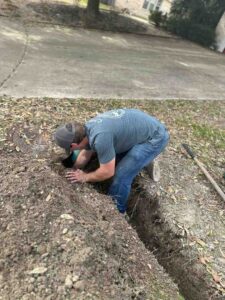
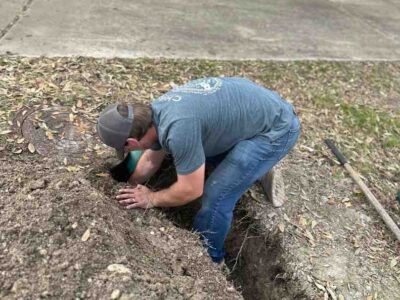
The benefits of trenchless technology for homeowners are hard to ignore — especially when the alternative means heavy machinery tearing up your lawn, driveway, or patio for days on end. If your sewer line is failing in Bloomington-Normal or the surrounding McLean County area, the last thing you want is weeks of property disruption on top of an already stressful situation.
Here is a quick look at the main benefits:
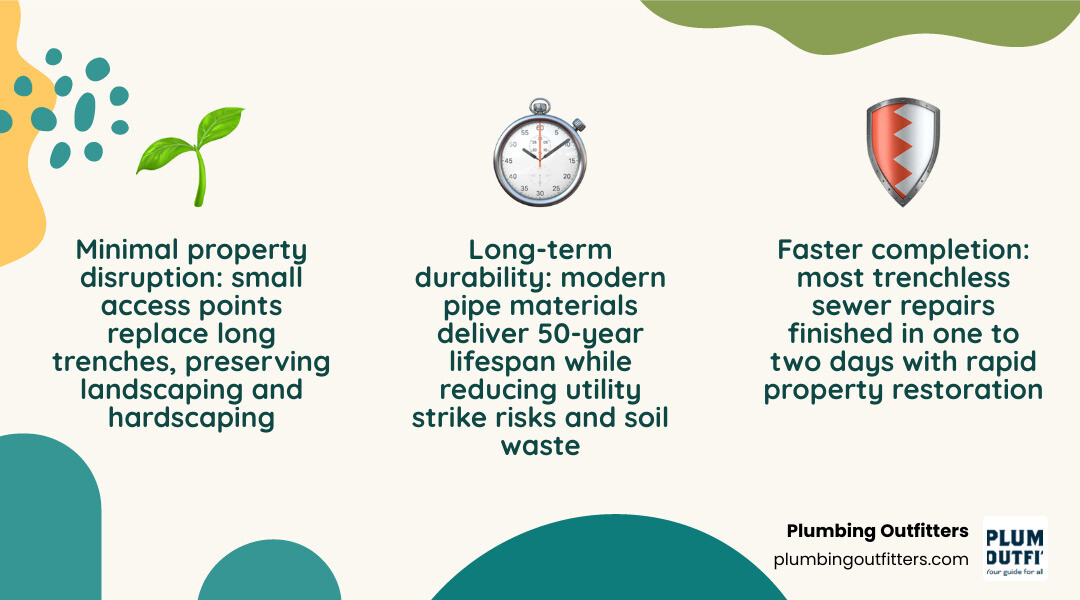
- Minimal property disruption — only small access points needed, no long trenches
- Faster repairs — most projects completed in one to two days
- Long-lasting results — modern materials rated for 50 years or more
- Lower total cost — avoids expensive landscaping, driveway, and hardscape restoration
- Reduced safety risks — isolates the target pipe, lowering the chance of utility strikes
- Environmentally friendly — less soil disturbance, less waste, less runoff
Traditional pipe replacement in Central Illinois can mean excavating hundreds of cubic feet of soil, tearing through mature landscaping, and leaving your property looking like a construction zone. Trenchless methods skip all of that. Using techniques like pipe lining and pipe bursting, a trained plumber can restore or replace your sewer line from the inside out — with minimal mess and disruption to your daily life.
Whether you are dealing with root intrusion, cracked pipes, or general aging infrastructure common in established McLean County neighborhoods, trenchless technology offers a smarter path forward.
What is Trenchless Technology?
Trenchless technology is a modern, minimally invasive family of methods used to install, replace, or repair underground utilities—including water and sewer lines—without digging long, deep trenches across your property. Instead of exposing the entire length of a buried pipe, we use advanced equipment to access the pipe through small, strategically placed entry and exit points.
For homeowners, this means the days of heavy excavators destroying your front yard are over. Whether we are dealing with a water main or a sewer lateral, trenchless solutions allow us to restore your plumbing system efficiently from the inside out. You can learn more about how this applies to your water supply in our guide, All About Trenchless Water Line Replacement.
The two primary residential trenchless methods are pipe lining (also known as Cured-in-Place Pipe, or CIPP) and pipe bursting. While both methods achieve the same goal—providing a highly durable, leak-free pipe—they work in entirely different ways.
To help you understand how these modern methods stack up against traditional excavation, here is a quick comparison:
| Feature | Traditional Excavation | Trenchless Technology (Lining/Bursting) |
|---|---|---|
| Excavation Level | Large open trenches across the entire pipe path | One or two small access pits |
| Average Timeline | 3 to 7+ days (excluding restoration) | 1 to 2 days |
| Property Damage | High (lawns, driveways, patios, walkways) | Minimal (confined to access points) |
| Material Lifespan | Varies, often susceptible to joints/roots | 50 to 100 years (seamless HDPE/Epoxy) |
| Restoration Costs | High (requires repaving, sodding, landscaping) | Low to none |
| Risk of Utility Strikes | Moderate to high due to extensive digging | Extremely low due to isolated pipe paths |
How Pipe Lining Works
Pipe lining, or Cured-in-Place Pipe (CIPP) lining, is essentially creating a brand-new, structural pipe right inside your old, damaged one. The process begins with a thorough cleaning of the existing line using high-pressure water jetting (hydro jetting) to clear out any tree roots, scale, and debris.
Once the pipe is clean, we take a flexible, felt-like tube saturated with a high-strength epoxy resin and pull or blow it into the damaged pipe. An internal bladder is then inflated, pressing the resin-coated liner firmly against the inner walls of the host pipe.
Over the course of several hours, the epoxy resin cures and hardens—often accelerated by heat, steam, or UV light. When the bladder is deflated and removed, it leaves behind a smooth, jointless, and incredibly durable new pipe. While this process slightly reduces the inner pipe diameter by about a quarter of an inch, the ultra-smooth surface of the epoxy resin actually decreases friction, which often improves your system’s overall flow characteristics.
How Pipe Bursting Works
When an old pipe is too severely damaged, collapsed, or misshapen to accept a liner, pipe bursting is the go-to alternative. Instead of rehabilitating the old pipe, pipe bursting replaces it entirely.
This process requires two small access pits: one at the entry point and one at the exit. We use a powerful hydraulic pulling machine to draw a heavy-duty steel cable through the old line. Attached to this cable is a cone-shaped tool called a “bursting head,” which is welded directly to a brand-new, seamless High-Density Polyethylene (HDPE) pipe.
As the hydraulic system pulls the bursting head through the old line, the cone-shaped head fractures and breaks apart the old, brittle pipe (such as cast iron, clay, or concrete), pushing the fragments safely into the surrounding soil. Simultaneously, the new HDPE pipe is pulled directly into the newly created void behind it. Once the pull is complete, you are left with a continuous, seamless pipe that is completely free of joints—the very spots where tree roots typically find their way in.
Key Benefits of Trenchless Technology for Homeowners

When you look at the big picture, the benefits of trenchless technology for homeowners extend far beyond just avoiding a mess. It changes the entire experience of dealing with a major home maintenance crisis. If you are comparing your options in McLean County, checking out our breakdown of Trenchless vs Traditional Pipe Replacement in Bloomington Normal can provide valuable local context.
Minimal Property Disruption
The most obvious benefit of trenchless technology is the preservation of your home’s exterior. Traditional excavation requires digging a trench along the entire length of your sewer lateral. If that line runs under your paved driveway, a stamped concrete patio, a retaining wall, or a mature Japanese maple, all of those features have to be demolished or removed.
With trenchless methods, we only need small access pits. This means we can replace or repair pipes running directly beneath:
- Paved or concrete driveways
- Patios and walkways
- Established landscaping and prized garden beds
- Porches and home foundations
By keeping the digging confined to small, controlled areas, you preserve your hardscaping and avoid the massive headache of hiring separate contractors to repave your driveway or rebuild your patio after the plumbing work is done.
Faster Completion Timelines
Traditional sewer line replacement can easily drag on for a week or more, especially when you factor in the time it takes to dig the trench, remove the old pipe, lay the new one, backfill the soil, and compact it. During this time, your water service may be limited, and your yard is a safety hazard.
Trenchless projects, by contrast, offer incredible project efficiency. Most pipe lining and pipe bursting jobs are completed in just a single day—and rarely take more than two. Because the process is so rapid, your daily routine is barely interrupted, and your plumbing system is back up and running with minimal downtime.
Long-Term Durability, Safety, and Environmental Advantages
Choosing trenchless technology is also a smart investment in the future value, safety, and environmental footprint of your property.
- 50-to-100-Year Lifespan: The materials used in trenchless applications are engineered to last. Seamless HDPE pipes and epoxy-cured liners are incredibly resilient. They do not rust, corrode, or degrade when exposed to harsh sewer gases or chemical household cleaners.
- Root Intrusion Prevention: Tree roots are the number-one cause of sewer line failures in established Bloomington-Normal neighborhoods, accounting for a huge portion of local pipe damage. Traditional pipes have joints every few feet, which naturally weaken over time and allow roots to slip inside. Because both CIPP liners and HDPE pipes are completely seamless, they eliminate joints entirely, making it virtually impossible for tree roots to invade the line.
- Fewer Utility Strikes: Digging blindly across a yard carries a high risk of hitting buried gas, electrical, or telecommunication lines. Trenchless methods isolate the target pipe. By pulling a new line directly through the old one, we avoid disturbing the surrounding soil, drastically improving safety for both our technicians and your household.
- Eco-Friendly Solutions: Traditional excavation requires heavy, diesel-burning machinery and involves hauling tons of excavated soil and old, contaminated pipe debris to landfills. Trenchless technology minimizes soil erosion, prevents damage to local tree root systems, and keeps waste out of landfills by leaving the old pipe fragments safely buried or rehabilitating the existing line in place.
If you suspect your water line is suffering from leaks or root damage, exploring our Services: Trenchless Water Line Replacement page can help you find a long-lasting, durable solution.
Frequently Asked Questions About Trenchless Sewer Repair
How do you know if your sewer line is actually failing? Before deciding on a repair method, look out for these common warning signs:
- Multiple slow drains throughout the house
- Frequent, unexplained sewer backups in tubs or basement drains
- Persistent, foul sewage odors in your yard or home
- Unusually lush, green patches of grass above your sewer line
- Sudden, unexplained wet spots or sinkholes in your lawn
If you notice any of these red flags, a professional inspection is the next step. Here are some of the most common questions we hear from homeowners in Central Illinois.
Can all sewer lines be repaired using trenchless methods?
While approximately 85% of residential sewer lines qualify for trenchless methods, they are not suitable for every single situation. If a pipe has completely collapsed, has a severe “belly” (a deep sag caused by shifting soil), or has extreme offset joints, a trenchless liner or bursting head may not be able to pass through.
This is why we always begin every project with a high-definition sewer camera survey. This camera inspection allows us to visually verify the structural integrity of your pipe and determine exactly which method will deliver the safest, most reliable result.
Does trenchless pipe lining reduce the pipe’s flow capacity?
It is a common concern that adding a layer of epoxy inside an existing pipe will restrict flow. However, the opposite is usually true. While CIPP lining does cause a minor reduction in the pipe’s inner diameter (typically about 1/4 inch), the new epoxy surface is incredibly smooth and joint-free. This drastically reduces internal friction and turbulence compared to old, rough cast iron or clay pipes. The improved flow characteristics more than make up for the tiny reduction in diameter.
How do I know if my home qualifies for trenchless repair?
The only way to know for sure is through a professional assessment. If you are dealing with slow drains or sewer odors in your McLean County home, our team can perform a high-definition camera inspection to look inside your pipes. We will assess the age, material, and layout of your plumbing system to see if pipe lining or pipe bursting is the right fit for your property.
Conclusion
When it comes to maintaining your home’s vital infrastructure, trenchless technology represents a massive leap forward. It protects your beautiful Central Illinois landscaping, saves you from expensive hardscape restoration, and delivers a seamless, root-resistant plumbing system designed to last for generations.
At Plumbing Outfitters, we are proud to provide dependable, high-quality plumbing solutions to our neighbors throughout Bloomington, Normal, and the surrounding McLean County communities. We bring our customer-first philosophy, multi-trade expertise, and 24/7 emergency availability to every single job.
If you are facing sewer line issues or want to learn more about how we can restore your pipes with minimal mess, check out our professional repiping services and schedule your high-definition camera inspection with us today!