

All About Trenchless Water Line Replacement
What Is Trenchless Water Line Replacement? A Homeowner’s Quick Guide
Trenchless water line replacement explained simply: it’s a modern method of repairing or replacing underground water pipes without digging a long trench through your yard, driveway, or landscaping. Instead of tearing up your property from one end to the other, technicians use just one or two small access points to do the job.
Here’s a quick snapshot of what you need to know:
- What it is: A no-dig approach to fixing or replacing damaged underground water lines
- Main methods: Pipe bursting (breaks old pipe while pulling in a new one) and pipe lining (creates a new pipe inside the old one using epoxy resin)
- How long it takes: Most residential jobs are completed in one to two days
- How long it lasts: New pipes and liners are designed to last 50 years or more
- Best for: Pipes under driveways, mature landscaping, patios, or any area where digging would cause major damage or expensive restoration
- Not ideal for: Pipes that are fully collapsed or severely misaligned, which may still require traditional excavation
If you’ve ever dealt with low water pressure, a soggy patch in the yard, or a sudden spike in your water bill, there’s a chance your underground water line is to blame. The traditional fix — digging a trench the full length of the damaged pipe — can mean days of disruption, torn-up grass, and costly repairs to your driveway or garden. Trenchless technology changes that equation entirely, letting licensed plumbers fix the problem with far less mess and far less time.
Trenchless Water Line Replacement Explained: How It Works

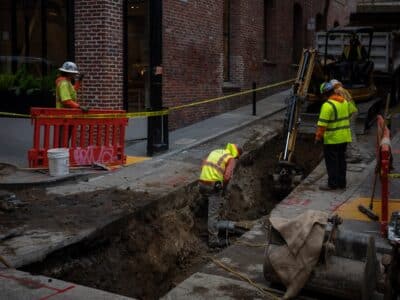
When we talk about the traditional way of fixing a water line, we’re talking about “open-cut” excavation. This involves a backhoe or a team of plumbers digging a deep, long trench from the city’s water main all the way to your home’s shut-off valve. If that line happens to run under your prize-winning rose bushes, your stamped concrete driveway, or your front porch, those things are usually coming up.
The trenchless water line replacement explained process is fundamentally different. Instead of a long trench, we create small “access pits” at the beginning and end of the pipe run. These pits are typically only a few feet square. From these two points, specialized equipment can either reline the existing pipe or pull a brand-new one through the old path.
This “no-dig” solution is a game-changer for homeowners in places like Austin, Round Rock, and Pflugerville, where established neighborhoods often have beautiful, mature trees and expensive hardscaping that would be a nightmare to replace. By focusing on these two entry points, we minimize the footprint of the repair on your daily life. If you are noticing signs of age in your home’s infrastructure, understanding the options for Replacing Your Plumbing Austin Plumbing Outfitters can help you choose the least invasive path forward.
Core Techniques: Pipe Bursting and Pipe Lining
Not every pipe failure is the same, which is why there are two primary ways we handle trenchless replacements. Both methods utilize high-tech materials designed for maximum durability. Whether we are using High-Density Polyethylene (HDPE) or epoxy resins, the goal is to leave you with a jointless, corrosion-resistant system. You can explore our full range of Services to see how these technologies fit into your home’s overall health.
Pipe Bursting in Trenchless Water Line Replacement Explained
Pipe bursting is a fascinating process that effectively “swaps” your old pipe for a new one in real-time. We use a conical metal tool called a “bursting head.” This head is attached to a high-strength cable or rod and pulled through your existing, damaged pipe.
As the bursting head moves through, it physically fractures or “bursts” the old pipe (whether it’s made of clay, cast iron, or old PVC) and pushes the fragments into the surrounding soil. Simultaneously, the head pulls a brand-new HDPE pipe right behind it. This new pipe is incredibly strong and flexible, and because it’s pulled through in one continuous piece, it has no joints where leaks or roots usually start. One of the biggest perks? Pipe bursting even allows us to “upsize” your water line if you need more capacity for a home renovation.
Pipe Lining in Trenchless Water Line Replacement Explained
Pipe lining, often called Cured-in-Place Pipe (CIPP), is more like creating a “pipe within a pipe.” Instead of replacing the old structure, we use it as a host. We take a flexible, felt-like sleeve saturated with a special epoxy resin and pull it through the existing line.
Once the sleeve is in place, we inflate it so it presses firmly against the inner walls of the old pipe. Over the next few hours, the resin cures and hardens, forming a new, structural pipe that is smooth, seamless, and incredibly tough. This method is excellent for fixing cracks, leaks, and root intrusion without changing the footprint of the original line. It results in a jointless construction that significantly improves flow capacity because the new inner surface is much smoother than aged, corroded metal.
Key Benefits of Choosing No-Dig Solutions
Choosing a trenchless approach isn’t just about avoiding a mess; it’s about making a smart investment in your property. In our experience serving the Greater Austin area, from Leander to Bastrop, homeowners consistently see several major advantages:
- Property and Landscape Preservation: This is the most obvious benefit. You don’t have to worry about the cost of re-sodding your lawn, replacing a driveway, or rebuilding a walkway. Your curb appeal stays intact.
- Incredible Longevity: The materials used in trenchless technology—HDPE and epoxy liners—have a life-use expectancy of at least 50 years. These materials don’t corrode like old galvanized steel or cast iron.
- Eco-Friendly Approach: Because we aren’t moving tons of earth, the carbon footprint of the project is much smaller. There is less fuel used by heavy machinery and less disruption to the local ecosystem and soil health.
- Faster Timelines: While a traditional trench job can take a week or more when you factor in the digging, the repair, and the backfilling, a trenchless job is often a “one liner per day” affair.
- Root Resistance: Since the new pipes are seamless and joint-free, tree roots (a common problem in Central Texas) have no way to “sniff out” water and break into the line.
For those living in newer developments or undergoing major renovations, our Repiping Services in Leander TX often utilize these modern approaches to ensure long-term reliability.
When to Choose Trenchless vs. Traditional Trenching
While we love trenchless technology, it isn’t a “magic wand” for every single situation. Sometimes, the old-fashioned way is still the best way. Here is a quick comparison to help you understand when each method shines:
| Feature | Trenchless Replacement | Traditional Trenching |
|---|---|---|
| Surface Disruption | Minimal (2 small pits) | High (full-length trench) |
| Project Duration | 1–2 days | 5–10 days (including restoration) |
| Pipe Condition | Best for intact but leaking/root-filled pipes | Required for fully collapsed or “bellied” pipes |
| Landscape Impact | Preserves mature trees and hardscaping | Requires significant landscape restoration |
| Visibility | Relies on camera technology | Full physical visibility of the line |
| Driveway Impact | Can go under driveways without cutting | Usually requires cutting through concrete/asphalt |
If your water line has completely collapsed or if the earth has shifted so much that the pipe is severely misaligned, a trenchless head might not be able to navigate the path. In those cases, we have to dig to fix the underlying structural issue. However, for most “old age” failures or root problems, trenchless is the superior choice. If you’re wondering about the overall state of your home’s water system, check out From Old to New: The Complete Guide to Repiping Your Leander Home for more context on modern plumbing updates.
Preparation and What to Expect During the Process
If you decide to move forward with a trenchless water line replacement, the process is very systematic. We don’t just start pulling pipes; we need to know exactly what we’re dealing with first.
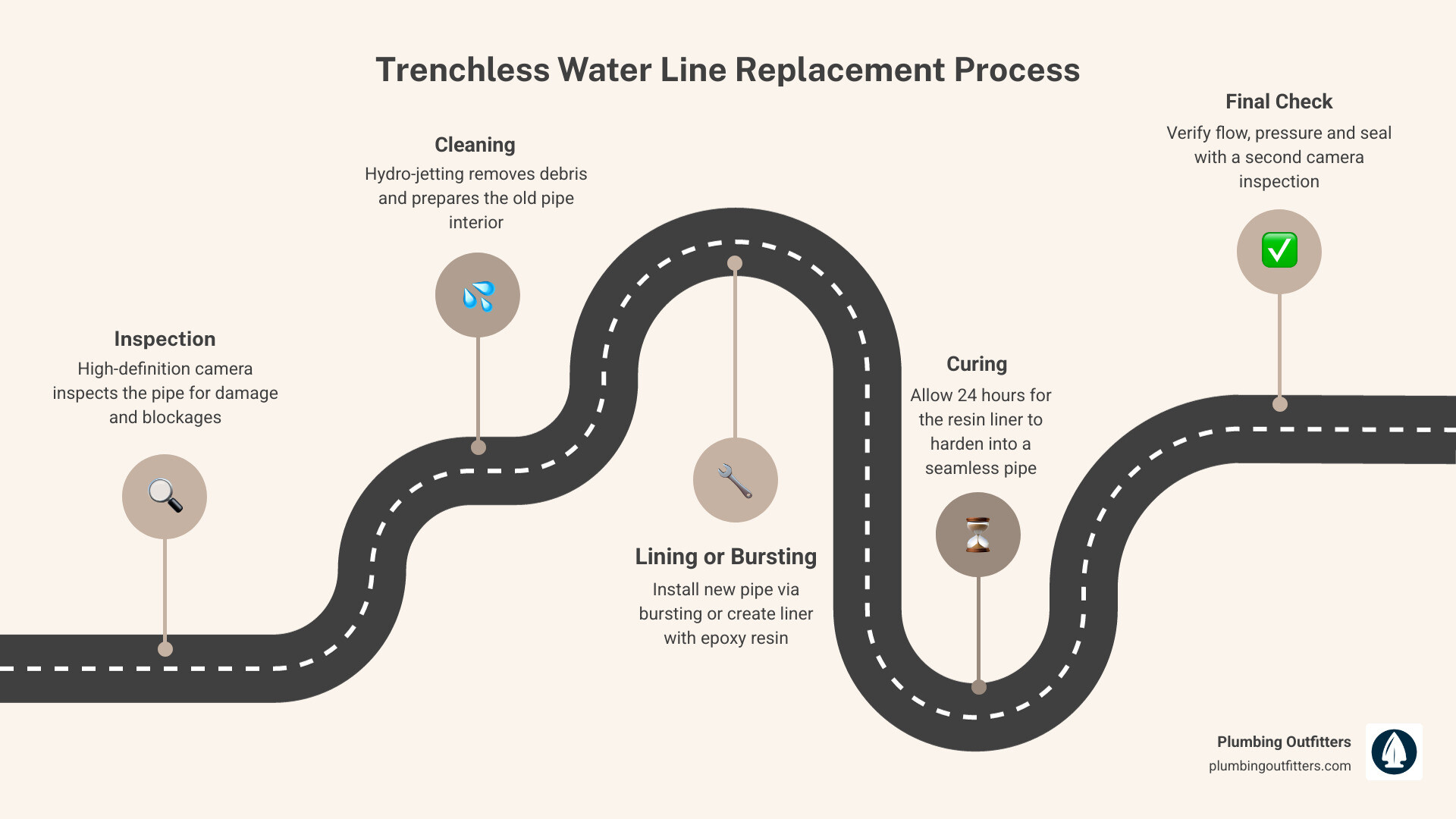
The first step is a High-Definition Video Inspection. We run a specialized camera through your line to map out the damage, locate any hidden obstructions, and confirm that the pipe is a good candidate for trenchless repair. Once we have a “map,” we often perform Hydro-jetting. This uses high-pressure water to scour the inside of the old pipe, removing scale, debris, and roots so the new liner or pipe has a clean path.
On the day of the replacement, we dig our small access pits and perform the bursting or lining. If we use a liner, it typically needs about 24 hours to fully cure and harden. During this time, we ask you to be mindful of water usage, though we work hard to minimize any inconvenience. Finally, we do one last camera inspection to ensure everything is perfect before we close up the access pits and leave your yard looking just like it did when we arrived. For a deeper dive into the timing of these projects, read How Long Does a Repipe Take? What Homeowners Should Know.
Frequently Asked Questions about Trenchless Water Line Replacement
How long does a typical trenchless project take?
For most residential homes in the Greater Austin area, the actual replacement is completed in a single day. A good rule of thumb is “one liner per day.” If the project is more complex—like a large commercial property or a home with a very long service line—it might take two days. This is significantly faster than the week or more required for traditional excavation and property restoration.
How durable are the results of trenchless replacement?
The results are exceptionally durable. The HDPE pipes used in pipe bursting and the epoxy resins used in pipe lining are designed to last at least 50 years. Because these materials are resistant to corrosion and chemical wear, they often outlast the original pipes they replaced. Furthermore, the seamless nature of the new line makes it nearly impossible for tree roots to cause future blockages.
Will I need to leave my home during the work?
In almost all cases, no. You do not need to move out. While there will be a period where your water service is temporarily shut off to make the final connections, we strive to keep this window as short as possible. We stagger our work to ensure you aren’t without facilities for more than a few hours.
Conclusion
At Plumbing Outfitters, we believe in providing “Texas Class Service” to our neighbors in Austin, Cedar Park, Georgetown, and throughout Central Texas. Dealing with a failing water line is stressful enough; the last thing you need is a giant trench splitting your yard in two. By utilizing trenchless water line replacement explained above, we can provide a long-lasting, high-tech solution that respects your property and your time.
Whether you’re in Taylor, Hutto, or West Lake Hills, we are here to provide upfront pricing and a trustworthy, neighborly experience. If you’re concerned about the health of your underground pipes, don’t wait for a soggy yard or a massive bill to take action. Understanding the details like How Much Does Residential Repiping Cost? is a great first step in planning your home’s maintenance.
Ready to see if your home is a candidate for a no-dig solution? Start Your Professional Repiping Service Today and let our experienced team give you the peace of mind you deserve.