
Why That Wet Spot in Yard Signals a Problem You Shouldn’t Ignore
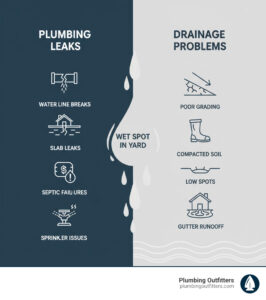
A wet spot in yard that never dries is more than an eyesore; it’s a sign of an underground problem. That soggy patch points to one of two main culprits: a hidden plumbing leak or a major drainage issue. For Austin homeowners familiar with shifting soil and extreme weather, figuring out the cause is key to preventing foundation damage, high water bills, and costly repairs.
Quick Answer: Common Causes of Wet Spots in Your Yard
- Underground pipe leak (water line, slab leak, or sprinkler system)
- Septic system or sewer line failure
- Poor yard drainage (low spots, compacted soil, or improper grading)
- Runoff from gutters or neighboring properties
If you suspect a plumbing issue, our guide on important signs that you have a water leak can help. For immediate assistance, schedule a service call with our experienced plumbers.
This guide will help you diagnose your soggy yard and find the right fix, whether it’s a simple DIY drainage solution or a professional repair for a hidden leak.

Step 1: Playing Detective – Is It a Plumbing Leak or a Drainage Problem?
Before you act, you need to determine the cause of the wet spot in yard. The fix for a broken pipe is very different from a drainage solution. Start by asking a few key questions. Is the spot always wet, or only after it rains? A constantly wet spot, even in dry weather, strongly suggests a plumbing leak. The location also provides clues—is it near the foundation, a sprinkler head, or your septic drain field? Finally, a sewage smell is a clear sign of a septic or sewer line problem.
For a broader look at leak symptoms, our article on Important Signs That You Have a Water Leak covers all the bases.
How to Identify a Main Water Line or Slab Leak
A leak in your main water line or under your foundation (a slab leak) can create a persistent wet spot in yard with no obvious signs indoors. Here’s how to identify them:
- Perform a water meter check. Turn off all water-using appliances and fixtures in your home. Find your water meter (usually near the street) and look for a small triangle or wheel. If it’s spinning, you have a leak. If there’s no leak indicator, write down the meter reading, wait 30 minutes without using water, and check again. If the numbers have changed, water is flowing somewhere.
- Check your water bill. A sudden, unexplained spike in your water bill is a classic sign of a hidden leak. We’ve seen Austin homeowners face shocking bills, like the Austin couple who faced a $3,000 water bill from an undetected leak.
- Listen for running water. In a quiet house, you might hear the faint sound of water running, which could be a leak.
- Feel for warm spots on the floor. A warm area on your floor can indicate a hot water line is leaking under your slab foundation. Our guide on Slab Leak Signs digs deeper into these leaks.
Telltale Signs of a Septic System or Sewer Line Failure
If your wet spot in yard is accompanied by a foul odor, you’re likely dealing with a septic or sewer issue. These problems pose health risks and require immediate attention.
- The smell is a dead giveaway. A persistent sewage odor around the wet area means wastewater is escaping. You can’t miss it, and it’s your cue to call a professional.
- Look for unusually green grass. A patch of lawn that is much greener and spongier than the rest of your yard may be getting “fertilized” by leaking sewage. This lush spot often appears over your septic drain field or sewer line.
- Check the drain field. If the wet spot is directly over your septic drain field, the system may be clogged or failing. Most septic tanks need pumping every 3-5 years to prevent this.
- Note indoor plumbing issues. Slow drains throughout your home, gurgling toilets, or backups all point to a main sewer line blockage or septic problem. Our article on 5 Common Signs You’re Having Sewer Problems covers these warnings.
Diagnosing Poor Yard Drainage
Sometimes, a wet spot in yard is simply water that can’t drain away. These issues are frustrating but often easier to fix than a pipe leak.

Key signs of poor drainage include:
- Standing water after rain: Puddles that remain for more than a day or two indicate a drainage problem. Soggy, squishy ground long after a storm is another sign.
- Low spots in your yard: Depressions act like bowls, collecting water that has nowhere to go.
- Improper grading: Your yard should slope away from your house. If it slopes inward, water will pool near your foundation.
- Downspout runoff: Gutters dumping large amounts of water in one spot will create a swampy area.
- Compacted soil: Heavy foot traffic or equipment can pack soil so tightly that water can’t penetrate, causing it to pool on the surface.
- Heavy clay soil: Common in Austin, clay soil drains very slowly. When wet, it becomes a sticky, water-holding mess, making your yard prone to soggy spots.
Tackling Drainage Issues: From Simple Fixes to Major Landscaping
Once you’ve ruled out a plumbing leak, you can focus on drainage solutions for your wet spot in yard. The fix can range from a simple weekend DIY project to professional landscaping, depending on the problem’s severity. For more ideas, check out this guide on How to Fix the Wet Spot in Your Yard.
Matching the solution to the problem is key. A small soggy patch from compacted soil may only need aeration, while a yard with poor grading requires a bigger-picture approach. Let’s explore your options.
DIY Solutions for a Minor Wet Spot in Your Yard
For smaller soggy spots, these DIY methods can improve how water moves through your soil:
- Lawn Aeration: Use a core aerator (rentable from home improvement stores) to pull small plugs of soil from the ground. This creates channels for water and air to penetrate compacted soil. It’s best to aerate in the spring or fall when the soil is moist.
- Top-Dressing with Compost: After aerating, spread a thin layer of compost over the area. The organic matter will improve soil structure and drainage over time as it works its way into the aeration holes.
- Amending with Gypsum: For Austin’s heavy clay soil, gypsum can help clay particles clump together, creating better drainage. Spread it according to package directions and water it in.
- Redirecting Downspouts: If your wet spot is at the base of a downspout, use extensions to carry roof runoff at least five to ten feet away from your foundation and to an area that can handle the water.
Long-Term Landscaping Solutions for Persistent Soggy Spots
For larger drainage challenges, more substantial landscaping solutions provide a permanent fix.

- French Drain System: This is a gravel-filled trench with a perforated pipe that collects and redirects groundwater. It requires at least a 1% slope to move water to a storm drain or a lower part of your property.
- Dry Well: An underground, gravel-filled pit that collects water from drains or downspouts and allows it to slowly percolate into the surrounding soil.
- Regrading Your Yard: For widespread issues or a yard that slopes toward your house, regrading is the most effective solution. It involves reshaping the land to create a gentle slope (at least 2%) that directs water away from your foundation.
- Creating a Swale: A shallow, vegetated ditch that slows and spreads stormwater, allowing it to soak into the ground. It’s a natural-looking and effective solution.
- Building a Rain Garden: A shallow depression planted with water-loving native plants. A rain garden temporarily holds and filters runoff from roofs and driveways, turning a drainage problem into a beautiful landscape feature.
- Water-Tolerant Plants for Texas: Plants that thrive in wet conditions include Cardinal Flower, Swamp Hibiscus, Buttonbush, Turk’s Cap, Inland Sea Oats, and Bald Cypress.
Addressing the Underground Culprit: Your Guide to a Plumbing-Related Wet Spot in Yard
If your detective work points to a plumbing leak causing the wet spot in yard, it’s time to address a serious infrastructure problem. Unlike drainage issues, a plumbing leak is urgent and requires professional expertise. Our Homeowners Guide to Quick and Effective Leak Detection can help you understand these hidden problems.
Immediate Steps for a Suspected Pipe Leak
If you suspect a pipe leak, act quickly to minimize damage.
- Shut Off Your Main Water Supply: This is the most critical step. Locate your main water shut-off valve (often near the meter or where the line enters your house) and turn it off completely.
- Document Everything: Take photos of the wet spot and your water meter reading. This information is useful for your plumber and any potential insurance claims.
- Don’t Start Digging: Resist the urge to find the leak yourself. You could hit other utility lines or worsen the problem. This is a job for a professional, as explained in our guide on Local Plumber or DIY: When to Call a Professional.
- Schedule a Professional Inspection: A licensed plumber has specialized equipment to pinpoint the leak without unnecessary digging, assess the damage, and provide repair options.
Common Causes of Underground Pipe Leaks and a Soggy Yard
Underground pipes are under constant stress. Here are common reasons they fail and create a wet spot in yard.

- Tree Root Intrusion: Tree roots seek out water and can invade pipes through tiny cracks, eventually growing large enough to break them.
- Shifting Texas Soil: Austin’s expansive clay soil shrinks when dry and swells when wet. This constant movement puts immense pressure on pipes, causing them to crack or separate.
- Old or Corroded Piping: Pipes don’t last forever. Older materials like corroded copper piping or cast iron can develop leaks as they age.
- Poor Installation: Improperly connected joints or pipes buried without adequate support can fail prematurely.
- Broken Sewer Pipes: Like water lines, sewer pipe breaks can be caused by roots, shifting soil, or age, releasing wastewater into your yard.
Why Ignoring a Leaky Pipe is a Costly Mistake
That wet spot in yard from a plumbing leak is a warning sign of potentially devastating and expensive problems. As our article on 5 Reasons Why Leak Detection Is Crucial to Catch Early On explains, ignoring it can lead to:
- Foundation Damage: Saturated soil can cause your home’s foundation to shift, crack, or settle, leading to repairs costing tens of thousands of dollars.
- Sinkholes and Erosion: The constant flow of water erodes soil, creating underground voids that can collapse into sinkholes. It can also undermine walkways, patios, and retaining walls.
- Sky-High Water Bills: A continuous leak wastes thousands of gallons of water, leading to shocking utility bills, like the Austin couple’s $3,000 water bill.
- Mold and Structural Risks: Persistent moisture can lead to mold growth and compromise the structural integrity of decks, patios, and other outdoor structures.
Acting quickly can save you thousands of dollars and protect the value and safety of your home.
Frequently Asked Questions about Wet Spots in the Yard
We’ve helped many Austin homeowners solve soggy yard mysteries. Here are answers to the most common questions we hear.
How can I tell if the wet spot is from a neighbor’s yard?
If your wet spot in yard might be coming from next door, here’s how to check:
- Observe Runoff: During or after a rainstorm, watch where the water flows. Does it run from your neighbor’s property onto yours? Does their sprinkler system overspray?
- Check Property Grading: If your yard is downhill from your neighbor’s, you will naturally receive some of their runoff.
- Have a Friendly Chat: Your neighbor may not be aware of the issue. A simple conversation can often lead to a cooperative solution.
If neighbor runoff is the cause, you can install a swale (a shallow channel) or a berm (a raised mound of soil) along the property line to intercept and redirect the water.
Can a new wet spot appear after removing a large tree?
Yes, this is surprisingly common. A large tree acts like a water pump, absorbing hundreds of gallons of water from the soil each year. When you remove the tree, that water is no longer being drawn out of the ground. The soil, previously kept drier by the tree’s roots, can become saturated, creating a new wet spot in yard.
This is especially true after removing thirsty trees like willows or oaks in areas with heavy clay soil. DIY drainage solutions like aeration and adding compost can help the area adjust.
How much does it cost to fix a wet spot in the yard?
The cost to fix a wet spot in yard varies widely based on the cause.
- DIY Drainage Fixes: These are the most affordable options. Renting an aerator or buying soil amendments like gypsum and compost might cost a few hundred dollars.
- Professional Landscaping: Installing a French drain can cost $500 to $3,000+, while major yard regrading can run several thousand dollars.
- Plumbing Leak Repair: Costs depend on the leak’s location and severity. Professional leak detection services can range from a couple hundred dollars and up. A complex repair like a slab leak can be costly, as detailed in our guide to Slab Leak Repair Costs.
Getting a professional assessment is the best first step. For plumbing issues, contact us for professional leak detection services. For drainage, consult a landscaper. Acting promptly is almost always cheaper than waiting.
Conclusion: Reclaim Your Yard from Soggy Spots
That persistent wet spot in yard is your property’s way of signaling a problem. Whether it’s a drainage issue or a hidden plumbing leak, understanding the cause is the first step toward a permanent solution. You now know how to investigate the issue, from checking your water meter to examining soil conditions.
The most important takeaway is not to wait. Ignoring a wet spot, especially one from a plumbing leak, can lead to severe consequences like foundation damage, high water bills, and other structural risks. Prompt action protects your property and your peace of mind.
At Plumbing Outfitters, we understand Austin’s unique soil and weather challenges. Our experienced plumbers provide “Texas Class Service,” using the latest leak detection technology and upfront pricing. If your investigation points to a plumbing problem, we’re here to help.
Contact us for professional leak detection services and let’s get your yard back to being the beautiful, dry space it should be.