

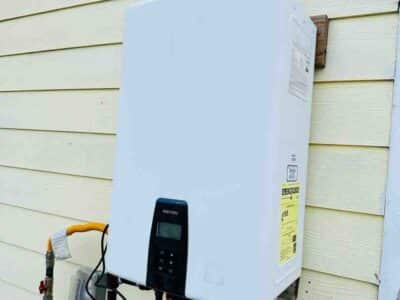
The End of the Tank: When to Replace Your Heater
How to Know When to Replace Your Water Heater (Before It Fails on You)
How to know when to replace your water heater is one of those things most Austin homeowners only think about after a cold shower catches them off guard. But your water heater gives off warning signs well before it completely breaks down — you just need to know what to look for.
Here’s a quick look at the most common replacement signals:
- Your unit is 10+ years old — ENERGY STAR recommends replacing storage water heaters past this point
- You’re seeing rusty or discolored hot water — likely internal tank corrosion
- You hear rumbling or popping noises — a sign of heavy sediment buildup
- You’re running out of hot water faster than usual — reduced tank efficiency
- Water is pooling around the base of the unit — tank leaks are not repairable
- Repairs are piling up — if you’ve called a plumber more than twice in the past year, replacement is likely smarter than another fix
- Your energy bills are climbing — aging units work harder and cost more to run
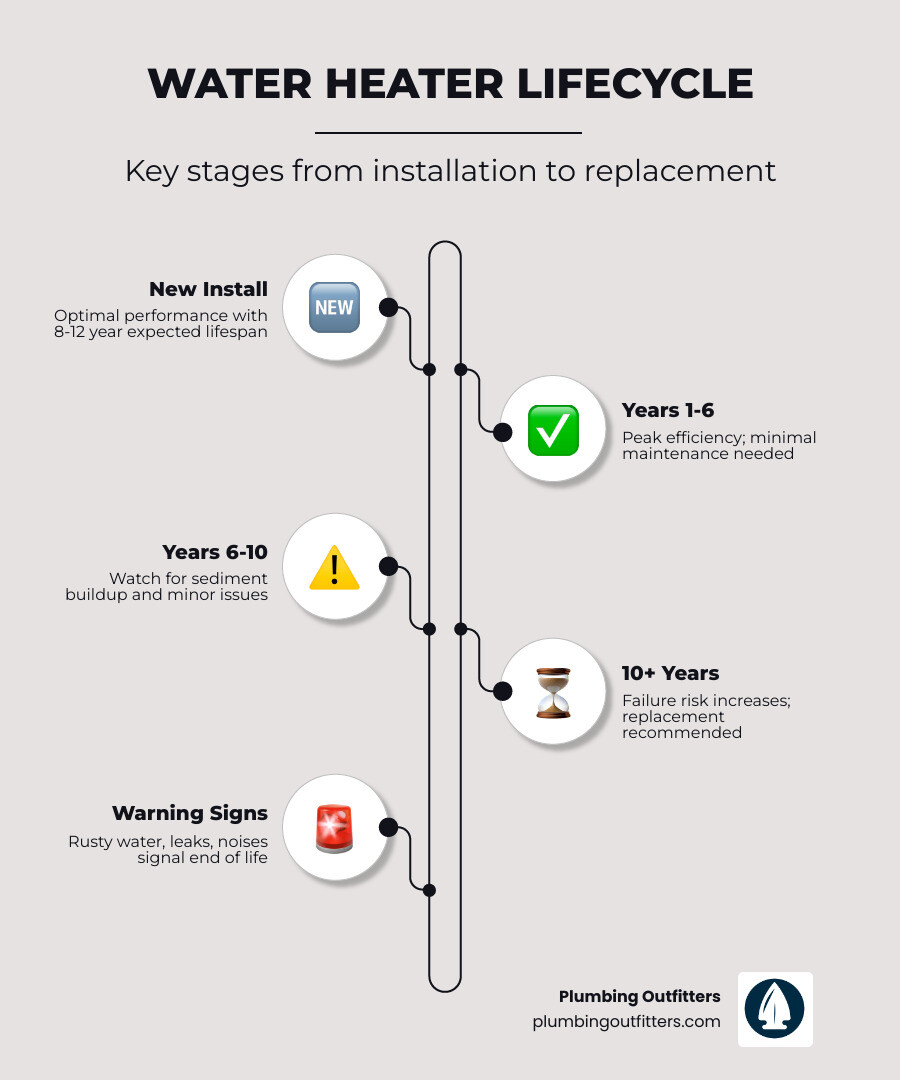
Most tank-style water heaters last between 8 and 12 years. After that window, the risk of failure climbs fast — and an unexpected breakdown can mean not just cold showers, but potential water damage to your home. As one home maintenance expert puts it, the average lifespan of a hot water heater is around 11 years, though that depends on the type of unit, your water quality, how much you use it, and how well it’s been maintained.
The good news? If you’re paying attention, your water heater will usually tell you when it’s time to go — long before you’re stuck dealing with a flooded utility room.
Understanding Lifespan and Age
When we visit homes in Round Rock or Pflugerville, the first thing we often check is the age of the unit. While a conventional water heater with a tank has an average lifespan of 8 to 10 years, some can stretch to 12 years with attentive maintenance and a bit of luck. However, research shows that serious dysfunction becomes much harder to avoid once you pass the 6-year mark.
If you have upgraded to a tankless system, you can breathe a bit easier. These modern units typically last up to 20 years. Regardless of the type, knowing exactly where your unit stands in its lifecycle is the first step in Services/Water Heater management.
How to Find Your Water Heater’s Age
Don’t worry if you don’t remember when the unit was installed; the tank holds the secrets to its own history. You just need to find the manufacturer’s label.
To decode the age, look for the serial number. Most manufacturers use a simple code:
- The Letter: The first letter usually represents the month (A = January, B = February, and so on).
- The First Two Numbers: These typically represent the year of manufacture.
For example, if a serial number starts with “D21,” the unit was likely manufactured in April 2021. As of April 2026, that unit would be five years old—right on the cusp of needing more frequent inspections. If your serial number indicates a date from 2014 or 2015, you are well into the “replacement window.” For those with gas units, there are specific Gas Water Heater Replacement What You Need To Know factors, such as venting and gas line integrity, that become more critical as the metal ages.
5 Critical Signs for How to Know When to Replace Your Water Heater
Recognizing the “red flags” can save you from a flooded garage in Cedar Park or a ruined closet in Leander. Here are the five most common indicators that your tank is nearing the end of the road.
Water Leaking Around the Base: This is the most definitive sign. Because metal expands and contracts as it heats and cools, tiny fractures can form over time. If you see water pooling, it often means the internal tank has cracked. What To Do When Your Water Heater Is Leaking involves shutting off the water immediately, as a leaking tank cannot be patched.
Rusty or Discolored Water: If you turn on the hot tap and see “tea-colored” or rusty water, but the cold water runs clear, the inside of your tank is likely corroding. This rust will eventually eat through the steel.
- Rumbling and Popping Noises: As water is heated, sediment at the bottom of the tank (minerals from our Central Texas water) hardens. This sediment layer agitates and “pops” as the burners heat the water through the crust. This isn’t just annoying; it causes the tank to overheat and wear out faster.
- Insufficient Hot Water: If your morning shower turns lukewarm halfway through, your unit is losing its capacity. This often happens because sediment has taken up all the space where hot water should be, or the heating elements are failing. Not Enough Hot Water This Can Help diagnose if it’s a simple fix or a total failure.
- Frequent and Costly Repairs: If you feel like you have your plumber on speed dial, it’s time to look at the numbers. We often suggest checking these 5 Signs To Replace Your Water Heater to see if you’re just throwing good money after bad.
What are the most common signs for how to know when to replace your water heater?
Beyond the big five, keep an eye out for visible corrosion on the top of the tank or around the pipes. Moisture or “sweating” on the outside of the unit can also signal a slow, hidden leak. Some homeowners even notice a metallic taste or smell in their hot water. If you’re constantly dealing with Five Signs Its Time To Replace Your Hot Water Heater, such as a pilot light that won’t stay lit on an old gas model, the internal components are likely degraded beyond a simple fix.
Does water quality affect how to know when to replace your water heater?
In Greater Austin, water quality is a massive factor. Our region is known for “hard water,” which is high in calcium and magnesium. These minerals settle in your tank, creating a thick layer of scale. This scale acts as an insulator, forcing the heater to work twice as hard to get the water to temperature.
One way to fight this is by Extending A Water Heaters Life through regular maintenance. Every tank has an “anode rod”—a sacrificial rod that “attracts” corrosion so the tank doesn’t have to. In hard water areas like Georgetown or Hutto, these rods can dissolve in just two to three years. Once the rod is gone, the water starts eating your tank.
Repair vs. Replacement: Making the Right Choice
Deciding whether to fix or flip your water heater can be tricky. We use a few “rules of thumb” to help our neighbors in Taylor and Manor make the best financial choice.
| Factor | Consider Repair | Consider Replacement |
|---|---|---|
| Age | Under 8 years old | Over 10 years old |
| Repair Cost | Minor (under $150-$400) | Major (over $450 or 50% of new unit) |
| Efficiency | Monthly bills are stable | Monthly bills are rising |
| Frequency | First time issue | Second or third time this year |
If you’re spending more than $50 a month on hot water and your unit is nearing a decade of service, the efficiency loss alone might justify a new one. Some issues, like a failed thermostat or a broken heating element, are simple fixes. However, if the tank itself is corroded, replacement is the only safe option. You can learn more about identifying these specific needs by checking 5 Signs You Need A Water Heater Repair Expert.
When you look at How Much Does Replacing A Water Heater Cost, remember to factor in the potential for water damage. A tank failure can lead to thousands of dollars in restoration costs. For many, the peace of mind that comes with a new Services/Tank Water Heater is worth the investment. Safety is also a concern; aging T&P (Temperature and Pressure) valves can fail, and on gas units, old burners can become fire hazards.
Upgrading for Efficiency and Performance
If you’ve decided it’s time for a change, April 2026 is a great time to look at modern upgrades. Technology has come a long way since your old tank was installed.
The Rise of Tankless and Heat Pumps
Many homeowners are moving away from traditional tanks. When comparing a Tankless Vs Tank Water Heater What S The Difference, the biggest benefit is “endless” hot water. Because tankless units heat water on demand, you don’t have to worry about the last person in the house getting a cold shower.
Other options include ENERGY STAR certified electric heat pump water heaters. These units are incredibly efficient, often saving a household of four more than $330 per year on electric bills. In fact, for a family of four, the energy savings can pay back the upfront cost difference in less than three years.
As of 2026, there are still significant federal tax credits (up to $2,000 for eligible heat pumps) and local utility rebates available for those who choose high-efficiency models. Upgrading to a Services/Tankless Water Heater or a heat pump isn’t just good for your wallet; it significantly reduces your home’s environmental footprint.
Frequently Asked Questions
How long does a typical water heater last?
A standard tank model usually lasts 8 to 12 years. Tankless units are more durable, often reaching 20 years. Your local water quality and how often you flush the tank will ultimately determine the “real” lifespan. High usage demands (like a household of six) will wear a unit out faster than a home with only two residents.
When should I call a professional plumber for an assessment?
You should call us if you notice a drop in performance, see any moisture around the unit, or hear strange noises. A professional diagnosis can often catch a small issue—like a dying anode rod—before it turns into a catastrophic tank failure. If you smell “rotten eggs” (gas) or see scorched metal near the pilot light, call a plumber immediately.
What are the benefits of a tankless system?
Besides endless hot water, tankless systems are much smaller, saving valuable floor space in your garage or utility room. They also eliminate the risk of a 50-gallon tank rupturing and flooding your home. While they require a bit more maintenance (like annual descaling), their long-term value and energy efficiency make them a top choice for Austin homeowners.
Conclusion
At Plumbing Outfitters, we believe in providing “Texas Class Service” to our neighbors throughout Greater Austin, from Liberty Hill to Elgin and down to West Lake Hills. We know that how to know when to replace your water heater can feel like a daunting question, but you don’t have to answer it alone.
Whether you’re in Round Rock dealing with hard water scale or in Bastrop looking to upgrade to a more efficient system, our team is here to provide a trustworthy, neighborly experience. We pride ourselves on upfront pricing and professional assessments that help you make the right choice for your home and your budget.
Don’t wait for a cold morning or a flooded floor to take action. Schedule your water heater service today and let our experienced plumbers ensure your home stays comfortable and dry.