


Spring Plumbing Tasks for Texas Homes and Beyond
Why a Spring Plumbing Inspection Checklist Matters for Texas Homes
A spring plumbing inspection checklist gives Texas homeowners a simple, step-by-step way to catch plumbing problems before they turn into costly emergencies. Here’s a quick overview of what to inspect this spring:
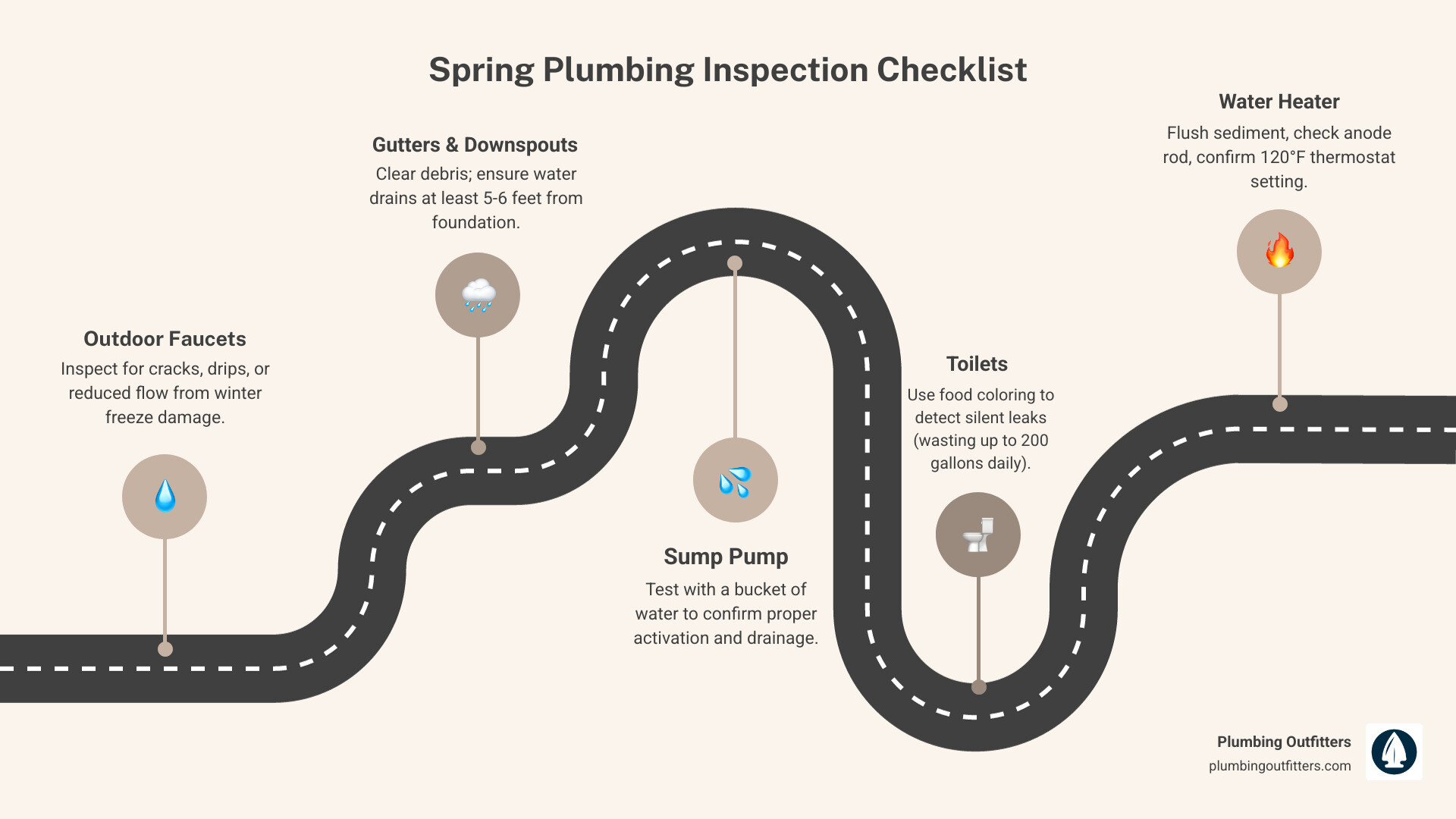
- Outdoor faucets and hose bibs – Check for cracks, drips, or reduced flow from winter freeze damage
- Gutters and downspouts – Clear debris and confirm water drains at least 5-6 feet from your foundation
- Sump pump – Pour a bucket of water into the pit to confirm it activates and drains properly
- Toilets – Use the food coloring test to detect silent leaks that can waste up to 200 gallons per day
- Water heater – Flush sediment, check the anode rod, and confirm the thermostat is set to 120°F
- Exposed pipes and under-sink areas – Look for moisture, corrosion, or discoloration around joints and connections
- Washing machine hoses – Replace rubber hoses older than five years with braided stainless steel
- Water meter – Turn off all water and watch the meter for movement, which signals a hidden leak
- Water pressure – Use a gauge to confirm pressure stays between 40-60 PSI
- Sewer lines – Watch for slow drains or gurgling sounds, especially if mature trees grow near your property
Even in Texas, where winters are milder than most, freeze-thaw swings — like the kind Greater Austin sees — can quietly stress pipes, loosen joints, and set up plumbing failures that only show up once spring water use picks back up. Add in heavy spring rains, tree roots waking up and seeking moisture, and the fact that regular maintenance can prevent up to 70% of plumbing failures before they become emergencies, and it becomes clear why a seasonal checkup is worth your time. Whether you’re a longtime Austin homeowner or new to the area, running through this checklist now can save you from an expensive surprise when summer demand peaks.
Why Every Homeowner Needs a spring plumbing inspection checklist
As we move into April 2026, it is easy to forget the stress our pipes endured during the colder months. In Texas, we often experience “yo-yo” weather—those sudden shifts from freezing nights to warm afternoons. These freeze-thaw cycles cause pipes to expand and contract repeatedly. Even if a pipe didn’t burst in January, that constant movement can loosen joints, weaken seals, and create hidden cracks that don’t leak until you start using more water in the spring.
Utilizing a spring plumbing inspection checklist isn’t just about finding leaks; it’s about water conservation and system longevity. Did you know that regular maintenance can prevent up to 70% of plumbing failures before they become full-blown emergencies? By catching a small drip today, you’re not just saving a few pennies on your water bill; you’re potentially extending the lifespan of your entire plumbing system by up to 10 years.
We’ve seen it time and again in places like Round Rock and Pflugerville: a homeowner ignores a tiny damp spot in April, only to face a catastrophic pipe failure during the heat of July. Taking a proactive approach now ensures your home stays dry and your wallet stays full. For more detailed guidance on getting started, check out these 6 Helpful Spring Plumbing Tips to keep your system running smoothly.
Outdoor Faucets and Foundation Drainage
In the Greater Austin area, our soil is famous (or perhaps infamous) for its high clay content. This means it expands and contracts significantly based on moisture levels. Proper drainage is the first line of defense for your home’s foundation. If water pools near your slab because of clogged gutters or short downspouts, you aren’t just looking at a muddy yard—you’re looking at potential foundation shifts that can snap underground plumbing lines.
Spring is the perfect time to tackle Five Plumbing Projects To Tackle This Spring, starting with your home’s exterior. Clear out the winter debris from your gutters and ensure your downspout extensions direct water at least 5 to 6 feet away from the foundation. If you notice water lingering in the yard long after the rain stops, it might be time to look into professional services/drains to ensure your property is shedding water correctly.
Outdoor Faucet Care and Your spring plumbing inspection checklist
Outdoor hose bibs are particularly vulnerable to winter damage. If a hose was left attached during a freeze, water trapped inside the faucet could have cracked the pipe inside the wall. You won’t know it’s broken until you turn the handle and water starts pouring into your drywall instead of your garden hose.
A simple “thumb test” can help you identify hidden damage. Place your thumb firmly over the spigot opening and turn the water on. If you can easily stop the flow of water with your thumb, it’s a sign that pressure is escaping somewhere else—likely through a crack inside the pipe behind the wall. While you’re at it, check the spigot washers for wear and ensure your vacuum breakers (those little brass caps on top of the faucet) aren’t leaking or stuck.
Sewer Line and Yard Drainage Checks
Spring is “growing season” in Texas, and as trees in Georgetown and Cedar Park wake up from their winter dormancy, their roots go on a hunt for moisture. Your sewer line, full of nutrient-rich water, is a prime target. About 30% of all clogs start with tree root intrusion into older sewer lines.
If you notice slow drains, gurgling sounds coming from your toilets, or unexplained “marshy” spots in your lawn, these are major red flags. Catching these early with a professional camera inspection can prevent a messy backup during your first spring backyard BBQ. Understanding The Most Common Summer Plumbing Problems How To Spot Them can help you identify if your yard issues are seasonal or structural.
Indoor Fixtures and Appliance Care
Moving inside, the spring plumbing inspection checklist turns toward the “heart” of the home. We recommend a “leak safari”—a thorough walkthrough where you check every visible pipe. Look under every sink in your home, from the master bath in West Lake Hills to the utility room in Taylor. You’re looking for more than just active puddles; look for green corrosion (verdigris), white mineral deposits, or dampness on the cabinet floor.
Pay close attention to your supply lines. If you still have old plastic or rubber hoses connecting your sinks and toilets, consider upgrading to braided stainless steel. These are far more durable and much less likely to burst under pressure.
Don’t forget the sump pump if your home has one (common in certain low-lying areas or homes with basements/crawl spaces). Use the “bucket method” to test it: pour about five gallons of water into the pit. The pump should activate quickly, drain the water, and shut itself off without making unusual grinding noises. If you find any moisture where it shouldn’t be, our services/leaks team can help pinpoint the source before it causes mold growth.
Testing Toilets with a spring plumbing inspection checklist
A leaky toilet is one of the most common causes of high water bills in Texas. A “silent leak”—where water trickles from the tank into the bowl—can waste up to 200 gallons of water every single day. That is enough to fill a large hot tub every week!
To test your toilets, use the food coloring method. Drop a few drops of blue or red food coloring into the toilet tank (not the bowl) and wait about 30 minutes without flushing. If the color appears in the bowl, your flapper valve is leaking and needs to be replaced. It’s a cheap, 5-minute fix that can save you a fortune over the course of the year.
Water Heater and Appliance Maintenance
Your water heater worked overtime during the winter, heating up much colder intake water than it deals with in the summer. This extra work often leads to sediment buildup at the bottom of the tank. Sediment acts as an insulator, making the heater less efficient and potentially causing the tank to overheat and fail prematurely.
We recommend an annual sediment flush. While you’re at it, check the anode rod—this is a “sacrificial” rod that attracts corrosion so your tank doesn’t have to. If it’s heavily depleted, replacing it can add years to your heater’s life. For safety and efficiency, ensure your thermostat is set to the “Goldilocks” temperature of 120°F. This is hot enough to kill bacteria but cool enough to prevent scalding and save on energy. Check out our Top Tips For Spring Water Heater Maintenance for a deeper dive, or visit our Services/Water Heater page if you notice rust or inconsistent temperatures.
Finally, check your washing machine hoses. Rubber hoses deteriorate over time and should be replaced every five years. If yours are bulging or cracked, swap them for braided stainless steel versions immediately to avoid a catastrophic indoor flood.
Detecting Hidden Leaks with Your Water Meter
One of the most powerful tools in your spring plumbing inspection checklist is sitting right out by the curb: your water meter. This is the best way to find “ghost leaks” that are hidden behind walls or under your foundation.
To perform a meter test, make sure every water-using appliance in your home is turned off—no dishwasher, no laundry, and no one flushing toilets. Go out to your meter and look at the “low-flow indicator” (often a small red or silver triangle or star). If that dial is spinning even slightly while everything is off, you have a leak. If your meter is digital, check the reading, wait two hours without using any water, and check it again. Any change in the numbers confirms a hidden problem. This is a crucial step in identifying The Top 5 Summertime Plumbing Issues To Look Out For, as small leaks often worsen when temperatures rise.
Frequently Asked Questions about Spring Plumbing
What is the ideal water pressure for a home, and how do I check it?
The “sweet spot” for residential water pressure is between 40 and 60 PSI (pounds per square inch). Anything below 40 PSI will result in a weak, unsatisfying shower. However, high water pressure—anything over 80 PSI—is like “hypertension” for your plumbing. It puts immense stress on your joints, valves, and appliances like your dishwasher and water heater, significantly increasing the risk of a burst.
You can check this yourself with a simple pressure gauge that screws onto an outdoor faucet. If your pressure is consistently high, you may need a professional to inspect or install a Pressure Regulating Valve (PRV).
How often should I clean gutters and downspouts to prevent foundation damage?
In Central Texas, we recommend a bi-annual cleaning—once in the spring and once in the late fall. Debris removal is essential because clogged gutters cause water to overflow and fall directly against your home’s slab. Over time, this leads to soil erosion and foundation “ponding,” which can cause your foundation to settle or crack, eventually snapping the plumbing lines buried beneath it. Keeping water moving away from your home is the cheapest way to protect your plumbing infrastructure.
When should I call a professional plumber instead of doing DIY checks?
While many items on a spring plumbing inspection checklist are DIY-friendly, some “red flags” require professional diagnostics. You should call us if you experience:
- Persistent Clogs: If a drain stays slow even after you’ve cleared the trap.
- Discolored Water: Rusty or brown water can indicate failing pipes or a dying water heater.
- Main Valve Failure: If you can’t easily turn off your main water shut-off valve in an emergency.
- Unexplained High Bills: If your meter test shows a leak but you can’t find a puddle anywhere.
- Gurgling Sounds: If your drains “talk” back to you, it often signals a venting issue or a main sewer line blockage that a plunger can’t fix.
Conclusion
Taking the time to run through a spring plumbing inspection checklist is one of the smartest things a Texas homeowner can do. Whether you’re in Austin, Bastrop, or Liberty Hill, the unique climate and soil of the Hill Country demand a proactive approach to home maintenance. By catching small issues in April, you ensure your home is ready for the heavy demands of a Texas summer.
At Plumbing Outfitters, we are proud to provide “Texas Class Service” to our neighbors throughout Greater Austin, including Hutto, Leander, and Round Rock. From advanced leak detection to water heater repairs, our experienced plumbers offer upfront pricing and a trustworthy, neighborly experience. Don’t wait for a small drip to become a big disaster. If you’ve found something concerning during your spring checkup, visit our services page or give us a call today. We’re here to help you keep your home running smoothly all season long!