
Why Slab Leaks Are a Hidden Threat to Austin Homes
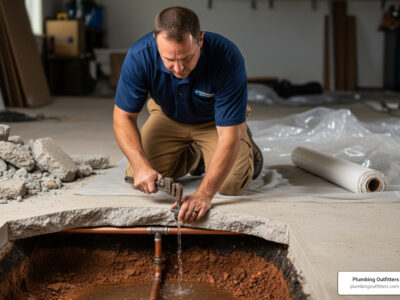
Slab leak repair in austin, tx is something many homeowners don’t think about until they spot a wet carpet, an unexplained spike in their water bill, or mysterious warm spots on their floor. A slab leak happens when the water pipes running beneath your home’s concrete foundation start to leak. Because these pipes are hidden under several inches of concrete, the damage can go unnoticed for weeks or even months—silently eroding your foundation, wasting water, and creating conditions for mold growth. In Austin, where many homes are built on concrete slab foundations to deal with the area’s expansive clay soil, slab leaks are more common than you might think.
Quick Answer: What to Do if You Suspect a Slab Leak
- Look for warning signs: Unexplained high water bills, the sound of running water when all fixtures are off, hot spots on floors, cracks in walls, damp carpets, or soggy spots in your yard
- Call a licensed professional immediately: Slab leaks require specialized detection equipment like acoustic listening devices and thermal imaging cameras
- Don’t attempt DIY fixes: Accessing pipes under a concrete slab requires expertise to avoid damaging your foundation
- Act fast: Early detection and repair prevent thousands of dollars in foundation damage, soil erosion, and mold remediation
If you’re looking for trusted plumbing services in Austin, Plumbing Outfitters offers expert detection and repair using non-invasive methods. For immediate help, schedule a slab leak inspection today.

The Unique Challenge of Slab Leaks in Austin
Austin is a beautiful place to call home, but it presents some unique challenges for homeowners, especially when it comes to plumbing. Many homes in Austin and surrounding areas like Bastrop, Cedar Park, Georgetown, Hutto, Leander, Round Rock, and Taylor are constructed with slab-on-grade foundations. This architectural choice is common due to its durability and the ability to mitigate unstable soil conditions. However, it also means that when a leak occurs in the plumbing lines embedded within or beneath this concrete slab, it becomes a literal hidden threat.
The very ground beneath our feet, Austin’s expansive clay soil, plays a significant role in the prevalence of slab leaks here. This soil type, typically high in clay content and low in organic matter, is highly reactive to moisture fluctuations. When filled with water, it expands and rises, putting immense pressure on the concrete slabs above. Conversely, during dry spells, the soil contracts, which can cause the foundation to settle or shift. This constant movement, or soil shifting, can cause a slab foundation to crack and buckle, and unfortunately, it also puts incredible stress on the plumbing pipes running through or under the slab.
Beyond the dynamic soil, Austin’s water itself can contribute to slab leak issues. Areas with particularly hard water, like Austin, can lead to corrosion inside pipes over time. This aggressive water chemistry can slowly wear away at pipe materials, creating pinhole leaks or weakening them to the point of rupture.
For residents in Austin, understanding these local factors is the first step in protecting your home from the silent, destructive force of a slab leak.
Why Austin’s Soil is a Major Factor
Let’s dive a little deeper into why Austin’s geology makes us particularly susceptible to slab leaks. The expansive soil properties of our region mean that the ground is constantly moving, albeit often imperceptibly. During heavy rains, the clay absorbs moisture, swells, and pushes upwards against your home’s foundation. During extended dry periods, the clay loses moisture, shrinks, and pulls away, causing the foundation to settle. These wet and dry cycles create continuous foundation movement.
This constant push and pull translates directly into stress on plumbing lines. Pipes that are designed to be static are instead subjected to bending, flexing, and shifting. Over time, this stress can cause pipes to crack, separate at joints, or even abrade against the concrete or gravel surrounding them. Hot water pipes are particularly vulnerable to abrasion damage due as they expand and contract with temperature changes, rubbing more frequently against their surroundings.
Adding to this vulnerability, many older homes in our service areas like Elgin, Granger, Liberty Hill, Manor, Pflugerville, Rockdale, and Temple were built with copper pipes. While durable, these older copper systems are more susceptible to degradation and corrosion, especially when combined with Austin’s hard water and the relentless pressure from shifting clay soil. This combination creates a perfect storm for developing slab leaks, making early detection and professional slab leak repair in austin, tx absolutely essential.
Identifying the Telltale Signs of a Slab Leak
Slab leaks are sneaky. They often start small, deep within your foundation, making them difficult to spot until significant damage has occurred. However, your home often sends out distress signals if you know what to look for. We encourage all homeowners to be vigilant about these common indicators.
One of the most obvious,, signs is an unexplained high water bill. If your water usage habits haven’t changed, but your bill suddenly skyrockets, it’s a strong indicator that water is escaping somewhere it shouldn’t be. Another common sign is the sound of running water when all fixtures are off. This phantom gurgling or dripping can be unnerving and points directly to a leak in your pressurized water lines. Sometimes, a slab leak can also manifest as low water pressure at your faucets, as water is diverted elsewhere.
We’ve put together a comprehensive list of common slab leak symptoms and other important signs that you have a water leak to help you identify a problem early.
Physical Clues Inside and Outside Your Home
Beyond the general indicators, a slab leak often leaves physical clues that are harder to ignore:
- Hot Spots on the Floor: If you notice unusually warm spots on your floor, especially concrete or tile, it could indicate a leak in a hot water line beneath the slab. The escaping hot water heats the concrete above it.
- Cracks in Walls or Flooring: The pressure from escaping water can cause the soil beneath your foundation to erode or shift, leading to foundation movement. This movement often manifests as new or growing cracks in interior walls, exterior brick veneer, or even in the concrete slab itself.
- Damp Carpets or Warped Hardwood Floors: Water seeping up through the slab can saturate carpets, leading to dampness, mildew, or discoloration. For homes with hardwood floors, moisture can cause warping, buckling, or lifting of floorboards.
- Mildew or Musty Odors: Hidden moisture from a slab leak creates a perfect breeding ground for mold and mildew. If you notice a persistent musty or damp smell in your home, particularly near the floor or walls, it could be a sign of a hidden leak.
- Soggy Spots in the Yard or Uneven Plant Growth: If water is leaking from a pipe under your slab and making its way to the surface, you might notice mysterious soggy spots in your yard near the foundation, even when there hasn’t been rain. Conversely, some areas of your landscaping might show unusually lush or uneven plant growth due to the constant water supply.
Any of these signs warrant immediate investigation. The sooner a slab leak is detected, the less damage it will cause to your home and your wallet.
The Importance of Professional Slab Leak Detection and Repair in Austin, TX
When it comes to a suspected slab leak, a professional assessment isn’t just recommended—it’s crucial. The hidden nature of these leaks means that without specialized tools and expertise, you risk misdiagnosis, further damage, or even injury. We strongly advise against attempting DIY repairs for slab leaks. Cutting into a concrete slab without pinpointing the exact leak location can lead to unnecessary structural damage, costly cosmetic repairs, and potentially hitting other pipes or utility lines.
A professional plumber, especially one experienced in slab leak repair in austin, tx, understands the local challenges and has the right technology to accurately locate the problem. We believe in providing solutions that are not only effective but also minimize disruption to your home. That’s why we emphasize the importance of early detection, as outlined in our guide on 5 Reasons Why Leak Detection is Crucial to Catch Early On.
Advanced Non-Invasive Detection Methods
Gone are the days when plumbers had to indiscriminately jackhammer through your floor to find a leak. Modern technology allows us to pinpoint leaks with remarkable accuracy, often without causing any damage to your home in the process. Our team uses a suite of advanced non-invasive detection methods, ensuring a precise and efficient diagnosis:
- Electronic Listening Devices (Acoustic Detection): These highly sensitive devices amplify the faint sound of water escaping from a pipe under pressure. By listening carefully and systematically across your slab, our technicians can home in on the exact location of the leak.
- Thermal Imaging Cameras: Leaks in hot water lines create temperature differentials on the surface of your slab. Thermal cameras detect these subtle temperature changes, revealing the path and source of the hot water leak.
- Static Leak Isolation Testing: This method involves isolating sections of your plumbing system and pressurizing them to determine which line, or even which segment of a line, is experiencing a pressure drop, indicating a leak.
- Electromagnetic Pipe Equipment: These specialized tools allow us to accurately trace the path of pipes embedded in your slab. This is invaluable for understanding the layout of your plumbing and identifying anomalies.
These sophisticated techniques, which we discuss further in our Top Leak Detection Methods for Quick Home Solutions, drastically reduce the need for exploratory demolition, saving you time, money, and stress.
Potential Consequences of an Ignored Leak
Ignoring a slab leak is akin to ignoring a slow-motion disaster unfolding beneath your home. The consequences can be far-reaching and incredibly costly:
- Structural Foundation Damage: This is perhaps the most severe outcome. The constant saturation of soil beneath your foundation can lead to soil erosion, creating voids or causing differential settlement. This foundation movement can lead to significant structural issues, including dropping, tilting, or twisting of your home’s foundation.
- Widespread Water Damage: Water doesn’t just stay put. It can seep up through your slab, damaging flooring, baseboards, drywall, and even furniture. This leads to extensive repair and restoration costs.
- Mold and Mildew Growth: Hidden moisture from a slab leak creates the perfect environment for mold and mildew to thrive. These can spread rapidly, causing unpleasant odors, further property damage, and potentially impacting indoor air quality and health.
- Health Hazards: Chronic exposure to mold and mildew can exacerbate allergies, asthma, and other respiratory issues, making your home an unhealthy environment.
- Compromised Property Value: A history of unresolved or poorly repaired slab leaks can significantly diminish your home’s market value and make it difficult to sell.
Early detection and professional slab leak repair in austin, tx are not just about fixing a pipe; they’re about protecting your entire home and your investment.
Understanding Your Slab Leak Repair Options
Once a slab leak has been accurately located, the next step is determining the best course of action for repair. There isn’t a one-size-fits-all solution; the ideal method depends on factors like the leak’s severity, location, the type of pipe, and the age of your plumbing system. Our goal is always to provide a lasting solution with minimal disruption to your home. We offer a comprehensive range of services to address these complex issues.
Here’s a comparison of common slab leak repair methods:
| Repair Method | Pros | Cons |
|---|---|---|
| Spot Repair | Direct fix, targets only the leak. Potentially quickest and least expensive if leak is isolated. | Requires breaking the concrete slab, which can be invasive and cause cosmetic damage. Risk of future leaks in other parts of old piping. |
| Pipe Rerouting | Avoids breaking the slab. Replaces a section or entire line with new piping. Can improve water flow. | More extensive than spot repair. May involve cutting into walls or ceilings. Can be more costly. |
| Pipe Lining/Epoxy Coating | Non-invasive (no slab breaking). Seals existing pipes from the inside. | Not suitable for severely damaged or collapsed pipes. May be a temporary fix for major structural pipe issues. |
Common Methods for slab leak repair in austin, tx
- Spot Repair (Direct Access Repair): This involves carefully breaking through the concrete slab directly above the leak to access and repair the damaged section of pipe. While it’s the most straightforward approach for an isolated leak, it does require excavation and subsequent concrete patching and flooring repair.
- Pipe Rerouting (Repiping): For more extensive damage, multiple leaks, or an aging pipe system, rerouting might be the best long-term solution. This involves abandoning the leaking pipe under the slab and installing a new pipe through the walls or ceiling, bypassing the foundation entirely. This method avoids breaking the slab and can provide a completely new, reliable water line.
- Trenchless Pipe Lining (Epoxy Coating): This innovative, non-invasive method is gaining popularity. It involves inserting a new, durable liner into the existing pipe or applying an epoxy coating to the pipe’s interior. The liner or coating hardens, creating a new, seamless pipe within the old one. This is particularly effective for widespread pinhole leaks and avoids any need for excavation.
- Under-Slab Repiping: Similar to rerouting, this involves replacing the entire problematic water line. Depending on the situation, this can be done by tunneling under the slab or by rerouting the new lines through the home’s structure.
How to Prevent Future Slab Leaks
While we can’t control Austin’s expansive clay soil, there are proactive steps homeowners can take to minimize the risk of future slab leaks:
- Annual Plumbing Inspections: Regular check-ups by a professional plumber can identify early signs of stress or minor leaks before they escalate into major problems. We can perform comprehensive checks and water pressure tests that may indicate a brewing slab leak.
- Water Pressure Regulators: High water pressure can put excessive stress on your plumbing system, accelerating wear and tear. A pressure regulator ensures your home’s water pressure remains within a safe range, protecting your pipes.
- Water Softeners for Hard Water: Given Austin’s hard water, installing a water softener can reduce mineral buildup and mitigate the corrosive effects of aggressive water chemistry on your pipes, extending their lifespan.
- Maintaining Proper Yard Drainage: Ensure that water drains away from your home’s foundation. Proper grading and functioning gutters prevent excessive moisture from accumulating around and under your slab, which can exacerbate soil movement.
Taking these preventative measures, as highlighted in our Best Ways to Prevent a Slab Leak, can save you significant headaches and expenses down the line. Finding a reliable Austin plumber to protect your home is your first line of defense.
Frequently Asked Questions about Austin Slab Leaks
We understand that dealing with a potential slab leak can be daunting. Here are some common questions we hear from homeowners in Austin and our service areas:
How do I know for sure if I have a slab leak?
While the signs we’ve discussed are strong indicators, the only way to know for sure if you have a slab leak is through professional detection. Our technicians use advanced diagnostic tools to confirm the presence and exact location of a leak. We encourage you to consult our Homeowner’s Guide to Quick and Effective Leak Detection for more insights, but ultimately, professional assessment is key. Don’t let uncertainty fester; an accurate diagnosis is the first step toward peace of mind.
How long does slab leak detection typically take?
The duration of slab leak detection can vary depending on several factors. Typically, our non-invasive detection process takes around 1 to 3 hours. This timeframe can be influenced by the complexity of your home’s plumbing system, the size of your slab, the number of potential leak points, and how elusive the leak might be. Rest assured, we work efficiently and thoroughly to pinpoint the issue as quickly as possible.
What should I look for in a company for slab leak repair in austin, tx?
Choosing the right partner for slab leak repair in austin, tx is paramount. Here’s what we recommend looking for:
- Licensed and Insured: Always verify that the plumbing company is fully licensed and insured. This protects you and ensures they meet professional standards.
- Experience with Austin Soil Conditions: Due to our unique clay soil, experience with local geological challenges is invaluable. Look for a company that understands how Austin’s environment impacts slab foundations and plumbing.
- Use of Modern Technology: A reputable company will use advanced, non-invasive leak detection equipment to minimize damage and ensure accuracy.
- Upfront Communication: You deserve clear, honest communication about the problem, the proposed solutions, and what to expect throughout the repair process. We pride ourselves on upfront pricing and transparent explanations.
- Positive Reviews and Reputation: Check online reviews and testimonials. A company with a strong track record of satisfied customers is a good indicator of reliable service.
For more tips, check out our guide on How to Find the Best Austin, TX Plumber.
Your Trusted Partner for Austin Slab Leak Solutions
Slab leaks are more than just an inconvenience; they’re a serious threat to the integrity and value of your home. The unique geological conditions in Austin, coupled with the hidden nature of these leaks, make early detection and professional slab leak repair in austin, tx absolutely essential. Waiting to address a suspected leak only allows the damage to worsen, potentially leading to costly foundation repairs, extensive water damage, and health hazards from mold.
For Texas Class Service you can trust, the experienced plumbers at Plumbing Outfitters are ready to help. We combine our deep understanding of Austin’s specific challenges with cutting-edge, non-invasive detection technology and effective repair methods. Our commitment is to provide you with a trustworthy, neighborly experience, ensuring your home’s plumbing is sound and your foundation protected.
If you suspect a slab leak, don’t wait for the damage to worsen. Contact a professional for expert Slab Leak Detection and Repair Austin, Texas today. We’re here to offer solutions and peace of mind for homeowners across Austin and our service areas, including Bastrop, Cedar Park, Elgin, Georgetown, Granger, Hutto, Leander, Liberty Hill, Manor, Pflugerville, Rockdale, Round Rock, Taylor, and Temple.