

From Cold Showers to Warm Solutions: Solving Your West Lake Hills Water Heater Issues
Your First Step When Your Water Heater Acts Up
If you’re dealing with a water heater problem west lake hills tx homeowners face every day, you’re not alone. Whether your morning shower turned icy, strange noises are coming from your tank, or you’ve spotted a puddle near your unit, water heater issues disrupt your daily routine fast. West Lake Hills homes deal with unique challenges from hard Hill Country water that accelerates wear and tear on heating systems.
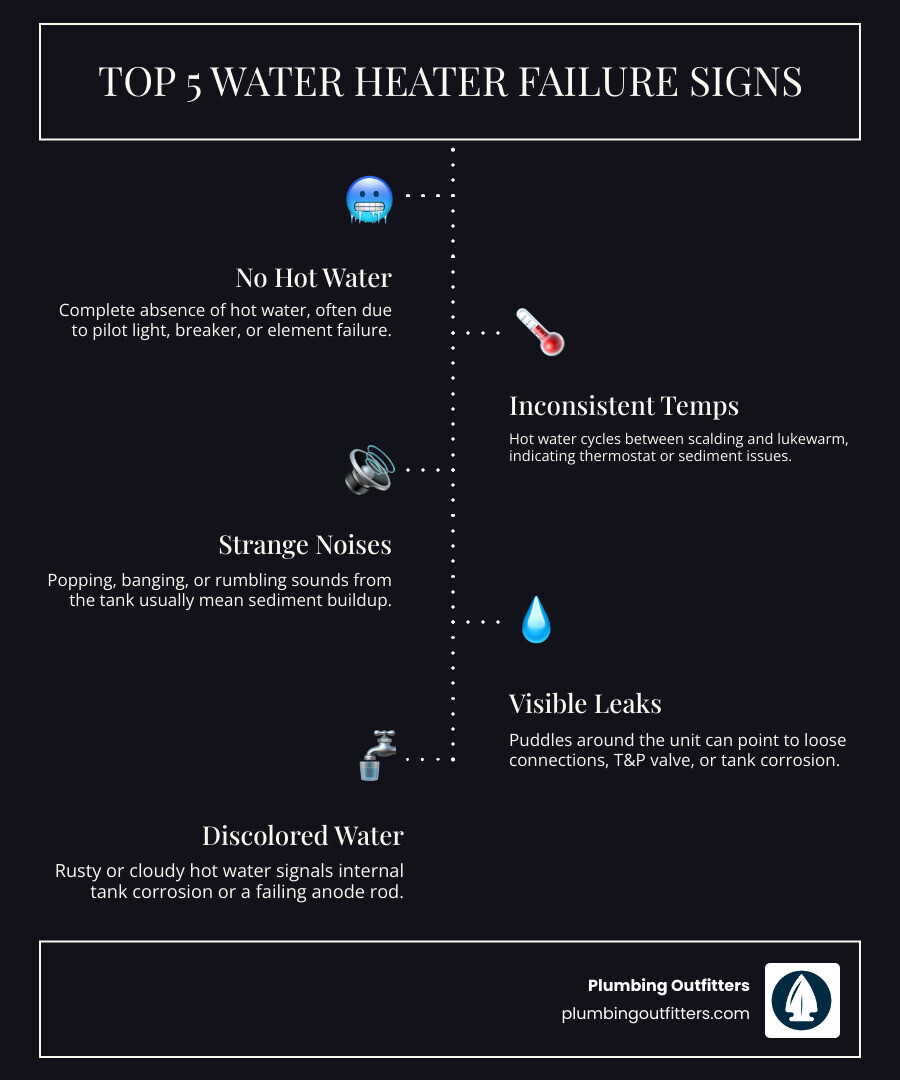
Quick diagnosis guide for common water heater problems:
- No hot water – Check pilot light (gas) or circuit breaker (electric), then heating elements
- Inconsistent temperatures – Likely thermostat failure or sediment buildup
- Strange noises (popping, banging) – Sediment accumulation on tank bottom
- Leaks or moisture – Inspect connections, T&P valve, and tank for corrosion
- Rusty or discolored water – Sign of internal tank corrosion or anode rod failure
For comprehensive guidance on water heater maintenance and repair, visit our water heater services page, and when you need immediate professional help, contact Plumbing Outfitters for fast, reliable service in West Lake Hills.
Most water heater problems in West Lake Hills stem from age, hard water damage, or component failure. Gas water heaters typically last 8-10 years, while electric models run 10-15 years. The good news? Many issues are fixable when caught early, and knowing what to look for helps you act before a minor problem becomes a major headache.
Identifying Common Water Heater Problems in West Lake Hills
When your water heater starts acting up, it’s not just an inconvenience; it’s a sign that something is amiss. Recognizing these warning signs early can save you from a complete system breakdown and potentially costly damage to your home. In West Lake Hills, we often see specific indicators that tell us a water heater is struggling. From lukewarm water to strange noises or even outright leaks, each symptom points to a particular water heater problem west lake hills tx residents commonly encounter.
Let’s explore the common red flags that signal it’s time to call in the professionals.
Common Signs of a water heater problem in west lake hills tx
No Hot Water or Inconsistent Temperature: This is perhaps the most obvious and frustrating sign. If your shower turns icy cold without warning, or the water never reaches a satisfactory temperature, it’s a clear indication. Inconsistent temperatures (lukewarm, icy cold, or boiling hot) are a key indicator of a problem. This could be due to a failed heating element, a faulty thermostat, or issues with the pilot light in gas units. If you’re experiencing a lack of hot water, our guide, Not Enough Hot Water? This Can Help!, offers valuable insights.
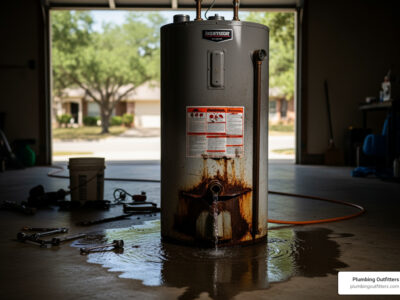
Leaks and Moisture: Any visible moisture around your water heater is a cause for concern. A small puddle at the base could indicate anything from a loose connection to a more serious tank corrosion. While condensation can sometimes be mistaken for a leak, it’s always best to have it professionally checked. Leaks can stem from loose fittings, a faulty temperature and pressure relief (TPR) valve, or even cracks in the tank. If you find a leak, our article What to Do When Your Water Heater is Leaking provides immediate steps to take.
Strange Noises: Water heaters aren’t known for their melodic qualities, but unusual sounds like popping, banging, rumbling, or hissing are definite warning signs. These noises often suggest sediment buildup at the bottom of the tank, which hardens and makes sounds as it’s heated.
Discolored Water: If the hot water coming from your taps appears rusty, brownish, or has a metallic odor, it often points to corrosion inside the tank or a deteriorating anode rod. Discolored hot water can also be a sign of sediment buildup, which can lead to corrosion and leaks if not addressed promptly.
For a deeper dive into these issues, our experts have compiled 5 Signs You Need a Water Heater Repair Expert.
What Causes Leaks and Failure?
Understanding the root causes of water heater issues can help you prevent them or address them more effectively. Here are the most common culprits behind leaks and system failures:
Corroded Tank: Over time, the inside of your water heater tank can corrode, especially if the anode rod (which protects the tank) has worn out. This corrosion can lead to leaks and eventually a complete tank failure.
Faulty T&P Valve: The temperature and pressure relief (T&P) valve is a crucial safety device designed to release water if pressure or temperature inside the tank becomes too high. If this valve malfunctions, it can leak or, worse, fail to prevent a dangerous situation. A faulty TPR valve is a common cause of leaks.
Loose Connections: Vibrations and normal wear and tear can cause fittings and pipe connections to loosen over time, leading to drips and leaks. These are often easier to fix but can cause significant water damage if ignored.
Worn Anode Rod: The anode rod is often called the “sacrificial rod” because it attracts corrosive elements in the water, protecting the tank lining. Once it’s fully consumed, the tank itself becomes vulnerable to corrosion. A worn anode rod can be a precursor to a corroded tank.
Sediment Buildup: This is a particularly prevalent issue in the Texas Hill Country due to hard water. Minerals in the water settle at the bottom of the tank, forming a layer of sediment. This buildup reduces efficiency, can cause strange noises, and can even lead to corrosion and leaks over time. We’ll dig deeper into this issue next.
When these signs become frequent or severe, it might be time to consider a replacement. Our article, 5 Signs to Replace Your Water Heater, offers guidance on this critical decision.
How Texas Hill Country Hard Water Affects Your System
Living in West Lake Hills means enjoying beautiful landscapes, but it also means dealing with the realities of Texas Hill Country water – which is notably hard. Hard water contains high concentrations of dissolved minerals, primarily calcium and magnesium. While these minerals aren’t harmful to consume, they can wreak havoc on your plumbing system, especially your water heater.
As water is heated, these minerals precipitate out and form hard deposits known as scale. This scale builds up on heating elements, tank walls, and pipes, leading to a cascade of problems for your water heater. Sediment buildup is especially common with the hard water found in the Hill Country.
The consequences of hard water on your water heater include:
- Reduced Efficiency: Scale acts as an insulator, making it harder for the heating elements to transfer heat to the water. Your water heater has to work harder and longer to heat the same amount of water, consuming more energy.
- Clogged Lines: Over time, mineral deposits can narrow the pipes leading to and from your water heater, restricting water flow and reducing water pressure.
- Tank Corrosion: Sediment buildup can create an environment where corrosion thrives, especially if it settles unevenly. This can lead to premature tank failure and leaks.
- Premature Component Failure: Heating elements, in particular, can become encased in scale, leading to overheating and early failure.
Understanding this impact is crucial for extending your water heater’s life. Our experts share tips in Extending a Water Heater’s Life.
The Impact of Sediment and Scaling
Sediment and scaling are direct consequences of hard water, and their effects on your water heater’s performance are significant:
- Lower Efficiency and Higher Energy Bills: As mentioned, scale on heating elements forces your unit to use more energy to achieve the desired water temperature. This directly translates to higher utility bills, as your water heater becomes less efficient.
- Rumbling Noises: The distinctive popping, banging, or rumbling sounds you hear from your water heater are often caused by water getting trapped beneath the layer of sediment at the bottom of the tank. As this water heats, it boils and bursts through the sediment, creating these noises. These strange noises are typically caused by sediment accumulation.
- Reduced Capacity: A thick layer of sediment takes up space inside the tank, effectively reducing its hot water storage capacity. This means you might run out of hot water faster than usual.
- Premature Failure: The constant stress of heating through sediment, combined with potential corrosion, significantly shortens the lifespan of your water heater. What might last 10-15 years could fail much sooner in a hard water environment without proper care.
To combat these issues, professional flushing and descaling services are essential. Regular maintenance helps remove these mineral deposits, restoring efficiency and extending the life of your unit.
Repair vs. Replacement: Making the Right Choice
When faced with a water heater problem west lake hills tx, one of the biggest dilemmas is whether to repair your existing unit or invest in a new one. This decision depends on several factors, including the age of your water heater, the frequency and cost of repairs, and its overall energy efficiency.
Deciding on a water heater problem west lake hills tx solution
Age Factor: This is often the most significant indicator. According to industry statistics, electric water heaters typically last 10-15 years, while gas water heaters last between eight and 10 years. If your water heater is over a decade old, it’s more prone to breakdowns and inefficiency. If your unit is approaching or has exceeded its typical lifespan, replacement often makes more economic sense than repeated repairs.
Frequency of Repairs: If you’re calling for repairs every few months, the cumulative cost can quickly add up to the price of a new unit. Investing in a new, more reliable water heater can save you money and headaches in the long run.
Extent of Damage: Minor issues like a faulty thermostat or a leaking T&P valve are often repairable. However, major problems like a corroded tank or a significant leak might necessitate replacement, as repairing these can be complex, expensive, and may not guarantee long-term reliability.
Energy Efficiency: Older water heaters are significantly less energy-efficient than modern models. Even if your old unit is still functional, replacing it with a new, energy-efficient model can lead to substantial savings on your utility bills, offsetting the initial cost of replacement. It’s always wise to consider energy efficiency when choosing a new water heater.
While we can’t give specific pricing, our article How Much Does Replacing a Water Heater Cost? can help you understand the factors involved in estimating replacement expenses. For gas water heaters specifically, our guide Gas Water Heater Replacement: What You Need to Know offers valuable insights.
We can help you weigh these factors and provide an honest assessment to help you make the best decision for your home and budget.
Your Guide to Water Heater Solutions and Prevention
Preventing a water heater problem west lake hills tx is always better than reacting to one. Regular maintenance is key to extending the life of your unit, ensuring efficiency, and catching potential issues before they escalate.
Here are essential maintenance tasks for your water heater:
- Annual Flushing: This is crucial, especially in West Lake Hills with its hard water. Flushing your tank annually removes accumulated sediment, preventing efficiency loss, strange noises, and corrosion. Preventing sediment buildup is one of the most important maintenance steps you can take.
- Anode Rod Check: Have your anode rod inspected every few years. This “sacrificial” rod protects the tank from corrosion. Replacing a worn rod can significantly extend your tank’s life.
- Temperature Setting Check: Ensure your thermostat is set to 120°F. This temperature is hot enough for most household needs, prevents scalding, and reduces energy consumption.
- Leak Inspection: Regularly check around your water heater for any signs of leaks or moisture. Early detection can prevent significant water damage.
- T&P Valve Test: Test your T&P (temperature and pressure relief) valve annually to ensure it’s functioning correctly. This is a critical safety device.
For more detailed guidance, check out our Top Tips for Spring Water Heater Maintenance.
Choosing Your Next Water Heater
If replacement is the best option, you’ll want to consider the different types of water heaters available today. Each has its own advantages, and the best choice for your West Lake Hills home depends on your specific needs, budget, and energy preferences.
| Feature | Tank Water Heaters | Tankless Water Heaters | Hybrid Water Heaters |
|---|---|---|---|
| Hot Water Supply | Stores a limited amount; can run out during peak demand. | Endless hot water on demand; never runs out. | Combines tank with heat pump; efficient, consistent. |
| Energy Efficiency | Less efficient; constant reheating of stored water. | Highly efficient; heats water only when needed. | Very efficient; uses ambient air to heat water. |
| Installation Cost | Lower upfront cost. | Higher upfront cost. | Moderate to high upfront cost. |
| Operating Cost | Higher due to standby heat loss. | Lower due to on-demand heating. | Significantly lower due to heat pump technology. |
| Lifespan | 8-15 years (gas 8-10, electric 10-15). | 20+ years. | 10-15 years. |
| Space Required | Large tank; takes up significant space. | Compact; mounts on a wall. | Similar footprint to tank, but often taller. |
| Maintenance | Annual flushing; anode rod check. | Annual flushing/descaling; air filter cleaning. | Annual flushing; air filter cleaning. |
| Pros for WHL | Reliable, lower initial cost. | Energy savings, endless hot water, space-saving. | High efficiency, good for larger homes. |
Tank Water Heaters: These traditional units store and heat a large volume of water. They are generally less expensive to install and reliable, providing a steady supply of hot water until the tank is depleted. We offer comprehensive Tank Water Heater Services to keep your traditional unit running smoothly.
Tankless Water Heaters: Also known as on-demand water heaters, these units heat water directly as it flows through, eliminating the need for a storage tank. They offer endless hot water, significant energy savings, and a longer lifespan. Tankless models are also more eco-friendly. For a detailed look at the benefits, see Top Benefits of Switching to a Tankless Water Heater. Our team is expert in Tankless Water Heater Services.
Hybrid Water Heaters: These units combine elements of conventional tank water heaters with the energy-saving benefits of a heat pump. They draw heat from the surrounding air to warm the water, making them highly efficient.
When making your choice, consider your household size, hot water demand, available space, and long-term energy savings. Our guide Tankless vs. Tank Water Heater: What’s the Difference? can help clarify your options. We can help you assess your needs and recommend the best, most energy-efficient solution for your West Lake Hills home.
Why Choose a Local West Lake Hills Plumber
When you’re dealing with a water heater problem west lake hills tx, choosing a local plumber like us offers distinct advantages that national chains simply can’t match. We’re not just service providers; we’re your neighbors, deeply familiar with the unique challenges and characteristics of this beautiful area.
Local Expertise: We understand the specific environmental factors of West Lake Hills, such as the impact of hard Hill Country water on water heaters. This local knowledge allows us to diagnose and address problems more accurately and efficiently. Our plumbers are familiar with the types of homes and existing plumbing infrastructure common in the area, which streamlines the repair and installation process.
Faster Response Times: When your hot water goes out, you need help fast. As a local company, we can offer quicker response times, especially for emergency situations. Being part of the community means we’re nearby and ready to respond promptly when you need us most.
Personalized Service: We pride ourselves on offering “Texas Class Service” — a neighborly experience where you’re treated with respect and transparency. We take the time to explain the problem, outline your options, and provide upfront pricing, ensuring you’re fully informed every step of the way.
Professional Diagnosis and Quality Workmanship: Our experienced plumbers are equipped with the knowledge and tools to provide professional diagnosis and quality installation. We stand by our work, offering warranties and guarantees on our services, giving you peace of mind that the job is done right.
Emergency Services: Water heater emergencies don’t stick to a 9-to-5 schedule. That’s why we offer emergency water heater services, ensuring that help is available when you need it most, minimizing disruption to your daily life.
Choosing local means choosing a partner who understands your community and is committed to providing reliable, high-quality service right here in West Lake Hills.
Your Trusted Partner for Hot Water Solutions
Dealing with a water heater problem west lake hills tx can be stressful, but with the right partner, it doesn’t have to be. We’re here to ensure your West Lake Hills home always has reliable hot water, whether that means a quick repair, a comprehensive maintenance check, or a brand-new installation.
Our team offers professional assessments, expert repairs, and quality installations, all delivered with the “Texas Class Service” you deserve. We’re dedicated to providing trustworthy, neighborly service with upfront pricing, so you always know what to expect.
Don’t let a cold shower ruin your day or a leaky tank damage your home. For all your water heater needs, from routine maintenance to emergency repairs and new installations, we are your trusted local experts.
For expert help with your water heater in West Lake Hills, contact our team today. Let us bring warmth and comfort back to your home!