

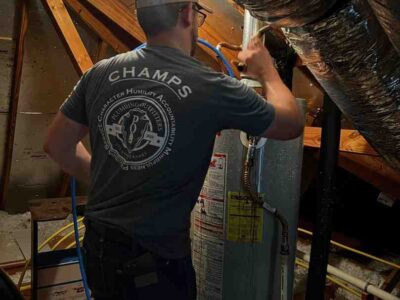
Flush It Good: Why Your Water Heater Needs a Spring Reset
Why Checking Your Water Heater in Spring Is One of the Smartest Home Moves You Can Make
Checking your water heater in spring is one of the easiest ways to avoid cold showers, high energy bills, and costly repairs down the road. Like your HVAC system or furnace, your water heater works hard every single day — and after a long Texas winter, it deserves a closer look.
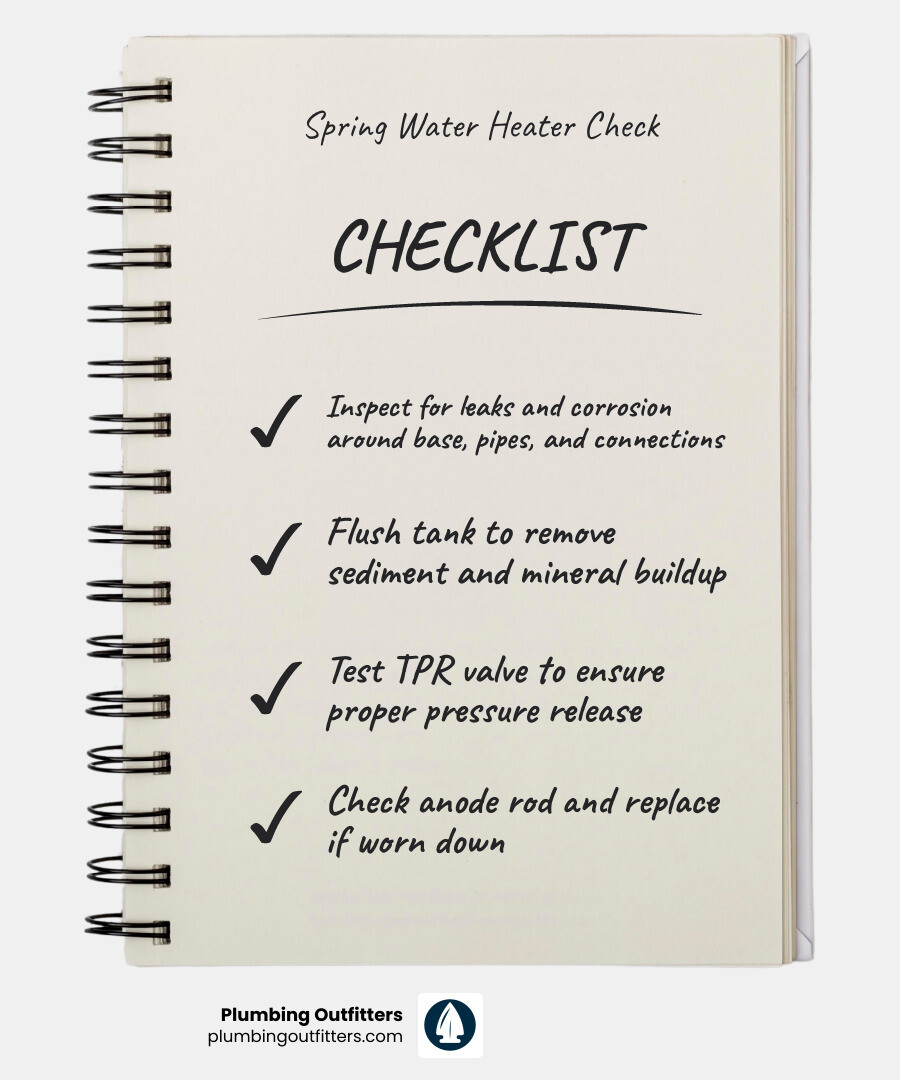
Here is a quick overview of the key steps for a spring water heater checkup:
- Inspect for leaks and corrosion around the base, pipes, and connections
- Flush the tank to clear out sediment and mineral buildup
- Test the Temperature and Pressure Relief (TPR) valve to confirm it releases properly
- Check the anode rod and replace it if it is worn down
- Verify the temperature setting is at or around 120°F
- Inspect pipe and tank insulation for gaps or damage
- Look up the age of your unit — if it is over 10 years old, factor that into your decision to repair or replace
Most of these checks take under an hour and can prevent major problems before they start. Your water heater quietly powers every hot shower, load of laundry, and dish cycle in your home. When it fails, you notice immediately — but with a little attention each spring, you can keep it running efficiently for years longer.
Spring is also the natural sweet spot for this kind of maintenance. Your water heater has just come through its hardest season, with colder incoming water and heavier household demand driving up wear and tear. Now that temperatures are rising across the Austin area, it is the perfect window to reset, inspect, and prepare the system for the months ahead.
Why Spring Water Heater Maintenance Protects Your Home Investment
As we move into April 2026, many homeowners in Greater Austin are busy with traditional spring cleaning—dusting baseboards and tidying the yard. However, your plumbing system needs that same seasonal attention. Why is spring the magic window? It all comes down to the “winter hangover.”
During the colder months, your water heater works overtime. The groundwater entering your home is significantly colder, meaning the unit must run longer and hotter to reach your desired temperature. This constant cycling leads to thermal expansion—the repeated growing and shrinking of the tank and pipes—which can stress connections and weaken seals.
Furthermore, as groundwater begins to warm up in the spring, the solubility of minerals like calcium and magnesium changes. These minerals are more likely to settle out of the water and form a hard scale on your heating elements or at the bottom of the tank. By checking your water heater in spring, you catch this buildup before it bakes into a rock-hard layer that kills your efficiency. Taking care of these 6 Helpful Spring Plumbing Tips/ now ensures your system isn’t struggling as we head into the high-demand humidity of a Texas summer.
Essential DIY Steps for a Comprehensive Spring Maintenance Routine
You don’t need to be a master plumber to perform a basic health check on your unit. Start with a thorough visual inspection. Walk around the unit with a flashlight and look for:
- Puddles or dampness: Even a tiny “weep” at a connection can turn into a flood while you’re at work.
- Rust streaks: If you see orange or brown staining running down the side of the tank, it’s a sign of internal corrosion.
- Corrosion on pipes: Look for white, green, or blue crusty buildup on the copper or brass fittings (known as “calcification”).
To do this right, gather a few essential tools: a standard garden hose, a flat-head screwdriver, a bucket, and perhaps a pair of pliers. Having these on hand makes the process smooth. For a deeper dive into what to look for, check out our Top Tips For Spring Water Heater Maintenance/.
Checking your water heater in spring for insulation and efficiency
Did you know that insulating your water heater can reduce standby heat loss by up to 45%? Standby loss happens when the water inside the tank cools down while you aren’t using it, forcing the heater to “fire up” just to maintain the temperature.
In April 2026, take a moment to feel the outside of your tank. If it feels warm to the touch, it is losing heat. Installing an insulation blanket (specifically designed for water heaters) and foam pipe sleeves over the first few feet of the hot and cold water lines is one of the best Five Plumbing Projects To Tackle This Spring/. Just be sure not to cover the thermostat, the top of a gas heater, or the drain valve!
Optimal temperature settings for safety
Most water heaters come from the factory set at 140°F. While this ensures plenty of hot water, it’s often overkill and can be dangerous. We recommend a setting of 120°F.
Why 120°F? It’s the “Goldilocks” temperature:
- Safety: It significantly reduces the risk of accidental scalding, which is vital for homes with children or seniors.
- Pathogen Prevention: It is still hot enough to prevent the growth of harmful bacteria like Legionella.
- Energy Savings: For every 10-degree reduction in temperature, you can save between 3% and 5% on your water heating costs.
To adjust it, you may need a screwdriver to open the access panel (on electric models) or simply turn the dial (on gas models). You likely won’t even notice the difference in your shower, but you will notice it in your wallet.
How to Safely Flush Sediment and Scale from Your Tank
If you live in Austin, Round Rock, or Georgetown, you know our water is “very hard.” In fact, calcium carbonate concentrations in Central Texas often exceed 180 mg/l, which is the official threshold for “very hard” water.
Over time, these minerals settle at the bottom of your tank, creating a thick layer of sediment. This acts as an insulator between the burner (or element) and the water, meaning your heater has to work twice as hard to get the job done. This is a primary reason for Extending A Water Heaters Life/ through an annual flush.
| Feature | Tank Water Heater | Tankless Water Heater |
|---|---|---|
| Primary Maintenance | Full tank flush (Sediment removal) | Descaling with vinegar (Scale removal) |
| Safety Component | TPR Valve Test | Filter cleaning & sensor check |
| Corrosion Protection | Anode Rod replacement | N/A (No tank to corrode) |
| Frequency | Once a year (Twice if water is very hard) | Once a year |
Step-by-step flushing guide
Flushing your tank is the most impactful part of checking your water heater in spring. Follow these steps:
- Turn off the power: For electric heaters, flip the breaker. For gas, turn the dial to “Pilot.” Never drain a heater while it is actively heating, or you could burn out the elements or crack the tank.
- Shut off the water: Close the cold water inlet valve (usually a lever or knob on the pipe leading into the top).
- Attach the hose: Connect a standard garden hose to the drain valve at the bottom of the tank. Run the other end to a floor drain or outside.
- Open a faucet: Turn on a hot water kitchen or bathroom faucet to allow air into the system; this prevents a vacuum and helps the tank drain faster.
- Open the drain valve: Let the water flow until it runs clear. If the water looks like “sand” or “pebbles” is coming out, that’s the sediment!
- Refill: Close the drain valve, remove the hose, and turn the cold water back on. Once water flows steadily from the open indoor faucet (without air sputtering), you can turn the power/gas back on.
Mitigating hard water issues in Texas
Because our local water is so mineral-heavy, sediment builds up faster here than in other parts of the country. If you hear a “popping” or “rumbling” sound—almost like popcorn popping inside the tank—that is steam bubbles escaping from beneath a layer of sediment.
To mitigate this, many of our neighbors in Cedar Park and Leander choose to install a whole-home water softener. By removing the minerals before they ever reach the heater, you can significantly reduce the need for frequent flushing and prevent the efficiency loss that comes with scale-coated heating elements.
Inspecting the Anode Rod and TPR Valve for Safety
Two components are critical for the safety and “health” of your unit: the anode rod and the Temperature and Pressure Relief (TPR) valve.
The anode rod is a “sacrificial” piece of magnesium or aluminum. Its sole job is to sit in the tank and corrode so that the tank itself doesn’t. Think of it as a lightning rod for rust. If the rod is completely dissolved, the water will start eating your steel tank instead. If you find a leak, you need to know What To Do When Your Water Heater Is Leaking/ immediately to prevent property damage.
Checking your water heater in spring for common warning signs
As you perform your spring check, listen and look for these “red flags” that indicate you might need professional help:
- Rusty Water: If your hot water looks brown or orange but the cold water is clear, your tank is rusting from the inside out.
- Foul Odors: A “rotten egg” smell often indicates bacteria growth or a failing anode rod reacting with minerals.
- Slow Recovery: If it takes forever for the water to get hot again after one shower, sediment is likely the culprit.
- Strange Noises: Banging, screeching, or rumbling are all signs of mechanical stress or heavy scale.
If you spot these, don’t wait. Review these 5 Signs You Need A Water Heater Repair Expert/ to see if it’s time to call in the pros.
Testing the TPR valve
The TPR valve is the most important safety feature on your heater. If the thermostat fails and the water keeps heating, the pressure could build up until the tank explodes. The TPR valve releases that pressure safely.
To test it, simply lift the small lever on the valve. You should hear a “whoosh” of water and air as it discharges into the overflow pipe. If no water comes out, or if the valve won’t move, it is stuck and must be replaced immediately. This is a non-negotiable safety check!
Frequently Asked Questions About Spring Water Heater Care
How often should I flush my water heater if I have hard water?
In the Greater Austin area, we recommend flushing your tank at least once a year. However, if you don’t have a water softener and your water is particularly mineral-heavy, doing a “mini-flush” every six months can prevent sediment from hardening into a layer that is impossible to remove.
What is the average lifespan of a conventional water heater?
Most conventional tank water heaters are designed to last between 8 and 12 years. Tankless models can last significantly longer, often up to 20 years, because they don’t hold standing water that causes corrosion. If your unit is approaching the 10-year mark, maintenance becomes even more critical to squeeze out those last few years of service.
When should I consider replacing my unit instead of repairing it?
If your water heater is over 10 years old and develops a leak in the main tank, it’s time to replace it. You cannot “patch” a leaking tank safely. Additionally, if you find yourself calling for repairs more than once a year, the money spent on fixes would be better invested in a new, high-efficiency model. Check out these Five Signs Its Time To Replace Your Hot Water Heater/ for more guidance.
Conclusion: Ensuring Reliable Hot Water for Your Austin Home
Taking the time for checking your water heater in spring is an investment in your home’s comfort and safety. From Austin to Round Rock and everywhere in between, the hard water and seasonal shifts of Central Texas can be tough on plumbing. By following these DIY steps—flushing the tank, testing safety valves, and adjusting temperatures—you can enjoy peace of mind and lower utility bills all year long.
However, we know that not everyone feels comfortable tinkering with gas lines or electrical panels. If you find a leak, hear a strange noise, or simply want the pros to handle your annual maintenance, Plumbing Outfitters is here to help. We offer “Texas Class Service” to our neighbors in Pflugerville, Hutto, Taylor, and the entire Greater Austin area.
Whether you need a routine Services/Water Heater/ checkup or a full system replacement, our experienced team provides upfront pricing and trustworthy service. Don’t wait for a cold shower to remind you about your water heater! Contact our expert plumbers for your spring maintenance today!