


Why Shopping Around for Water Heater Replacement Matters in Taylor
When you need to compare prices for water heater replacement in Taylor, TX from different companies, you’re facing a decision that affects both your comfort and your home’s efficiency. Most Taylor homeowners will find that the requirements for a full replacement vary depending on whether they choose a standard tank or tankless system. This range reflects differences in unit size, fuel source, labor requirements, and necessary upgrades—highlighting why understanding the details of each proposal is essential.
Key factors that influence the project scope:
- Unit type – Tank systems are traditional while tankless units offer long-term efficiency
- Fuel source – Gas, electric, and propane each carry different installation requirements
- Capacity – Larger households need bigger tanks or higher flow rates
- Labor requirements – Licensed plumbers provide service based on experience and technical needs
- Additional work – Permits, disposal, gas line upgrades, and code compliance are part of the process
If you’re exploring water heater services in Taylor, you’ll want to understand what’s included in each estimate. For reliable installation and transparent service, reach out to Plumbing Outfitters today.
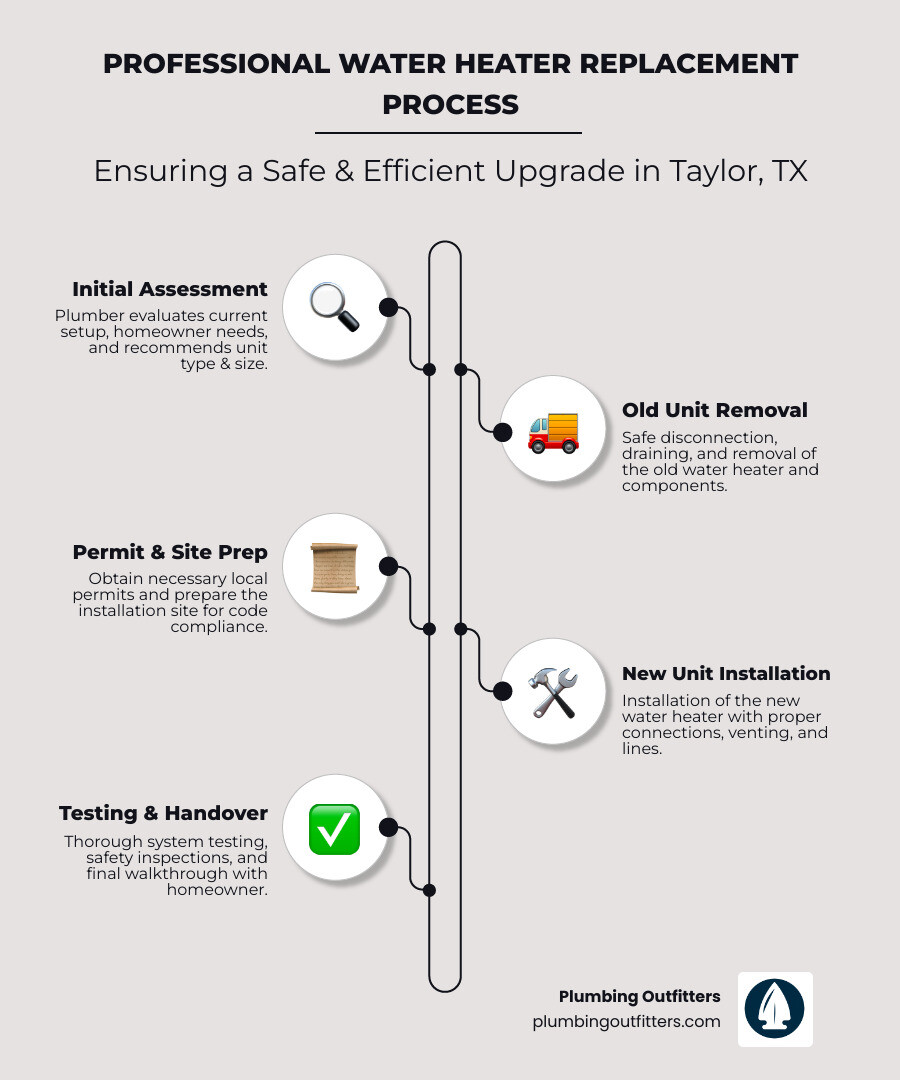
Key Factors Influencing Replacement Expenses in Taylor
Understanding the various elements that contribute to a water heater replacement is crucial for homeowners in Taylor, TX. It’s not just about the unit itself; many other factors play a significant role. When we compare prices for water heater replacement in Taylor, TX from different companies, we quickly realize that these variables can lead to substantial differences in project requirements.
The type of water heater, its size, and the fuel it uses are primary considerations. For instance, tank-style water heaters generally have different installation needs compared to their tankless counterparts. Energy efficiency features can lead to long-term performance benefits. The specific brand and model of the water heater also contribute to the material requirements, with premium brands often offering extended warranties and advanced features.
Beyond the unit, the complexity of the installation plays a major role. If your existing plumbing or electrical systems require modifications to accommodate a new water heater, these upgrades will be part of the total project. For example, switching from an electric unit to a gas one might necessitate the installation of a new gas line, which is a significant undertaking. Similarly, upgrading to a high-efficiency tankless electric water heater could require an electrical service upgrade.
Other factors include the ease of access to your current water heater. If the unit is in a difficult-to-reach location, such as a cramped attic or a utility closet, the labor involved in removal and installation can vary. We always strive to provide “Texas Class Service,” which means considering all these nuances to give you a comprehensive and fair assessment. For more general information on our services, please visit our Tank Water Heater Services page.
Understanding Capacity and Household Needs
One of the first questions we’ll ask when discussing water heater replacement is about your household’s hot water demands. This helps us determine the appropriate capacity for your new unit. For tank-style water heaters, capacity is measured in gallons. A larger household with multiple bathrooms and high hot water usage will naturally require a larger tank. Conversely, a smaller household might be perfectly served by a more modest capacity.
Selecting the right size is critical. An undersized water heater will constantly run out of hot water, leading to frustration and potentially higher energy consumption as it works overtime to keep up. An oversized unit, while providing ample hot water, might consume more energy to keep a large volume of water heated unnecessarily.
For tankless water heaters, capacity is measured in gallons per minute (GPM), indicating how much hot water the unit can deliver on demand. We consider how many hot water fixtures (showers, sinks, washing machines) might be in use simultaneously to recommend a tankless unit with adequate GPM. Getting this right ensures you have a continuous supply of hot water without waste. If you’re consistently running out of hot water, it might be a clear sign your current unit is either too small or failing. We have some tips on this topic in our article, Not Enough Hot Water? This Can Help!.
Fuel Source Variables: Gas vs. Electric
The fuel source of your water heater is another primary driver of the installation process. The most common options are natural gas, propane, and electric units. Each comes with its own set of considerations for installation and ongoing operation.
Natural gas water heaters are popular where natural gas lines are readily available, as they often offer efficient heating. However, if you’re switching from an electric unit to a gas one, the installation can be more complex. This might involve running a new gas line to the water heater’s location and ensuring proper ventilation for combustion byproducts.
Electric water heaters are typically simpler to install if your home already has the necessary electrical capacity, as they don’t require gas lines or venting. They are often a choice for homes without natural gas access. However, large electric tankless units might require significant electrical upgrades, such as a new electrical line or even a sub-panel, potentially adding to installation requirements. When we help you compare prices for water heater replacement in Taylor, TX from different companies, we’ll always factor in the existing infrastructure of your home and the most suitable fuel type. For more details on gas water heaters, check out our guide: Gas Water Heater Replacement: What You Need to Know.
Comparing Standard Tank vs. Tankless Systems
When it comes to water heater replacement, one of the biggest decisions homeowners face is choosing between a traditional tank-style unit and a modern tankless system. Both options have distinct advantages and disadvantages that impact the installation, long-term operation, and overall home comfort. Understanding these differences is key to making an informed choice for your Taylor home.
Traditional tank water heaters store a large volume of hot water, keeping it at a set temperature so it’s ready for use. They are generally straightforward to install. However, they consume energy continuously to maintain the water temperature, even when no hot water is being used, which can lead to standby energy losses.
Tankless water heaters, on the other hand, heat water only on demand, meaning they don’t store hot water. This eliminates standby energy losses and can lead to significant energy efficiency over time. While the initial requirements for tankless technology are typically different, their longer lifespan and efficiency often make them a worthwhile upgrade. They also take up much less space, as they are mounted on a wall.
Here’s a quick comparison:
| Feature | Standard Tank Water Heater | Tankless Water Heater |
|---|---|---|
| Lifespan | Typically 10-15 years | Often 20+ years |
| Space | Large, cylindrical tank, takes up floor space | Compact, wall-mounted, saves valuable floor space |
| Efficiency | Heats water continuously, standby losses | Heats on demand, highly energy-efficient, no standby losses |
| Hot Water | Limited by tank capacity, can run out | Continuous supply, unlimited hot water |
| Installation | Generally standard | May require upgrades |
For a more in-depth look at the differences, we encourage you to read our article: Tankless vs. Tank Water Heater: What’s the Difference?.
Long-Term Value of Tankless Upgrades
Investing in a tankless water heater offers compelling long-term value, primarily through improved energy efficiency and an endless supply of hot water. Because these units only heat water when you need it, they drastically reduce the energy wasted on keeping a large tank of water constantly hot. This can translate into noticeable efficiency gains, making the technology a worthwhile investment over the unit’s lifespan.
Beyond the energy efficiency, the convenience of unlimited hot water is a significant benefit, especially for larger families or homes with high hot water demand. No more cold showers because someone else used all the hot water! This feature alone can greatly improve daily comfort and satisfaction.
Furthermore, upgrading to a tankless water heater can positively impact your home’s value. Eco-friendly features and updated mechanicals, such as a tankless water heater, can boost home appeal. Buyers often have more confidence in homes with modern, energy-efficient systems, and they may value the promise of lower energy consumption and improved performance. To learn more about the benefits of tankless systems, see our article on Energy Efficiency: Tankless Water Heaters.
Solar and Hybrid Alternatives in Texas
While tank and tankless systems are the most common, homeowners in Taylor, TX, also have increasingly attractive alternative options like solar and hybrid (heat pump) water heaters, especially given the Texas climate. Texas is recognized as a leading state for solar adoption, making solar water heaters an appealing choice for those looking to harness renewable energy.
Solar water heaters use solar panels to absorb sunlight and transfer that heat to your water supply. While the installation can be more involved than conventional or even tankless options, the long-term energy benefits are substantial, as you’re primarily relying on free energy from the sun. These systems often include a conventional backup heating element for cloudy days or periods of high demand.
Heat pump water heaters, also known as hybrid water heaters, use heat pump technology to extract heat from the ambient air and transfer it to the water in their tank. They are incredibly energy-efficient, often consuming significantly less electricity than traditional electric tank water heaters. This makes them a fantastic option for energy efficiency, particularly in the Texas climate where ambient air temperatures are generally warm for much of the year. They often come with a backup electric resistance heating element for peak demand.
Choosing between these advanced systems depends on your goals and specific hot water needs. When we help you compare prices for water heater replacement in Taylor, TX from different companies, we can discuss how these innovative solutions might fit your home and help you achieve maximum energy efficiency. For a comparison of solar and electric options, check out Solar vs. Electric Water Heater: Which One Is Better?.
Hidden Cost Factors for Water Heater Replacement in Taylor, TX
When you’re looking to compare prices for water heater replacement in Taylor, TX from different companies, it’s easy to focus solely on the unit and the basic installation. However, many “hidden” variables can impact the final project. These are essential to understand to avoid unexpected requirements and to ensure you’re getting a truly comprehensive service.
These additional factors often include necessary permits, disposal for your old unit, and varying labor requirements. Sometimes, unforeseen upgrades to existing plumbing, gas lines, or electrical systems become necessary to comply with current codes or to safely install a new, more efficient unit. Understanding these potential additions upfront allows for more accurate planning and a smoother replacement process. We believe in transparent communication, ensuring you’re aware of all potential requirements. For a broader look at water heater replacement, you can visit our page: How Much Does Replacing a Water Heater Cost?.
Benefits of Getting Multiple Quotes to Compare prices for water heater replacement in Taylor, TX from different companies
Obtaining multiple quotes is one of the most effective strategies for homeowners in Taylor, TX, looking to compare prices for water heater replacement in Taylor, TX from different companies. This approach offers several key benefits that go beyond just the bottom line.
Firstly, it provides quote transparency. Each proposal should detail what is included, such as the water heater unit, labor, permit handling, and disposal of the old unit. By comparing these itemized lists, you can clearly see what each provider offers and identify any discrepancies. One provider might include an expansion tank, while another might list it as an add-on, making direct comparison difficult without a detailed breakdown.
Secondly, getting multiple quotes allows you to compare service inclusions. Some providers might offer additional services like a thorough system flush, water quality testing, or extended warranty options on their labor. These added values can be significant. For instance, a longer labor warranty offers peace of mind and protection against future issues.
Lastly, it gives you an opportunity to assess the professionalism and responsiveness of different service providers. How quickly do they respond? How thoroughly do they answer your questions? Do they perform an on-site assessment? These interactions can give you insights into the quality of service you can expect. At Plumbing Outfitters, we pride ourselves on “Texas Class Service” and upfront communication, ensuring a trustworthy experience from start to finish. We encourage you to Invest in a New Water Heater – Taylor, TX with confidence.
How Local Labor Rates Affect Your Ability to Compare prices for water heater replacement in Taylor, TX from different companies
The labor involved is a significant component of water heater replacement, and it is influenced by local factors in Taylor, TX. While we operate across the Greater Austin area, including Taylor, labor requirements can vary depending on the specific expertise required for the job.
Licensed plumbers, with their specialized skills and adherence to safety standards, provide professional service. Their work accounts for their training, experience, insurance, and the standards associated with running a reputable business. When you compare prices for water heater replacement in Taylor, TX from different companies, you’ll notice that labor represents a substantial portion of the overall project.
Some providers might use different pricing strategies for specific services. Understanding the service structure is crucial when evaluating quotes. The expertise of our plumbers in Taylor, TX Tank Water Heater Installation and Repair means you’re getting quality work that adheres to local codes and industry best practices.
The Importance of Professional Installation and Local Permits
When replacing a water heater, professional installation is not just a recommendation; it’s a necessity for safety, efficiency, and compliance with local regulations. Attempting a DIY installation can lead to serious hazards, such as gas leaks, electrical issues, or water damage, and may void warranties or insurance policies. Reputable plumbing companies, like ours, employ licensed and experienced professionals who understand the intricacies of water heater systems and Taylor’s specific building codes.
Professional installers ensure proper sizing, correct connections for water, gas, or electrical lines, and proper venting. They also handle the necessary safety checks and adjustments to ensure your new unit operates safely and efficiently. This level of expertise is invaluable, providing peace of mind that your home and family are protected.
Local permits are another critical aspect of water heater replacement. In Taylor, TX, permits are required for certain plumbing work, including water heater replacement. These permits ensure that the installation is inspected by a city official and meets all current safety and building codes. While the permit process is a step in the project, it’s a vital one that protects homeowners by verifying the quality and safety of the work. Skipping a permit can lead to complications with insurance claims and potential issues when selling your home. We handle the permit process for you, ensuring full compliance. Our services extend beyond just water heaters; we also offer Taylor, TX Repiping, Maintenance, and Repair to keep your entire plumbing system in top shape.
Necessary Upgrades for Modern Code
Water heater replacement often involves more than just swapping out an old unit for a new one. Modern building codes and safety standards evolve, and what was acceptable for your old water heater might not be for a new installation. This often means necessary upgrades to ensure code compliance.
For gas water heaters, this might involve reviewing and potentially upgrading gas line sizing to ensure adequate fuel delivery, especially if you’re installing a larger or more powerful unit. Proper venting requirements are also critical to safely expel combustion gases. If your current venting system is outdated or inadequate, an upgrade will be necessary.
For electric water heaters, particularly high-efficiency tankless models, electrical upgrades might be required. These powerful units can demand significant amperage, potentially necessitating a new, dedicated electrical line or even an upgrade to your home’s electrical panel or the installation of a sub-panel. Hiring a licensed professional for such work is paramount, as mishandling electrical systems can be extremely dangerous.
Another common upgrade is the installation of a water heater expansion tank. These tanks are often required by code in new construction and are highly advisable in areas with closed plumbing systems or where water pressure fluctuations are common. An expansion tank absorbs excess water pressure created when water is heated, protecting your plumbing system and water heater from damage. These necessary upgrades are investments in the safety and longevity of your new water heater and plumbing system. For specialized services like these, particularly for tankless units, refer to our Taylor, TX Tankless Water Heater Installation, Maintenance, Repair, and Replacement page.
Disposal and Environmental Considerations
When you replace your water heater, what happens to the old one? This is a practical question with logistical implications. The removal and proper disposal of your old water heater are typically included in a professional replacement service. Water heater removal and hauling away are handled based on factors like the size of the unit and its accessibility.
Environmental responsibility is also a growing concern. Old water heaters, especially larger tank models, are bulky and contain various materials that should be disposed of properly. Many components, such as steel and copper, can be recycled. Responsible disposal ensures that these materials don’t end up in landfills unnecessarily and that any hazardous components are handled safely.
When we help you compare prices for water heater replacement in Taylor, TX from different companies, we ensure that disposal is clearly outlined in your quote. This transparency helps you understand the full scope of the service and confirms that your old unit will be handled in an environmentally sound manner. Proper disposal is just one of the many details we manage to provide you with a seamless and worry-free experience. If you’re wondering if it’s time to replace your old unit, check out our insights on 5 Signs to Replace Your Water Heater.
Frequently Asked Questions
What is the typical lifespan of a water heater in Taylor, TX?
The typical lifespan of a water heater in Taylor, TX, largely depends on its type, maintenance, and the local water quality. Generally, a conventional tank-style water heater can last anywhere from 10 to 15 years. Factors like consistent maintenance, such as annual flushing to remove sediment, can extend this lifespan. However, if maintenance is neglected, especially in areas with hard water, its operational life might be shortened.
Tankless water heaters, with their more durable components and on-demand heating, often boast a longer lifespan, typically lasting 20 years or more. Their design reduces the internal corrosion common in tank units, contributing to their longevity. Regular professional maintenance is still crucial for tankless systems to ensure they operate efficiently throughout their extended life. Our article, Top Tips for Spring Water Heater Maintenance, offers valuable advice to help prolong your unit’s life.
Are permits required for water heater replacement in Taylor?
Yes, permits are typically required for water heater replacement in Taylor, TX. Local regulations are in place to ensure that plumbing work, especially involving gas or electrical connections, meets safety standards and building codes. This is a critical step that protects homeowners.
Obtaining a permit means that a qualified inspector from the city will review the installation to confirm it was done correctly and safely. This ensures compliance with all local ordinances, safeguarding your home and potentially preventing issues with home insurance or resale down the line. A reputable plumbing company will always handle the necessary permits as part of their service, ensuring professional accountability and peace of mind for you. Understanding these local requirements is part of our commitment to transparent service throughout Taylor, TX.
How does hard water affect my replacement choice?
Hard water, which is common in many parts of Texas, including Taylor, can significantly impact your water heater’s performance and lifespan. Hard water contains high levels of dissolved minerals like calcium and magnesium. Over time, these minerals can accumulate as scale inside your water heater’s tank and on heating elements, reducing efficiency and potentially leading to premature failure.
For tank-style water heaters, mineral buildup can insulate the heating element, forcing it to work harder and consume more energy. It also takes up space in the tank, reducing its effective capacity. For tankless water heaters, scale buildup can clog the heat exchanger, severely impairing its ability to heat water on demand.
When considering a replacement, especially if you have hard water, you might want to discuss options for mitigating its effects. This could include installing a water softener system for your entire home, which removes these minerals before they enter your plumbing and appliances. A water softener can protect your new water heater, extend its lifespan, and improve its efficiency. We offer comprehensive services for Taylor, TX Water Softener Installation, Maintenance, Repair, and Replacement to help combat the challenges of hard water.
Conclusion
Navigating the options for water heater replacement in Taylor, TX, can seem daunting, but by understanding the key factors influencing the project and the benefits of professional service, you can make an informed decision. From choosing between a traditional tank or an energy-efficient tankless system to considering necessary upgrades and local permits, each step contributes to ensuring your home has a reliable and safe hot water supply.
We hope this guide has shed light on how to effectively compare prices for water heater replacement in Taylor, TX from different companies. At Plumbing Outfitters, we are dedicated to providing “Texas Class Service” with upfront communication and a trustworthy, neighborly experience. Our experienced plumbers are here to guide you through every decision, ensuring you receive the best solution for your home.
Ready to explore your water heater replacement options or have more questions? Contact us today to learn more about water purification in Austin, TX and how we can bring our expertise to your Taylor home.