


Repairing vs. Replacing a Leaky Moen Kitchen Faucet: A Cost-Benefit Breakdown
Hard water pitting ruins brass. Use this repairing vs. replacing a leaky Moen kitchen faucet: a cost-benefit breakdown to decide with confidence.
Responsible Master Plumber · TX Master Plumber License M-41984
Myth: A Leaky Sink Always Just Needs a Quick Cartridge Swap
In our years of serving Taylor and the surrounding communities, we have found that when you are weighing the options of repairing vs. replacing a leaky Moen kitchen faucet: a cost-benefit breakdown often starts with a common myth: that every persistent drip can be cured with a simple replacement part. Most homeowners assume that a leaky sink is just a minor inconvenience caused by a worn-out rubber seal that can be swapped out in a matter of minutes. During the chaotic late-summer back-to-school transition, when kitchen usage spikes for daily meal prep and endless dishwashing, that constant dripping sound becomes more than just a background annoyance—it is a disruption you want resolved immediately.
However, as our team typically sees in the field, the reality of plumbing repair is rarely as straightforward as simply dropping in a new piece of plastic. While Moen fixtures are heavily renowned for their brilliant engineering and long-term durability, your local water conditions play a massive role in their actual, real-world lifespan. Assuming that a single replacement cartridge will permanently fix a leak ignores the complex internal environment of your kitchen sink. Before you order replacement parts online, you have to understand exactly why that drip is happening in the first place.
Need help evaluating your fixtures? Reach out to our professional plumbing services team for an honest assessment.
The Anatomy of a Moen Kitchen Faucet Leak
To understand why a simple repair sometimes fails, our technicians often explain what is happening inside your kitchen fixture. Moen uses highly specific internal components to regulate water flow and temperature. The most critical pieces of this puzzle are the internal cartridge and the heavy brass valve body that surrounds it.
The Mechanical Core: Cartridges and Valve Bodies
Whether your sink uses the classic push-pull style or a modern rotating handle, the internal mechanics rely on a very tight tolerance between moving parts. The system typically consists of:
- The Cartridge: Moen kitchen faucets (e.g., 1255 or 1225 cartridge models) use these self-contained units to mix hot and cold water. They are usually made of high-grade plastic, rubber O-rings, and sometimes ceramic discs.
- The Brass Valve Body: This is the heavy metal housing permanently mounted to your sink or countertop. The cartridge slides directly into this brass cylinder.
- The Retaining Clip: A small metal pin that locks the cartridge securely inside the brass body, preventing water pressure from blowing the cartridge out.
- The Rubber Seals: These sit between the cartridge and the brass wall, blocking water from seeping out of the handle or dripping from the spout when the faucet is turned off.
The critical requirement for a watertight seal: A leak-free sink requires both the rubber cartridge seals and the surrounding internal brass housing to be perfectly smooth and completely intact. If the cartridge is brand new but the brass wall it presses against is scarred, scratched, or degraded, water will easily bypass the new rubber seals. Age, daily friction, and constant exposure to water pressure gradually compromise these internal barriers over time.
The Hidden Culprit: How Hard Water Destroys Internal Brass Components
As local plumbers who navigate these issues daily, our team consistently sees that if you live in Central Texas, your plumbing system is fighting a constant, invisible battle against the local water supply. Water hardness refers to the concentration of dissolved minerals—specifically calcium and magnesium—flowing through your pipes. In Taylor TX and surrounding Central Texas areas, the water drawn from limestone aquifers is notoriously hard, and this chemical makeup aggressively attacks the metal components inside your home.
The Process of Dezincification and Pitting
When hard water constantly flows through the brass valve body of your kitchen faucet, a destructive chemical reaction occurs. Brass is an alloy made primarily of copper and zinc. Over time, the heavy minerals in the water cause a process called dezincification. The water literally leaches the zinc out of the brass alloy, leaving the remaining copper in a highly porous, spongy, and weakened state.
This degradation manifests as microscopic craters and rough patches on the inside walls of the brass housing—a condition our plumbers refer to as "pitting."
The problem with pitting: Once the inside of the brass valve body is pitted, it resembles the surface of the moon. No matter how many brand-new, perfectly smooth Moen cartridges you slide into that housing, the rubber O-rings cannot fill those microscopic craters. Water will always find a path through the pitted brass, bypassing the new cartridge entirely and continuing to drip from your spout.
Connecting the Damage to Whole-Home Plumbing
This aggressive mineral attack does not just stop at your kitchen sink. The exact same chemical reactions that destroy the inside of your faucet housing are actively degrading other metal fixtures and pipes throughout your home. In fact, understanding how hard water attacks brass is very similar to understanding the issues with old copper piping that many local homeowners face. Central Texas hard water heavily accelerates mineral scale buildup, frequently tipping the scale from a simple cartridge repair to a full fixture replacement.


The Risks of DIY Cartridge Swaps on Older Fixtures
With thousands of online video tutorials available, many homeowners are tempted to pull apart their kitchen sink and attempt a cartridge swap themselves. However, blindly attempting a repair without accurately diagnosing the internal brass body first is a massive false economy. You might spend days waiting for a part to arrive, only to find out the fixture cannot be saved.
The Reality of the Manufacturer Warranty
Moen offers an excellent lifetime limited warranty on parts for the original purchaser, which leads many people to believe that fixing a leak is completely free. The fine print, however, tells a different story. The warranty covers the physical replacement cartridge, but it does not cover professional diagnostic time, the labor required to install it, or any collateral damage caused by a failed installation attempt. If you wait two weeks for a warranty cartridge to arrive in the mail, install it, and the sink still leaks because the brass body is pitted, you have wasted precious time while the leak continues to worsen.
The Danger of Forcing a Repair
Improper DIY installation is incredibly common with Moen kitchen faucets (e.g., 1255 or 1225 cartridge models). Older cartridges frequently become seized inside the brass housing due to severe calcium buildup. If you try to force a stuck cartridge out with standard pliers, you can easily rip the plastic in half, leaving the bottom half permanently stuck inside the valve body. Worse, forcing a new cartridge into a heavily calcified or pitted housing can crack the brass entirely, sending water flooding into your kitchen cabinets.
This is not a hypothetical risk—it is a pattern we see often. Just recently, during the busy late-summer back-to-school rush, a local homeowner reached out to our team after attempting a DIY installation on their kitchen sink. The old cartridge had seized, and in an attempt to force the repair, the internal housing was compromised. The homeowner was understandably frustrated and a bit embarrassed by the mistake, but our technician was able to step in, correct the problem created by the DIY attempt, and get their kitchen fully operational again. Having a professional evaluate the situation from the start prevents these stressful, escalating disasters.
Diagnostic Transparency: Evaluating the Valve Body
A true professional does not just swap parts, cross their fingers, and hope for the best. Drawing on our daily field experience, our team at Plumbing Outfitters uses a transparent diagnostic process to help homeowners make cost-effective, long-term decisions rather than pushing unnecessary replacements or wasting your time on doomed repairs. We believe in showing you exactly what is going on inside your sink.
When our Taylor plumbing professionals arrive at your home, we rely on our extensive local expertise and follow a strict evaluation protocol to determine if a cartridge swap will actually hold.
Step 1: Safe Isolation and Disassembly
Before any work begins, we carefully shut off the water supply at the angle stops beneath the sink to prevent accidental flooding. We then carefully remove the handle set, the dome cap, and the retaining clip. Because we carry specialized cartridge-puller tools, we can safely extract even heavily calcified cartridges without damaging the surrounding sink basin or counter.
Step 2: Visual and Tactile Inspection
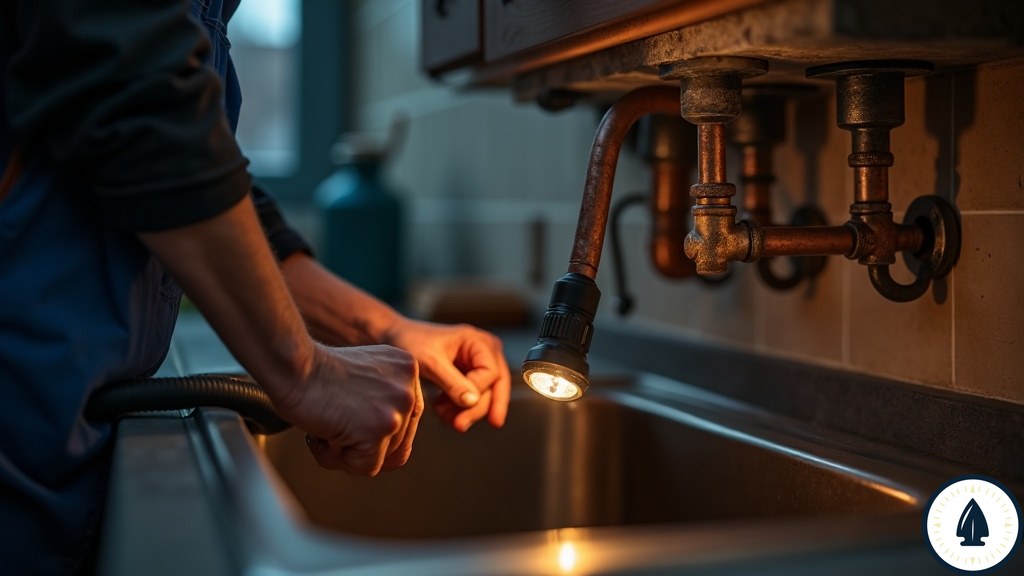
Once the old cartridge is removed, the real diagnostic work begins. We shine a high-lumen inspection light directly into the empty brass valve body. We are looking for visible dark spots, heavy green scaling, and the telltale micro-craters of dezincification. We also use specialized tools to physically feel the inside walls of the housing. If the brass feels rough, scratched, or pitted, we know immediately that a new cartridge will not solve the problem.
Step 3: Transparent Consultation
If the brass housing is perfectly smooth, we will gladly install a new cartridge. If the brass is pitted and destroyed by hard water, we will show you the damage directly. This transparent evaluation saves you from the intense frustration of repeated service calls. Honest plumbing evaluations prioritize your long-term reliability over quick, temporary fixes that are guaranteed to fail.
Cost-Benefit Breakdown: When to Repair Your Moen Faucet
Deciding to repair your kitchen sink by installing a new Moen cartridge is a highly practical choice—provided the internal conditions are right. If the fixture is relatively new (typically under five to seven years old) and our diagnostic inspection confirms that the brass body shows absolutely no signs of mineral pitting, we generally recommend a repair as the smartest path forward.
Here is a breakdown of the pros and cons of moving forward with a cartridge replacement:
| Consideration | Repairing (Cartridge Swap) |
|---|---|
| Initial Investment | Requires a lower immediate investment in replacement parts and professional labor compared to a full installation. |
| Aesthetic Preservation | Preserves the exact look and design of your current kitchen setup, which is ideal if your sink perfectly matches your cabinet hardware. |
| Time Factor | Usually a faster service visit, provided the old cartridge is not severely seized by calcium scale. |
| Long-Term Drawback | If your home's hard water quality is not addressed, the brand-new cartridge will eventually face the exact same mineral stress that destroyed the first one. |
The bottom line for repairs: A repair makes sense when you are dealing with normal wear and tear on the rubber O-rings, rather than chemical degradation of the metal housing itself.
Cost-Benefit Breakdown: When Full Replacement is the Only Option
In our professional experience, we recommend a full replacement when investing time and resources into an old fixture becomes simply throwing good money after bad. If our diagnostic inspection reveals that the internal brass housing is pitted, if the fixture is severely aged, or if persistent leaks have continued despite previous attempts at new cartridges, a full replacement is the only viable solution.
Here is why replacing the entire unit is often the more beneficial long-term choice:
| Consideration | Replacing (Full Fixture Upgrade) |
|---|---|
| Leak Prevention | Completely eliminates the compromised brass body, ensuring a reliable, long-term watertight seal from day one. |
| Modern Features | Provides an excellent opportunity to upgrade your kitchen's functionality with modern features like touchless sensors, pull-down sprayers, and spot-resistant finishes. |
| Warranty Reset | Starts you fresh with a brand-new manufacturer warranty on all internal components and external finishes. |
| Investment Drawback | Requires a higher initial investment in parts and labor, but it entirely prevents the wasted cost of repeated, failed repair attempts. |
The bottom line for replacement: When the metal housing is compromised by Central Texas water, a new cartridge is a bandage on a broken arm. Upgrading the fixture ensures you won't be dealing with the same puddle under your sink next month. If you are ready to upgrade, our plumbing services in Austin and the surrounding areas can help you select and install a resilient new fixture.
Frequently Asked Questions
Why does my Moen faucet still leak after replacing the cartridge?
If your faucet continues to leak after a cartridge swap, the internal brass valve body is likely damaged. Hard water minerals cause pitting and micro-craters inside the housing, preventing the new rubber seals from pressing flat against the metal. When the brass is pitted, water simply bypasses the new cartridge, meaning the entire fixture must be replaced to stop the drip.
Is it worth repairing an old kitchen faucet?
It depends heavily on the age of the fixture and the condition of the internal brass. If the faucet is under seven years old and the internal housing is smooth, a repair is highly cost-effective. However, if the fixture is over a decade old, heavily calcified, or structurally pitted, repairing it is usually a waste of time and resources.
Does Moen replace leaking faucets for free?
Moen provides a limited lifetime warranty to the original purchaser that covers replacement parts, such as cartridges, but they rarely replace the entire faucet for free. Furthermore, the warranty does not cover the professional labor required to diagnose the issue, safely remove stuck parts, or install the new components.
How long do Moen kitchen faucets typically last?
Under ideal water conditions, a high-quality Moen kitchen faucet can easily last 15 to 20 years. However, in regions with very hard water, heavy mineral scaling and dezincification can cut that lifespan in half. Installing a whole-home water softener is the best way to extend the life of all your plumbing fixtures.
What does hard water pitting look like inside a faucet?
Hard water pitting looks like tiny, dark micro-craters or rough, discolored patches on the inside walls of the brass cylinder. If you run a specialized tool or a pick along the inside of the housing and it feels bumpy or scratched rather than perfectly smooth, the brass has been compromised by dezincification.
Dealing with a persistent kitchen sink leak can be incredibly frustrating, especially when a supposedly simple fix fails. By providing a clear, non-technical explanation of how hard water pitting destroys the brass body, our team aims to help you make a confident repair-or-replace decision without wasting time on a doomed cartridge swap. If your sink is struggling to keep up with your household's demands, let our experts diagnose the true root cause and restore your kitchen's reliability.
Ready to find your way out of plumbing trouble?
Call the Outfitters or request service online — a real team member will guide you through the next steps. No dispatch fee, free estimates, same-day service across Taylor, TX and beyond.