


The Hidden Dangers of Inspecting Gas Shutoff Valves Before Heating Season
See why we prioritize inspecting gas shutoff valves before heating season. Learn the hidden risks of a seized valve and exactly when to call a professional.
Responsible Master Plumber · TX Master Plumber License M-41984
Preparing Your Heating System: The Hidden Risks of the First Winter Freeze
November pre-winter readiness is officially here, and the first major temperature drop is only weeks away. As homeowners prepare their homes for the cold, inspecting gas shutoff valves before heating season must be a top priority. While swapping out the furnace air filter and testing the thermostat are standard practice, the gas shutoff valve is a frequently ignored single point of failure. This crucial component controls the flow of highly combustible natural gas into your home's heating system, and after months of sitting idle, it can become a serious liability.
Firing up a furnace without verifying the integrity of a potentially seized or corroded gas valve introduces the severe risk of gas leaks or complete appliance failure. The core problem is that homeowners often do not know what a healthy valve looks like, leading to dangerous physical manipulation of compromised plumbing fixtures. The most important decision point in seasonal maintenance is understanding how to safely observe the system visually and knowing exactly when to step back. If you notice any signs of trouble during your initial checks, reaching out to licensed plumbers in Taylor, TX is the safest and most effective next step to secure your home.
Understanding the Mechanics of a Dormant Gas Valve
To understand why a gas valve becomes a risk, it is necessary to look at the physical mechanics of the fixture itself. The furnace gas shutoff valve is typically located on the black iron gas supply pipe just outside the heating unit. Its primary function is to allow or halt the flow of natural gas to the ignition system. However, during the long summer months, this valve remains completely dormant.
Months of disuse cause the internal components to undergo subtle but impactful physical changes. Most gas valves are constructed from brass or iron, materials that respond directly to their environment.
- Ambient humidity: Moisture in the air can settle on the exterior and interior of the valve housing, initiating slow oxidation.
- Temperature fluctuations: The constant expansion and contraction of metal during hot summer days and cooler nights can cause internal seals to stiffen.
- Galvanic corrosion: When different metals (like a brass valve and an iron pipe) are connected in the presence of moisture, low-level corrosion can fuse the threads over time.
In areas like Taylor, TX, the combination of high summer humidity and long periods of furnace inactivity creates the perfect environment for a valve to seize. It is critical to establish that a stiff valve after the summer is a normal condition resulting from basic metallurgy. However, while a stiff valve is common, it is potentially dangerous if mishandled. The internal ball or plug mechanism relies on smooth operation; when corrosion sets in, the friction required to turn the valve increases exponentially, turning a simple mechanism into a fragile hazard.
A Homeowner's Checklist for Safe Visual and Olfactory Inspections
When conducting November pre-winter readiness checks, homeowners must adhere to a strict boundary: observation only. There is a massive difference between looking at a valve and attempting to operate or repair it. The following checklist is designed to help you evaluate the safety of your gas supply without crossing into dangerous territory.
Olfactory Checks: Detecting Mercaptan
Natural gas in its raw form is completely odorless and colorless. To ensure safety, utility companies intentionally odorize the gas with a chemical compound called mercaptan. This additive gives natural gas its distinct, unmistakable scent.
- The rotten egg smell: Mercaptan is specifically formulated to smell like sulfur or rotting eggs. This allows for early detection of even the smallest leaks.
- Immediate action required: If you detect this odor near your furnace, do not attempt to find the source yourself. Just as you would if you noticed faint gas smells near the water heater, you must evacuate the area immediately, avoid creating any sparks (do not flip light switches), and contact emergency services or your gas provider from a safe distance.
Visual Checks: Identifying Corrosion
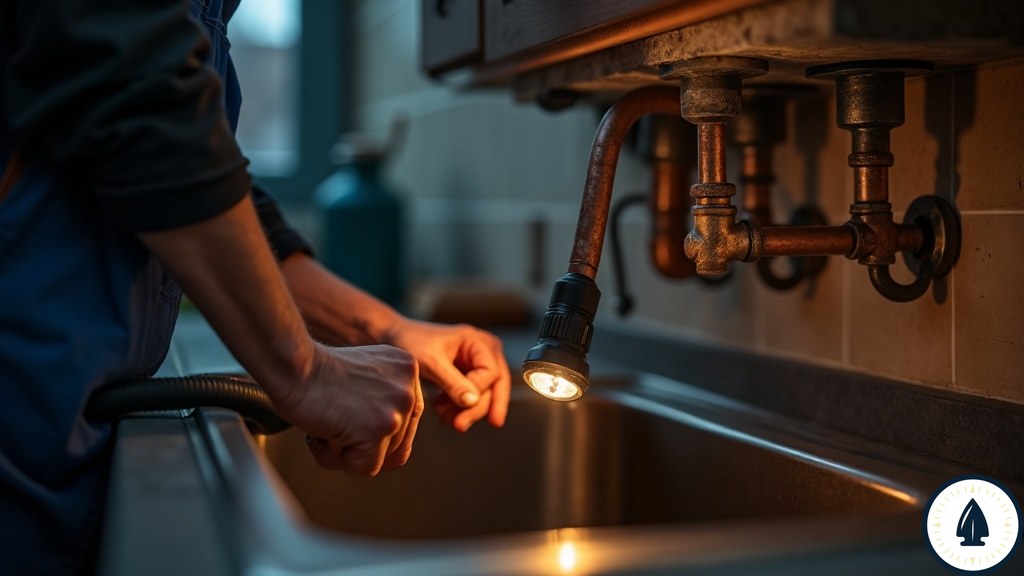
A visual inspection involves looking closely at the valve housing and the surrounding pipe connections for physical red flags. Use a flashlight to clearly illuminate the area behind or beside the furnace.
- Flaking rust or oxidation: Look for orange or brown rust on the iron pipe threads, or a chalky green/white buildup (patina) on brass components.
- Discoloration or moisture: Any unexplained moisture, oily residue, or dark discoloration around the valve joints can indicate a failing seal.
- Valve position: Observe the orientation of the valve handle. If the handle is parallel (in line) with the gas pipe, the gas is ON. If it is perpendicular (forming a T-shape) to the pipe, the gas is OFF.
The golden rule of inspection: Look, smell, but do not touch. If the visual and olfactory checks reveal any abnormalities, the inspection stops there, and professional diagnostics are required.

The Severe Dangers of Forcing a Stiff or Stuck Gas Valve
The most common and dangerous mistake homeowners make during pre-winter checks is attempting to force a seized gas valve to turn. When a valve has been sitting dormant in Taylor, TX for six months, the internal components can become chemically bonded through corrosion. Applying physical force to overcome this bond is a recipe for disaster.
The Risk of Sheared Stems
Gas valves are precision-machined fixtures. The handle is connected to a central stem, which turns the internal mechanism to block or allow gas flow. While the exterior of the valve may look robust, the internal stem is relatively fragile, especially when compromised by age or oxidation.
When a homeowner grabs a stiff valve handle and applies leverage—often escalating to using wrenches, pliers, or channel locks—they are applying massive torque to a small, compromised piece of brass. The physical mechanics dictate that the weakest point will give way first. In many cases, the internal stem shears completely off, or the brass housing itself cracks under the uneven pressure of the tool.
Escalating to an Active Gas Emergency
A well-intentioned DIY effort can instantly escalate a stiff handle into an active gas emergency. When a valve stem shears or the housing cracks, the seal is broken.
- Unrestricted gas flow: A broken valve can release highly pressurized natural gas directly into the enclosed space of your utility room, basement, or attic.
- Explosion risk: The sudden accumulation of combustible gas requires only a tiny ignition source—such as a static shock, a nearby pilot light, or a water heater relay—to trigger a catastrophic event.
- Emergency protocols: If a valve is accidentally broken, the immediate protocol is to evacuate the home entirely, leaving doors open to vent the gas if possible, and call 911 and the utility provider from outside.
Physical intervention on a stuck valve crosses the absolute line into required professional territory. If a valve cannot be turned smoothly with bare hands, it must be evaluated by a licensed expert.
Why Sudden Central Texas Freezes Demand Immediate Furnace Reliability
The regional climate plays a massive role in why proactive November pre-winter readiness is non-negotiable. Winter weather patterns vary wildly depending on geography, and heating systems must be prepared for local extremes.
In northern climates, the transition into winter is gradual. Temperatures slowly step down over several months, allowing homeowners to test their heating systems under moderate loads. Central Texas experiences a completely different weather phenomenon. The late fall and early winter often feature sudden, sharp temperature drops—frequently plunging from a comfortable 75 degrees down to freezing overnight. Focus on the sudden, sharp temperature drops in Central Texas during late fall, emphasizing how this weather pattern puts immediate stress on untested heating systems.
When a sudden freeze hits, dormant heating systems are forced to fire up and run at maximum capacity instantly. This rapid thermal expansion places immense, immediate stress on untested gas valves, supply lines, and heat exchangers. A gas valve that is already weakened by summer corrosion is highly susceptible to failure when subjected to this sudden demand and thermal shock. Having a reliable, pre-inspected system ready to operate safely without warning is the only way to protect your home. Relying on plumbing professionals in Austin and the surrounding region ensures your gas lines are structurally sound before the first freeze forces your system into overdrive.
Why Gas Line Integrity is a Specialized Plumbing Service
A common point of confusion for homeowners is knowing exactly who to call when a gas valve appears corroded or smells like mercaptan. Because the valve is attached to the furnace, many assume it is strictly an HVAC issue. Highlight the strict boundary between HVAC tasks and plumbing specialties, emphasizing professional diagnostic processes and the absolute necessity of licensed plumbers for gas line safety.
HVAC Technicians vs. Licensed Plumbers
Understanding the division of labor between home service professionals is key to getting the right repair.
| Service Professional | Scope of Work and Expertise |
|---|---|
| HVAC Technicians | Focus on the appliance mechanics: airflow, blower motors, electronic ignition sequences, heat exchangers, and thermostat communication. |
| Licensed Plumbers | Focus on the fuel supply: black iron gas pipes, structural integrity of shutoff valves, gas pressure testing, and leak detection at the source. |
While an HVAC technician can tell you if the furnace is burning gas efficiently, a licensed plumber is required to safely repair, replace, or test the structural integrity of the gas supply lines and shutoff valves leading up to the unit.
The Professional Diagnostic Process
When a licensed plumber evaluates a suspect gas valve in Taylor, TX, they utilize specialized tools and safety protocols that are entirely unavailable to the average homeowner. The diagnostic process is highly methodical.
- Electronic leak detection: Professionals use highly sensitive electronic "sniffers" that can detect combustible gases at parts-per-million levels, identifying micro-leaks long before the human nose can smell mercaptan.
- Manometer pressure testing: Plumbers can isolate the gas line and use a digital manometer to perform a drop test. This measures the exact pressure inside the pipe; if the pressure drops over a set time, it confirms a leak exists somewhere in the line or valve assembly.
- Safe replacement protocols: If a valve is seized, a plumber has the training to safely shut off the gas at the main meter, bleed the lines, and use the correct threading and pipe dope to install a new, secure valve without risking a spark.
This level of specialized testing is why residents trust Round Rock plumbing services and local experts to handle the physical manipulation of gas lines, ensuring total peace of mind before the heating season begins.
Frequently Asked Questions About Furnace Gas Shutoff Valves
How do I check if my gas shutoff valve is leaking?
The safest way to check for a leak is through olfactory and visual observation. Natural gas is odorized with mercaptan, which smells like rotten eggs; if you smell this near the valve, it is leaking. You can also look for visual signs of failure, such as dark discoloration, flaking rust, or oily residue around the valve joints. Never use an open flame to check for leaks, and avoid touching the valve if you suspect an issue.
Why is my furnace gas valve stuck after the summer?
Gas valves often become stuck due to months of disuse combined with ambient humidity and temperature fluctuations. The internal brass or iron components can experience low-level galvanic corrosion or oxidation, causing the internal ball or plug to bind to the housing. This is a normal metallurgical reaction during the summer off-season, but it makes the valve highly susceptible to breaking if forced.
Who do I call for a broken or seized gas valve?
You should call a licensed plumber to address a broken or seized gas shutoff valve. While the valve is connected to your furnace, the physical gas supply lines and the structural integrity of the valves themselves fall under specialized plumbing codes. Licensed plumbers have the specific leak detection equipment and pressure testing tools required to safely replace and verify the integrity of gas fixtures.
Should I turn off the gas to my furnace in the summer?
Turning off the gas to a furnace during the summer is a common practice, particularly for older units with standing pilot lights, to save energy and reduce ambient heat. However, leaving the valve in the "off" position for six months can contribute to it seizing due to lack of movement. If you choose to turn it off, it is crucial to perform a visual inspection for corrosion before attempting to turn it back on in the fall.
What happens if a gas valve is forced open?
Forcing a stuck gas valve open with tools or excessive manual pressure can easily shear the internal brass stem or crack the valve housing. This instantly transforms a stiff valve into an active gas emergency, allowing unrestricted, pressurized natural gas to pour into your home. If a valve does not turn smoothly with normal hand pressure, it must be evaluated by a professional to prevent a catastrophic leak.
Secure Your Home's Heating Safety Before the Winter Chill
Verifying a healthy gas valve is an indispensable part of your November pre-winter readiness routine. The transition into the heating season should bring comfort, not the anxiety of a potential gas leak. By understanding the severe dangers of forcing a stuck valve during a DIY check, you protect your home from sudden, catastrophic emergencies.
If your visual or olfactory inspections reveal rust, stiffness, or the faint smell of mercaptan, do not take matters into your own hands. Schedule a professional diagnostic inspection with licensed experts in Taylor, TX to evaluate the structural integrity of your gas lines. Ensuring your gas shutoff valve is in perfect working order provides a clear understanding of your system's health and guarantees absolute peace of mind before the harsh winter weather arrives.
Ready to find your way out of plumbing trouble?
Call the Outfitters or request service online — a real team member will guide you through the next steps. No dispatch fee, free estimates, same-day service across Taylor, TX and beyond.