


Diagnosing Gurgling Sounds in the Kitchen Sink When the Washing Machine Drains
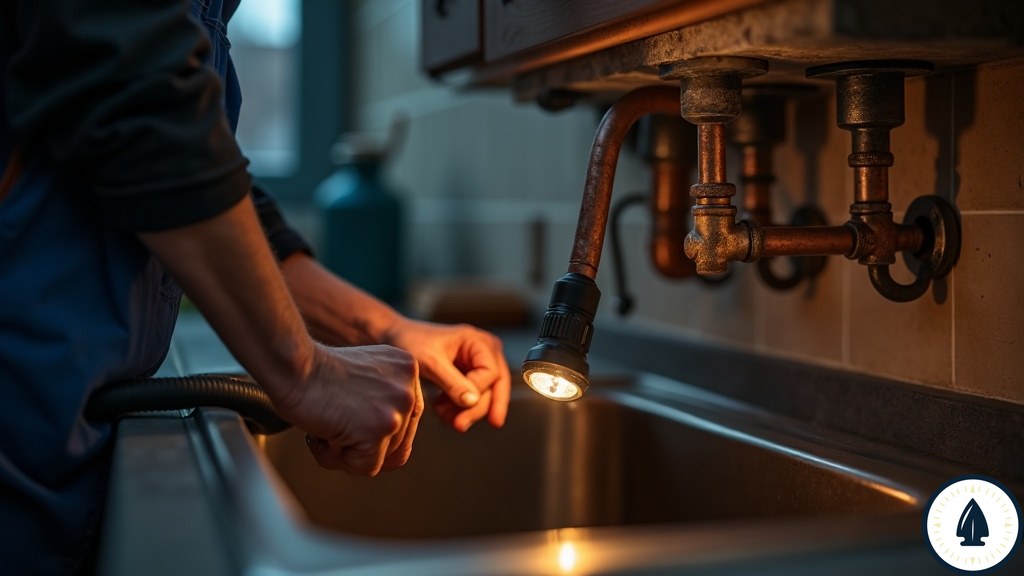
Why we check the P-trap when diagnosing gurgling sounds in the kitchen sink when the washing machine drains. See if your plumbing is about to back up.
Responsible Master Plumber · TX Master Plumber License M-41984
Is That Kitchen Sink Gurgle a Warning Sign?
Have you ever noticed a strange bubbling noise echoing from your drains the moment your laundry finishes its spin cycle? At Plumbing Outfitters, we receive countless calls from homeowners asking about this exact issue. Diagnosing gurgling sounds in the kitchen sink when the washing machine drains is one of the most common, yet frequently misunderstood, plumbing mysteries homeowners face. When the washing machine pumps out its wastewater, the kitchen sink should remain completely silent. If it starts gurgling, bubbling, or burping air, your plumbing system is sending a very clear distress signal.
This noise is rarely a harmless quirk of an older home. Instead, it is a primary indicator of a partial downstream blockage in a shared drain line. Right now, water is still finding a way through the pipe, but the available space inside that pipe is shrinking rapidly. As we head into September 2026, adding this to your early fall pre-holiday plumbing prep is crucial. Waiting until the house is full of guests and the plumbing system is under maximum load often turns a simple partial clog into a catastrophic, messy backup across multiple rooms.
If you are experiencing these warning signs, scheduling clogged drain repair in Taylor, TX is the most reliable way to restore your system before a complete blockage occurs. Understanding the invisible physics of residential plumbing systems is the first step toward protecting your home from unexpected water damage.
The Anatomy of a Plumbing Warning Sign
Most homeowners assume that if water is still draining, the pipes must be clear. However, plumbing systems operate on a delicate balance of water flow and air pressure. When a blockage begins to form—whether from grease, soap scum, or lint—it restricts the diameter of a standard 2-inch drain pipe long before it completely stops the flow of water.
- The initial symptom: A slow drain that you might barely notice.
- The secondary symptom: Gurgling noises when large volumes of water are introduced (like a washing machine discharging).
- The final symptom: A complete backup where wastewater flows backward into the lowest fixture in the house.
Catching the problem during the secondary symptom phase is the key to avoiding costly damage. The gurgle is your window of opportunity to act.
The Mechanics Behind the Noise: Shared Drain Lines and Trapped Air
To understand why a laundry appliance affects a kitchen fixture, you have to look at how modern homes are piped. Modern washing machines are incredibly efficient, but they also discharge water at a rapid, high-volume rate—often pushing 15 to 30 gallons of wastewater per cycle. When the pump engages, it pushes all that water into the drain lines at once.
In many residential floor plans, the kitchen sink and the laundry room are located relatively close to one another. Because of this proximity, builders often design the plumbing so that both fixtures share a common branch drain line before that line eventually meets the main 3-inch or 4-inch sewer pipe. This shared infrastructure is highly efficient, but it means a problem in one area instantly impacts the other.
When there is a partial blockage in this shared line, it restricts the speed at which water can flow away from the home. As the fast-moving washing machine water crashes into this bottleneck, it rapidly compresses the air trapped ahead of it in the pipe. This creates a state of positive air pressure.
The Physics of Positive Pressure in Your Pipes
Air, much like water, takes the path of least resistance. When positive pressure builds up inside a restricted pipe, that air has to go somewhere. The nearest escape route is usually the drain of the kitchen sink. Beneath that sink sits a curved pipe known as a P-trap, which is designed to hold a small amount of water to block dangerous sewer gases from entering your home.
When the compressed air forces its way backward up the pipe, it pushes right through that protective water barrier. Our technicians at Plumbing Outfitters regularly see this violent push of air result in P-trap water seal displacement. The gurgling sound you hear is literally the trapped air bubbling up through the water in the trap. If you are already dealing with common bathroom sink problems or kitchen drain issues, understanding this pressure dynamic is essential for accurate diagnostics.
The Chain Reaction of a Gurgling Sink:
- High-Volume Discharge: The washing machine forcefully ejects gallons of wastewater into the standpipe.
- The Bottleneck: The water rushes through the shared line but hits a partial obstruction (grease, lint, or debris).
- Air Compression: The water slows down, compressing the air trapped between the incoming water and the blockage.
- The Escape: The pressurized air travels backward to the nearest opening—the kitchen sink.
- The Gurgle: The air breaches the P-trap, causing P-trap water seal displacement and creating the audible bubbling noise.


How Slab-on-Grade Foundations Complicate Shared Drains
Diagnosing plumbing noises requires looking at how a home is built. In Central Texas, including areas around Taylor and Austin, homes predominantly feature slab-on-grade foundations—a construction style especially prevalent in 1990s and 2000s-era tract homes. Instead of having a basement or a raised crawlspace where pipes are exposed and easily accessible, the plumbing infrastructure is trenched into the earth and encased directly beneath a massive, solid concrete slab.
Our team has spent years diagnosing under-slab plumbing across the region, and we know firsthand that this regional construction style drastically changes how shared drain lines are routed and maintained. When a shared branch line runs under a concrete slab, it is entirely invisible. You cannot simply take a flashlight into the basement to look for sags, bellies, or leaking joints in the pipe. The entire diagnostic process must be done from the inside of the pipe looking out.
The Hidden Maze Beneath Your Feet
When P-trap water seal displacement occurs in a slab-on-grade home, the partial blockage causing the pressure buildup is almost always buried deep under the foundation. This makes DIY troubleshooting virtually impossible. Guessing at the location of an under-slab clog is ineffective and can lead to wasted time and money.
Slab-on-grade plumbing systems are particularly vulnerable to subtle shifts in the soil. Central Texas is known for expansive clay soils that swell during heavy rains and shrink during droughts. This constant movement can cause the pipes beneath the slab to lose their precise downward slope. When a pipe loses its slope, a "belly" forms—a low spot where water pools and debris settles. Over time, lint from the washing machine and grease from the kitchen sink accumulate in these bellies, creating the exact type of partial blockage that leads to gurgling drains.
Because the pipes are inaccessible, specialized diagnostic tools are the only way to accurately assess the health of an under-slab shared drain line without destroying the flooring of the home.
Partial Blockages vs. Venting Issues: Finding the Root Cause
While a partial blockage is the most common reason a kitchen sink gurgles during a laundry cycle, it is not the only possibility. The second potential culprit is a blocked plumbing vent. In our diagnostic process at Plumbing Outfitters, differentiating between these two issues is critical because the repair methods are entirely different.
Every plumbing system relies on vent pipes, which typically exit through the roof of the home as 2-inch or 3-inch PVC stacks. These vents allow ambient air into the plumbing system to equalize pressure as water flows down the drains. If you place your finger over the top of a straw filled with liquid, the liquid stays in the straw because no air can get behind it to let it flow. Your plumbing system works the same way. If the roof vent is clogged by early fall leaves accumulating in September, bird nests, or debris, the rushing water from the washing machine creates a vacuum (negative pressure) behind it.
This powerful vacuum will literally suck the air from the nearest source—which is often the kitchen sink P-trap. The result is exactly the same: P-trap water seal displacement, a loud gurgling noise, and the potential for sewer gases to enter the living space.
Comparing the Two Culprits
| Diagnostic Factor | Partial Blockage (Positive Pressure) | Blocked Vent Pipe (Negative Pressure) |
|---|---|---|
| The Core Mechanism | Trapped air is pushed forward, compressing until it escapes backward. | A vacuum is created, pulling air into the pipes from inside the home. |
| Common Causes | Grease, food waste, laundry lint, soap scum buildup in branch lines. | Leaves, debris, or animal nests blocking the vertical roof vent stack. |
| Effect on the P-Trap | Forces air up through the water seal (bubbling out). | Siphons the water seal down the drain (sucking in). |
| The Professional Fix | Camera inspection followed by targeted hydrojetting or snaking. | Clearing the roof vent stack from the exterior of the home. |
Clarifying the root cause is essential. While the symptoms are identical to the homeowner, treating a vent issue with drain clearing tools won't solve the problem, and treating a deep slab clog by cleaning the roof vent is a waste of time.
Why Chemical Drain Cleaners Are the Wrong Solution
When faced with a gurgling sink, the immediate instinct for many homeowners is to reach for a jug of over-the-counter chemical drain cleaner. However, this is one of the most damaging mistakes you can make for your plumbing system. We've replaced far too many damaged pipes to ever recommend this route. Chemical drain cleaners are formulated for simple, localized clogs—such as a clump of hair sitting right at the surface of a bathroom sink stopper. They are fundamentally incapable of resolving deep branch line blockages.
The Chemistry of a Clog:
When you pour caustic chemicals down a gurgling kitchen sink, the liquid travels down the pipe until it hits the partial blockage. Because the pipe is only partially restricted, much of the chemical simply flows past the clog without dissolving it. What remains often sits stagnant in the shared line. These chemicals rely on heat-generating reactions to melt clogs. When they sit in a pipe for extended periods, that intense heat can warp modern Schedule 40 PVC pipes or corrode older cast iron lines, turning a simple clog into a massive structural repair.
Furthermore, pouring chemicals into a shared line that connects to a washing machine introduces caustic fluids into an unpredictable environment. If the washing machine discharges while the chemicals are sitting in the line, the pressurized backflow can force those dangerous liquids back up into the kitchen sink, creating a severe safety hazard in your food preparation area.
Relying on temporary, ineffective chemical fixes gives a false sense of security, especially during early fall pre-holiday plumbing prep. You might think the problem is solved, leaving your home completely vulnerable to a sudden, catastrophic backup the moment holiday cooking and extra guest laundry overwhelm the system. Professional intervention is the only safe route when multiple fixtures are interacting negatively.
Professional Diagnostics: Pinpointing the Invisible Blockage
Because guessing is not an option when dealing with shared lines under a concrete slab, our Plumbing Outfitters team relies on advanced diagnostic technology to locate and identify the exact nature of the problem. This thorough diagnostic process ensures that the actual root cause is addressed, preventing messy backups inside the home before they occur.
The standard for resolving these complex blockages involves a systematic approach that eliminates blind snaking and guesswork.
The Professional Diagnostic and Clearing Process
- High-Resolution Sewer Camera Inspection: A flexible, waterproof camera is fed into the drain lines. This allows the technician to visually inspect the interior of the pipes in real-time. The camera reveals whether the restriction is caused by grease buildup, heavy laundry lint, a structural belly in the pipe, or even invasive tree roots.
- Pinpointing the Location: The camera head is equipped with a transmitter. Once the blockage is found on the monitor, the technician can use a surface locator to pinpoint the exact depth and location of the clog under the concrete slab.
- Targeted Clearing Methods: Once the nature of the blockage is understood, the appropriate tool is deployed. For heavy grease and sludge—which are common in kitchen and laundry shared lines—hydrojetting is often the superior choice.
Hydrojetting uses highly pressurized water—often up to 4,000 PSI—to scour the interior walls of the pipe, cutting through stubborn grease and flushing the debris out to the main sewer line. This is vastly different from a traditional mechanical snake, which might only punch a small hole through a grease clog, leaving the majority of the sticky buildup behind to catch debris and clog again.
This exact scenario plays out frequently in our service calls. During a recent early fall visit, a homeowner was dealing with a severely clogged line choked with a large amount of grease and debris. By deploying a hydrojetter, our technician was able to thoroughly scour the grease and chunks from the pipe walls, completely resolving the blockage and restoring full flow to the system.
Re-establishing the full interior diameter of the pipe is the only way to stop positive pressure from building up. Once the pipe is clear, the water can flow freely, and P-trap water seal displacement is entirely eliminated. If you are experiencing these symptoms, scheduling professional drain cleaning repair in Manor or your local area ensures the job is done safely and permanently.
Frequently Asked Questions About Kitchen Sink Gurgles
Why does my kitchen sink gurgle when the washing machine drains?
High-volume water from the washing machine creates positive air pressure in shared drain lines when it hits a downstream restriction. If there is a partial clog, this trapped air cannot move forward and instead escapes backward through the kitchen sink, causing P-trap water seal displacement and the distinct gurgling noise.
Is a gurgling sink an early sign of a backup?
Yes, a gurgling sink is almost always an early warning sign of a partial restriction in the pipe. While water is still passing through the line, the restricted space forces air backward. If left untreated, the partial restriction will eventually collect enough debris to become a total blockage, resulting in a full backup.
Can a washing machine cause a sink to overflow?
Absolutely. If the partial blockage in the shared drain line becomes a full clog, the rapid, high-volume discharge from the washing machine has nowhere to go. The wastewater will rapidly back up into the lowest connected fixture on that branch line, which is very often the kitchen sink, causing it to overflow onto the floor.
How do you fix a gurgling sink?
Because the issue is located deep within a shared branch line or up in a roof vent, it requires professional camera inspection to locate the exact source of the restriction. Once identified, a professional will use advanced clearing methods like hydrojetting or professional-grade snaking to safely and completely remove the blockage.
Are shared drain lines common in slab-on-grade homes?
Yes, modern plumbing design highly favors routing kitchen and laundry branch lines together under the concrete foundation before they join the main sewer line. This shared under-slab routing makes it difficult to diagnose issues visually, requiring specialized camera equipment to pinpoint clogs without damaging the foundation.
Secure Your Plumbing Before the Holidays
As we transition through September 2026, a gurgling kitchen sink during a laundry cycle is never a noise you should ignore. It is a clear, audible warning sign of a compromised drain system struggling with positive air pressure and trapped debris. Our team at Plumbing Outfitters knows that addressing this issue during your early fall pre-holiday plumbing prep is the smartest move a homeowner can make. Taking action now ensures that your plumbing can handle the heavy usage of the upcoming season without failing when you need it most.
Don't wait for a partial restriction to turn into a messy, damaging backup that ruins your floors and disrupts your household. If your drains are trying to tell you something, listen to them. Schedule a professional diagnostic inspection and professional clog repair in Pflugerville to ensure your shared lines are clear, your P-traps are secure, and your home remains safe and quiet.
Ready to find your way out of plumbing trouble?
Call the Outfitters or request service online — a real team member will guide you through the next steps. No dispatch fee, free estimates, same-day service across Taylor, TX and beyond.