


Upgrading to Touchless Kitchen Faucets: Battery Packs vs. Hardwired Installations
Planning on Upgrading to Touchless Kitchen Faucets: Battery Packs vs. Hardwired Installations? Compare your options to avoid solenoid failure this fall.
Responsible Master Plumber · TX Master Plumber License M-41984
Preparing Your Kitchen for the Fall Hosting Season
September is fast approaching, bringing cooler weather and a calendar full of family dinners, neighborhood gatherings, and holiday parties. As you prepare your home for this busy time of year, the kitchen naturally becomes the center of activity. At Plumbing Outfitters, we regularly help homeowners navigate these seasonal improvements, and Upgrading to Touchless Kitchen Faucets: Battery Packs vs. Hardwired Installations is a major consideration for those who want the convenience of hands-free technology while cooking and cleaning. However, bringing this modern convenience into older residential kitchens often uncovers a hidden challenge beneath the counter.
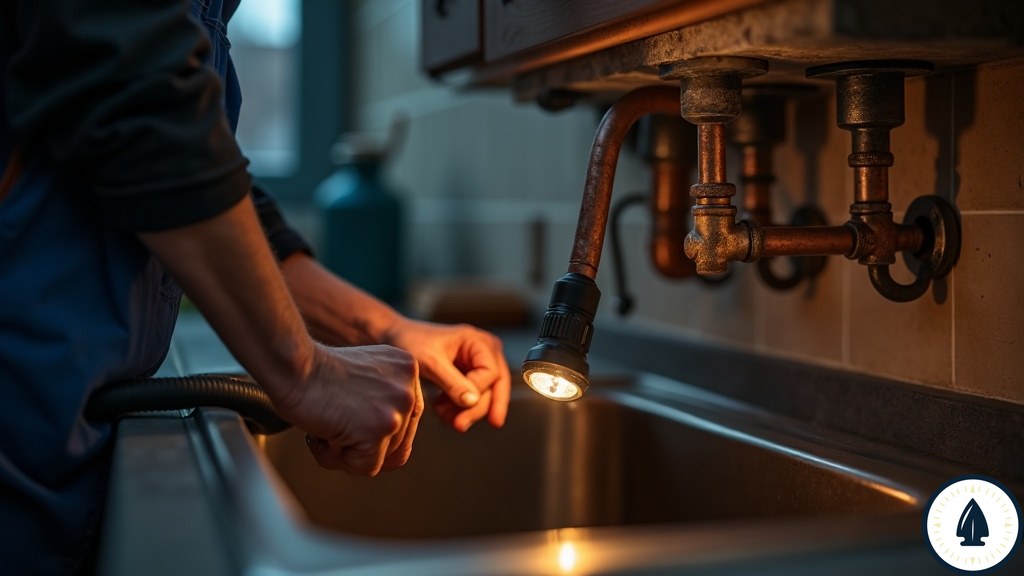
Many older homes simply lack the under-sink infrastructure needed for modern electronic plumbing fixtures. When you look under the cabinet, you might find your plumbing lines, a garbage disposal, and nothing else—no dedicated electrical outlet in sight. This presents a concrete problem: you want the hygiene and speed of a hands-free faucet, but you do not have an obvious way to power it.
This leaves you facing a critical decision point. You must choose between installing a battery-operated model that avoids electrical work, or committing to a hardwired installation that requires adding a new power source. Often, while evaluating these under-sink upgrades, homeowners also take the opportunity to assess their broader fixture needs, relying on professionals for comprehensive Bathroom Plumbing Upgrades and whole-house improvements. Making the right choice now ensures your kitchen performs flawlessly throughout the demanding September and pre-holiday hosting prep season.
How Solenoid Valves Drive Touchless Technology
To understand the power requirements of a touchless faucet, you have to look past the external sensor and focus on the internal mechanics. The heart of any hands-free plumbing fixture is the solenoid valve. This electromagnetic component acts as the gatekeeper for your water supply, opening and closing the line based on signals from the motion sensor.
The Mechanics of Actuation
When you wave your hand in front of the faucet, the sensor sends an electrical pulse to the solenoid. Here is how that process unfolds mechanically:
- The initial power surge: The solenoid requires a significant burst of electricity to overcome the resting water pressure sitting in your pipes.
- Magnetic engagement: This electrical surge magnetizes an internal coil, which physically pulls a rubber diaphragm or plunger upward, allowing water to flow.
- Sustained hold: The valve must maintain a low-level electrical draw to keep the magnet engaged and the water flowing while your hands are in the sensor zone.
- The release: Once you move your hands away, the power cuts off, and a mechanical spring pushes the diaphragm back down to seal the valve.
The amount of power drawn during each actuation is dictated by the mechanical resistance within the solenoid itself. If the valve has to work harder to pull that plunger against high water pressure or internal friction, it requires more electricity. In many older Taylor TX residential kitchens, the original layout never accounted for this type of repeated, localized power demand under the sink. Understanding this mechanical workload is the first step in deciding how to supply that power reliably.
Battery-Operated Faucets: Convenience vs. Long-Term Demand
For kitchens without an existing electrical outlet below the counter, battery-operated models offer a highly appealing, straightforward solution. These units typically rely on a battery pack holding four to six AA batteries, which mounts to the wall of the cabinet under the sink. While this setup bypasses the need for electrical modifications, it introduces a new set of long-term maintenance demands.
The Reality of High-Traffic Kitchens
The lifespan of a battery pack is directly tied to how often the solenoid valve opens and closes. During normal, quiet weeks, a set of batteries might last several months. However, the equation changes drastically during September and the pre-holiday hosting prep period. Consider the heavy usage a kitchen sees during a single family gathering:
- Constant handwashing: Multiple guests washing their hands before and after meals leads to dozens of extra actuations.
- Meal preparation: Rinsing vegetables, filling pots, and washing cutting boards requires the valve to open and close repeatedly in short bursts.
- Post-meal cleanup: Scraping plates and loading the dishwasher keeps the sensor working overtime.
This frequency of use stress-tests the battery packs. The primary drawback of a battery-operated system is the frustration of unexpected failure. There is nothing quite as aggravating as having the solenoid drain its final bit of power right when your hands are covered in raw ingredients, leaving you with a sink that refuses to turn on. While you can explore various Kitchen Faucets Innovations to Consider, you must weigh the upfront convenience of a battery pack against the ongoing chore of crawling under the sink to swap out AA batteries during your busiest hosting weekends.
The Hidden Impact of Hard Water on Battery Life
Beyond the frequency of use, local climate and environmental factors play a massive role in how electronic plumbing fixtures perform. The correlation between your local water quality and the mechanical efficiency of your plumbing components is undeniable, and it directly impacts the power consumption of touchless faucets.
Why Central Texas Water Changes the Equation
In our years of providing plumbing solutions throughout the area, our Plumbing Outfitters team has seen firsthand how local water quality impacts modern fixtures. Central Texas is known for having exceptionally hard water, often exceeding 10 to 15 grains per gallon of dissolved minerals like calcium and magnesium. When this hard water flows through the tight clearances of a solenoid valve, it leaves behind microscopic mineral deposits. Over time, this scaling builds up on the sensitive rubber diaphragms and internal plungers.
The friction factor: As mineral buildup increases, the mechanical friction inside the valve increases. The solenoid must fight against this crusty resistance every single time it tries to open the valve.
Accelerated power drain: Because the solenoid has to work harder to overcome that friction, it requires a much larger electrical surge for every actuation. This increased power draw causes batteries to drain significantly faster than manufacturer estimates predict. A battery pack that a manufacturer claims will last a year might only survive a few months in older Taylor TX residential kitchens due to the heavy mineral content in the water. This localized issue transforms a minor inconvenience into a recurring maintenance headache.
Hardwired Faucets: A Permanent Solution for Heavy-Use Kitchens
For homeowners who want complete reliability, especially during the heavy-use September and pre-holiday hosting prep season, a hardwired installation is the superior long-term choice. Instead of relying on disposable batteries, a hardwired touchless faucet uses an AC adapter that plugs directly into a dedicated electrical outlet installed under the sink.
Comparing the Power Sources
Understanding the operational differences between the two setups helps clarify why hardwiring is often preferred for busy households:
| Feature | Battery-Operated Models | Hardwired (AC Adapter) Models |
|---|---|---|
| Power Source | 4 to 6 AA batteries housed in an under-sink pack. | Direct connection to a standard 120V under-sink outlet. |
| Reliability | Vulnerable to sudden voltage drops and total power failure. | Provides consistent, uninterrupted power to the solenoid. |
| Maintenance | Requires frequent battery replacements, especially with hard water. | Zero ongoing power maintenance required. |
| Usage Spikes | Heavy holiday hosting rapidly depletes the remaining charge. | Completely immune to high-traffic usage spikes. |
| Solenoid Performance | Actuation can become sluggish as battery voltage slowly drops. | Valve opens crisply and consistently every single time. |
While the benefits of consistent power are clear, achieving this setup requires proper infrastructure. Attempting DIY electrical modifications under a sink full of water lines is incredibly risky. In fact, our technicians recently helped a local homeowner who attempted a DIY under-sink electrical and plumbing crossover that resulted in a frustrating malfunction. A Plumbing Outfitters professional was able to step in, correct the wiring and plumbing alignment safely, and get the system working perfectly—sparing the homeowner further embarrassment and preventing damage to the sensitive faucet components. Relying on professional Plumbing Services in Taylor, TX ensures that your permanent solution is both safe and effective.


Retrofitting Older Homes for Touchless Upgrades
Addressing the logistical realities of adding modern technology to older properties requires careful planning. Retrofitting older Taylor TX residential kitchens that lack modern electrical conveniences below the counter is a common challenge, but it is one that yields significant long-term rewards.
Coordinating Plumbing and Electrical Work
The most efficient way to achieve a hardwired setup is to coordinate the addition of an electrical outlet alongside your plumbing upgrades. Professional, code-compliant installation by local experts is critical here. Professionals know exactly how to properly manage under-sink power sources, ensuring that outlets are safely positioned away from water lines and that the electrical load meets current safety codes.
When updating older fixtures, addressing multiple needs at once is highly efficient. For example, our team recently helped a customer who needed both a kitchen disposal and multiple toilets replaced. A Plumbing Outfitters technician arrived on time, walked through the upgrade options, and performed all the replacements simultaneously, complete with professional caulking and alignment. Applying this same comprehensive approach to your kitchen faucet upgrade ensures that both the electrical and plumbing components are calibrated correctly.
Preventing Premature Failures: Proper installation does more than just supply power; it protects the fixture. If a touchless faucet is installed with incorrect water pressure settings or improper electrical grounding, the solenoid can fail prematurely. Having a professional handle the retrofit ensures that the fixture operates exactly as the manufacturer intended, providing years of reliable, hands-free service.
Make a Confident Upgrade Decision for Your Kitchen
Choosing the right power source for your new kitchen fixture comes down to balancing immediate convenience with long-term reliability. While battery packs offer a quick fix that avoids electrical work, hardwired installations provide the steadfast reliability needed for busy households, especially as you move into the demanding September and pre-holiday hosting prep season.
Before purchasing a new fixture, take the time to assess your under-sink setup and consider how local hard water conditions might impact a battery-operated model. If you want a seamless, dependable upgrade that won't quit on you in the middle of preparing a family meal, coordinating a hardwired installation is the smartest path forward. Reach out to schedule a consultation for Professional Plumbing Installation, and ensure your kitchen is fully equipped to handle whatever the season brings.
Frequently Asked Questions
Do touchless faucets need to be plugged in?
Not necessarily, as many touchless faucets are designed to run entirely on battery power. These battery-operated models use packs mounted under the sink, making them easy to install without electrical work. However, hardwired models do require an AC adapter plugged into a dedicated under-sink outlet for continuous power.
How long do batteries last in a touchless kitchen faucet?
Under normal conditions, a fresh set of batteries typically lasts between six months to a year. However, this lifespan drops significantly in high-traffic kitchens or in areas with hard water. The constant opening and closing of the valve, combined with mineral friction, forces the batteries to work harder and drain faster.
Can you change a battery operated faucet to hardwired?
Yes, many major plumbing manufacturers offer an AC adapter kit that allows you to convert a battery-operated faucet into a hardwired one. You will need to have a standard electrical outlet installed under your sink to plug the adapter into. Once the outlet is in place, the adapter simply replaces the battery pack connection.
What happens to a touchless faucet when the power goes out?
If you have a hardwired faucet and your home loses electricity, the touchless sensor will not operate. Fortunately, most modern hardwired faucets include a manual override feature, allowing you to use the handle to turn the water on and off mechanically until the power is restored. Battery-operated models are unaffected by household power outages.
Why is my touchless faucet draining batteries so fast?
Rapid battery drain is usually caused by excessive mechanical resistance inside the solenoid valve. Mineral buildup from hard water coats the internal components, forcing the valve to draw much more electrical power to push the plunger open. If you are replacing batteries every few weeks, your solenoid likely needs cleaning or replacement.
How does hard water affect touchless faucet solenoids?
Hard water leaves behind calcium and magnesium deposits that build up on the rubber diaphragms and moving parts of the solenoid. This scaling increases friction, making the valve sluggish and requiring more electricity to operate. Over time, severe hard water scaling can cause the solenoid to stick open or fail completely.
Ready to find your way out of plumbing trouble?
Call the Outfitters or request service online — a real team member will guide you through the next steps. No dispatch fee, free estimates, same-day service across Taylor, TX and beyond.