
Facing Water Line Replacement in Austin: The True Cost of Digging
Your yard is soggy, your home’s water pressure has plummeted, and you are suddenly staring down quotes for a trenchless water line replacement vs. traditional excavation: navigating Austin’s rocky terrain can make those initial estimates feel overwhelming. At Plumbing Outfitters, we frequently walk homeowners through the immediate shock of a major underground pipe failure and the confusion of comparing radically different repair bids. At first glance, the upfront base equipment costs for trenchless technology often appear higher than the standard digging quotes. However, that initial price tag rarely tells the whole story.
If you need immediate help evaluating your options, explore our comprehensive plumbing services to see how we handle complex underground repairs.
The core decision point for homeowners in our area comes down to choosing a repair method that accounts for solid limestone bedrock. Standard plumbing advice simply does not apply when your property sits on top of a rock shelf. To make the best financial choice, you need a logical breakdown of how local geology impacts the total cost of your project, far beyond the initial base equipment costs vs. secondary landscape and excavation costs.
What to Look for in Your Initial Quotes
Before you sign a contract, it helps to know exactly what you are reading. A standard estimate should clearly outline:
- Base equipment fees: The cost of the machinery required to reach the pipe.
- Labor hours: The estimated time the crew will spend on your property.
- Rock-breaking clauses: Specific terms detailing what happens if the crew hits solid bedrock.
- Site restoration: Whether the company will fill the trench, re-level the dirt, and repair your landscaping.
Understanding Austin’s Unique Geology: The Balcones Fault Zone
Plumbing in Central Texas requires highly specialized geological knowledge. If you live in the area, you are likely familiar with the rugged, beautiful landscapes that define the region. But what makes the surface visually striking makes the subterranean environment incredibly difficult to navigate. The geographical reality of the Balcones Fault zone dictates exactly how underground utilities must be installed, maintained, and replaced.
Unlike regions with deep layers of soft, loamy, or sandy soil, our technicians at Plumbing Outfitters know firsthand that Austin and the surrounding Central Texas communities present a massive challenge for traditional digging equipment. A standard trencher can slice through soft dirt with ease, but it will grind to a violent halt the moment it strikes solid rock.
The Edwards Plateau and Your Property
Many western Austin neighborhoods sit directly on the Edwards Plateau. This geological formation features hard limestone bedrock sitting just inches below a very thin layer of topsoil. When you attempt to access a buried water line in this environment, you are not just moving dirt—you are essentially mining.
The makeup of the limestone layer:
- Density: Central Texas limestone is incredibly dense, requiring heavy-duty hydraulic breakers to penetrate.
- Unpredictability: The bedrock is rarely flat. It forms jagged shelves and deep pockets, meaning a pipe might sit in soft soil for ten feet and then dive straight into solid rock.
- Vibration transfer: Striking this rock with heavy machinery sends intense vibrations through the ground, which can rattle nearby foundations and secondary utility lines.
Because this rock formation interacts so closely with residential utility lines, traditional trenching in this specific environment is exponentially more difficult and destructive than it is in other parts of the country.
The Illusion of Cheap Excavation: Hidden Costs in Limestone
The Problem: A pattern we see often at Plumbing Outfitters is homeowners receiving a quote for traditional excavation that looks highly appealing at first glance. The upfront price is low, and the timeline seems reasonable. However, these deceptively cheap upfront quotes often omit the heavy machinery fees required to break through solid bedrock.
The Cause: Generic plumbing estimates are usually based on digging through standard dirt. When a trenching crew hits an unexpected limestone shelf, the standard equipment is no longer sufficient. The project instantly requires hydraulic hammers, specialized rock saws, and significantly more labor hours. Suddenly, a two-day job turns into a week-long excavation project, and the homeowner is hit with massive secondary costs for extended labor and specialized machinery rentals.
The Solution: You have to factor in the unpredictable nature of excavation pricing. When you contrast standard digging with the controlled base equipment costs of trenchless methods, the financial picture changes completely. Factoring in all required rock-breaking makes trenchless the financially smarter choice, as it eliminates the hidden fees associated with fighting the bedrock. To understand exactly how this specialized equipment protects your wallet, you can review the benefits of trenchless technology for homeowners.
Comparing the True Costs of Repair Methods
| Project Factor | Traditional Excavation | Trenchless Technology |
|---|---|---|
| Initial Quote Accuracy | Low (often excludes rock-breaking fees) | High (predictable base equipment costs) |
| Heavy Machinery Required | Excavators, hydraulic hammers, rock saws | Specialized boring/bursting units |
| Labor Hours | Extended significantly by bedrock | Controlled and highly predictable |
| Secondary Costs | Massive landscape and hardscape restoration | Minimal to no restoration required |


How Trenchless Technology Navigates Central Texas Rock
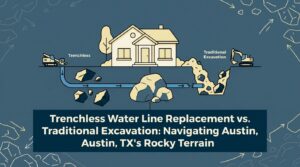
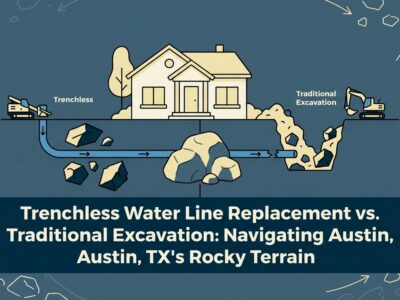
Trenchless technology was practically built for neighborhoods sitting on rock. Instead of fighting the geology from above, these methods bypass the need for continuous trenching through limestone altogether. By utilizing two small access points—one at the house and one at the street—technicians can replace an entire water line without tearing a massive trench through your yard.
The mechanics of the trenchless approach:
- Video Inspection: Technicians send a high-resolution camera into the existing line to map the route and identify the exact location of the pipe failure.
- Establishing Access: Two small pits are carefully dug at either end of the water line, minimizing the amount of bedrock that needs to be disturbed.
- Deploying the Equipment: Specialized boring or pipe-bursting equipment is calibrated to handle subterranean obstacles. In a pipe-bursting scenario, a heavy-duty bursting head is pulled through the old pipe, shattering it outward while simultaneously pulling a brand-new, highly durable pipe into place.
- Securing the Connections: The new line is connected to the municipal supply and the home’s interior plumbing, and the two small access pits are filled in.
This process results in a massive reduction in heavy machinery usage. Less machinery directly correlates to less collateral vibration damage to surrounding infrastructure. You do not have to worry about a hydraulic hammer rattling your foundation or cracking your driveway. This technology is specifically suited for Austin / Central Texas neighborhoods built on rock, allowing for a precise, controlled installation.
The Impact of July Droughts on Aging Water Lines
The subterranean challenges in our region go beyond just the rock itself; the weather plays a massive role in pipe vulnerability. With peak July heat and severe drought conditions baking the region, our crews typically see a massive spike in pipe vulnerabilities. Austin features expansive clay soils that sit directly on top of the limestone bedrock. When this clay gets wet, it expands. When it dries out during the blistering summer months, it shrinks and cracks.
The mechanics of soil contraction during July droughts:
As the peak summer heat sets in and rainfall disappears, the expansive clay soil pulls away from your home’s foundation and your underground utility lines. This sudden shifting increases the physical stress on aging and brittle water lines. Pipes that are already weakened by age or minor corrosion are suddenly forced to bear the weight of shifting earth, often snapping or pulling apart at the joints.
When our plumbers respond to a pipe failure under these peak-summer conditions, we emphasize that traditional excavation further destabilizes an already dry, cracked yard. Ripping a massive trench through dehydrated soil makes it incredibly difficult to properly compact the earth once the pipe is replaced. Trenchless replacement serves as a vital way to preserve soil integrity during extreme drought conditions. Because it only requires two small access pits, the surrounding dehydrated soil remains undisturbed, preventing further settling and shifting around your property.
Landscape Preservation: Avoiding Secondary Restoration Fees
When evaluating upfront base equipment costs vs. secondary landscape/excavation costs, you have to look at what happens above the ground. The aesthetic and financial benefits of preserving your property surface cannot be overstated. Traditional excavation requires a crew to tear up everything sitting above the broken pipe.
Common landscape elements destroyed by traditional trenching:
- Custom Driveways: Concrete and paver driveways must be saw-cut and demolished to reach pipes running underneath them.
- Mature Trees: Trenchers regularly sever the root systems of old-growth live oaks and other valuable shade trees.
- Retaining Walls: Hardscaping built into hillsides must be dismantled and rebuilt.
- Sod and Garden Beds: Carefully cultivated lawns and flower beds are turned into construction zones.
Once the pipe is repaired, you face the specific difficulty of backfilling and re-leveling rocky soil. When you dig up limestone and clay, it does not go back into the hole cleanly. It leaves the yard lumpy, prone to sinkholes, and visually ruined. You are then left footing the bill for new sod, concrete pouring, and professional landscaping to restore your property.
Trenchless methods protect driveways, mature trees, and custom landscaping from destruction. By tunneling underneath these expensive features, the surface of your home remains completely intact. Avoiding these massive secondary restoration fees easily offsets the initial base equipment costs of the trenchless machinery.
Accurate Job Scoping: Why Local Geological Expertise Matters
A generic plumbing quote cannot account for Austin’s unique subterranean challenges. If a contractor assumes your yard is filled with soft dirt, their low estimate will vanish the moment their shovel hits the Edwards Plateau. This is why receiving accurate, no-surprise assessments before work begins is absolutely critical for your budget and your peace of mind.
Proper job scoping prevents mid-project delays and unexpected bedrock-breaking fees. It requires a team that knows exactly what lies beneath the topsoil in your specific neighborhood. As experienced Austin plumbers, the Plumbing Outfitters team relies on deep local geological expertise to assess your property correctly the first time. Having spent years working through the limestone of the Edwards Plateau, we know which neighborhoods require heavy-duty rock solutions and which ones allow for smoother sailing.
We strongly encourage homeowners to prioritize regional expertise over seemingly cheap initial bids. A contractor who understands the Austin / Central Texas limestone layer will provide a transparent, accurate quote that factors in the reality of the terrain. This local expertise acts as a primary trust factor, ensuring that the price you are quoted is the price you actually pay, without sudden demands for emergency machinery rentals.
Frequently Asked Questions About Trenchless Water Line Replacement in Austin
Does trenchless water line replacement work in rocky soil?
Yes, trenchless technology is highly effective in rocky soil when properly deployed. Specialized boring and pipe-bursting equipment is designed to navigate around or shatter through subterranean obstacles without the need for a continuous trench. This method is often the preferred choice in areas with heavy limestone, as it avoids the need for extensive rock-breaking from the surface.
Why is traditional trenching difficult in Austin?
Traditional trenching is difficult in Austin because much of the area sits on the Balcones Fault zone and the Edwards Plateau, which feature dense limestone bedrock just below the topsoil. Standard excavation equipment cannot easily dig through this rock, requiring crews to bring in hydraulic hammers and rock saws. This dramatically increases the time, noise, and difficulty of the project.
What are the hidden costs of traditional water line replacement?
The hidden costs of traditional excavation typically include heavy machinery fees for breaking bedrock and extensive landscape restoration. While the initial digging quote might look low, it rarely accounts for the extra labor hours required when the crew hits solid rock. Additionally, homeowners are left paying to rebuild driveways, replace sod, and repair hardscaping destroyed by the trench.
How does summer drought affect my water lines in Central Texas?
Severe summer droughts cause the expansive clay soils in Central Texas to dry out, shrink, and shift. This significant soil movement places immense physical stress on aging underground water lines, often causing them to crack or separate at the joints. Trenchless replacement is ideal in these conditions because it does not further destabilize the dry, cracked soil.
Can trenchless technology save my driveway and landscaping?
Absolutely. Because trenchless replacement only requires two small access pits at either end of the water line, the pipe is replaced underground without disturbing the surface. This allows you to completely preserve custom concrete driveways, mature tree roots, retaining walls, and expensive garden beds, saving you from costly restoration fees.
Secure Your Property with Expert Trenchless Solutions
Ultimately, the local limestone layer dictates the true cost of your water line replacement. While upfront base equipment costs vs. secondary landscape/excavation costs can make traditional bids look tempting, trenchless methods ultimately save money by preventing property damage and eliminating hidden rock-breaking fees. You do not have to sacrifice your driveway or your budget to restore your home’s water supply. To get an accurate, no-surprise assessment tailored to your specific property’s geology, contact our team today and secure a lasting, minimally invasive solution.