

The Ultimate Lone Star Summer Plumbing Maintenance Checklist
Why Your Home Plumbing Needs Extra Attention This Texas Summer
The best summer plumbing tips for Texas homeowners cover five core areas: checking for hidden leaks, inspecting outdoor irrigation, testing water pressure, maintaining your water heater and AC condensate drain, and upgrading to water-saving fixtures. Here’s a quick overview:
- Check for hidden leaks – Test your water meter before and after a two-hour no-use period. No water use but the dial moves? You likely have a leak.
- Inspect outdoor faucets and irrigation – Look for drips, cracked lines, sprinkler heads spraying sidewalks, and soggy yard patches.
- Test your home water pressure – Ideal PSI is between 40 and 80. Anything above 80 can damage pipes and appliances.
- Flush your water heater and clear your AC condensate drain – Sediment and algae buildup are both more common in summer and both cause real damage.
- Upgrade to low-flow fixtures – Showerheads, aerators, and high-efficiency toilets can cut water waste significantly during the months when usage peaks.
Texas summers are brutal on home plumbing in ways that most homeowners don’t see coming. Temperatures regularly push past 100°F, the ground dries out and shifts, water demand spikes, and storms roll through fast. That combination puts stress on pipes, sewer lines, water heaters, and irrigation systems all at once.
In San Antonio, water main breaks more than doubled from around 470 per month early in the year to over 1,000 in August during one record-breaking summer. In Houston, calls for water leaks jumped to 500 per week during peak heat. These aren’t flukes — they’re what happens when extreme heat, drought-shrunken clay soil, and high water demand hit your plumbing system at the same time.
The good news is that most of the damage is preventable. This checklist walks you through exactly what to inspect, fix, and monitor so your plumbing holds up from June through September.
Why Texas summers are so hard on home plumbing
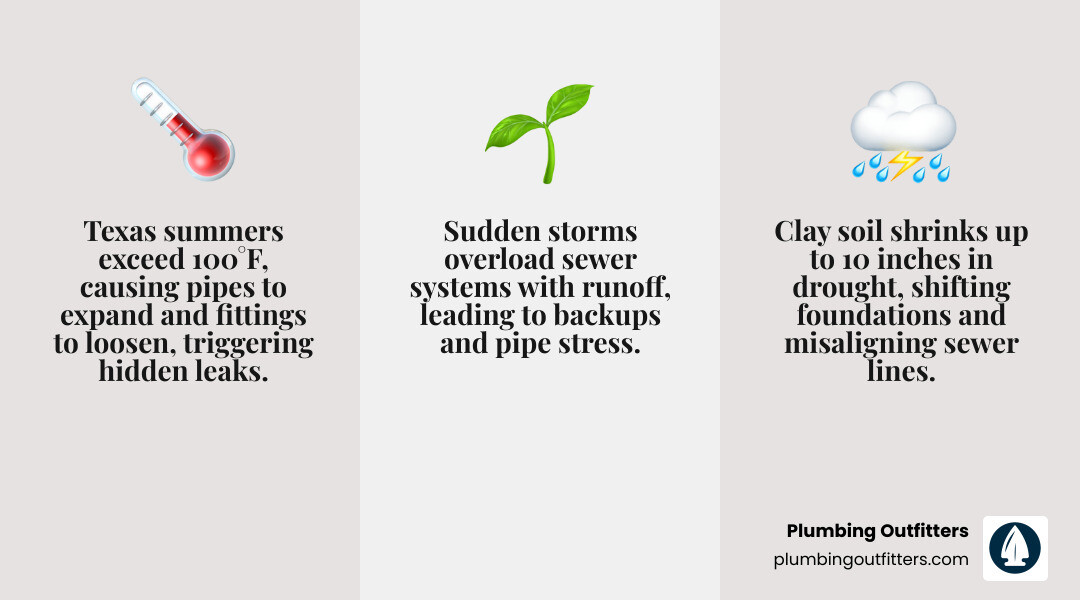
Central Texas homes deal with a rough summer combo: long heatwaves, clay-heavy soil, dry spells, sudden storms, and much heavier water use. That matters because plumbing is not isolated from the rest of your house. Your pipes move when your slab moves. Your sewer line feels the effects of soil shrinkage. Your outdoor system takes a beating from UV exposure and irrigation demand.
Why extreme heat can trigger leaks, pipe movement, and slab-related damage
Heat affects plumbing materials in simple but important ways. Pipes expand as temperatures rise, especially in attics, garages, exterior walls, and exposed outdoor runs. Seals and fittings can loosen, and older joints may start leaking where they held fine in milder weather.
In Central Texas, attic temperatures can get far hotter than the outdoor air. That means pipes running overhead are exposed to serious heat stress even when everything inside the home feels cool. Underground lines can also shift as the ground dries and settles.
This is one reason summer leak calls climb during peak heat. A tiny weakness in a fitting or line may stay quiet for months, then show up in July with a water stain, damp cabinet, or unexplained bill spike. Slab leaks are especially concerning because they can hide under flooring while quietly damaging the foundation.
How drought-shrunken Texas clay soil can shift water and sewer lines
Much of the Austin-area region has expansive clay soil. When it gets wet, it swells. When it dries out during drought, it contracts and pulls away from foundations and buried plumbing. That constant movement can stress water lines, sewer lines, and the slab itself.
When the soil shrinks, underground pipes may lose the support they normally rely on. That can lead to offsets, sagging sections, cracked joints, or full breaks. Sewer lines are especially vulnerable because even a slight misalignment can catch waste and toilet paper, turning a small issue into a repeat clog.
You may notice:
- Cracks in drywall or at door corners
- Doors that suddenly stick
- Soft or soggy spots in the yard
- Extra-green patches over buried lines
- Water pooling near the foundation
If you suspect movement-related plumbing trouble, learn more about leak detection and plumbing repair services.
The most common warning signs homeowners should not ignore
Summer plumbing problems usually give warnings before they turn into emergencies. Common red flags include:
- A sudden increase in your water bill
- Musty smells under sinks or near walls
- Low water pressure at multiple fixtures
- Slow drains or repeated clogs
- Gurgling sounds from drains or toilets
- Sewage odors indoors or in the yard
- Damp flooring, warped baseboards, or stained ceilings
- Unusually lush grass over a sewer or water line
If your home is talking, do not make it repeat itself louder.
Outdoor summer plumbing checks that save water fast
Outdoor water use can account for up to 60% or more of household water consumption during hot Texas summers. That means your sprinkler system, hose bibs, and outdoor faucets deserve just as much attention as the kitchen sink.
Inspect hose bibs, hoses, and exposed outdoor lines for drips and cracks
Start with a quick walk around the house. Check every outdoor faucet, hose bib, garden hose, and exposed pipe for signs of leakage or wear.
Look for:
- Dripping spouts
- Rust or mineral buildup
- Cracked vacuum breakers
- Loose hose connections
- Bulging or split hoses
- Damp wall areas behind the faucet
A leak that seems tiny can still waste a surprising amount of water. A faucet dripping once per second can waste more than 3,000 gallons in a year. In a long Texas summer, that is a lot of water to lose for no good reason.
Also pay attention to exposed PVC or plastic irrigation parts. Strong sun and UV exposure can make them brittle over time. If a hose nozzle or connector feels flimsy, replace it before it fails during heavy use.
Tune up sprinklers and irrigation systems before the hottest stretch
Before the next stretch of triple-digit weather, run each irrigation zone and watch what it actually does, not what you hope it does.
Check for:
- Sprinkler heads spraying sidewalks or driveways
- Broken or tilted heads
- Clogged nozzles
- Misting instead of proper spray
- Leaks at valves or risers
- Areas getting too much or too little water
For many homes, drip irrigation or soaker hoses are better choices than broad spray during summer because they deliver water more directly to the soil with less evaporation. Smart irrigation controllers can also help adjust watering based on weather and soil conditions.
Set watering for early morning when possible. Midday watering loses more water to evaporation, and evening watering can leave moisture sitting too long in some landscapes.
Watch for underground irrigation and main-line leaks in the yard
Not every outdoor leak announces itself with a fountain effect. Some stay hidden underground.
Watch for:
- Soggy patches when it has not rained
- Soil erosion near line paths
- Mushy spots around valve boxes
- Grass that is much greener in one strip or patch
- Puddles near the meter or foundation
An underground leak can waste a lot of water fast and may also affect foundation moisture levels. If you see repeated yard wet spots or suspect a buried line issue, it is smart to have it inspected sooner rather than later.
Indoor checks for summer plumbing tips for texas homeowners
Summer puts extra strain on indoor plumbing too. Kids are home, guests come over, laundry increases, toilets flush more often, and showers somehow get longer even when everyone swears they were only in there for five minutes.
Quick leak checks for toilets, faucets, and hidden lines
Toilets are one of the biggest water wasters in the home. A single running toilet can waste 200 or more gallons per day. Start by listening for phantom refills and checking whether the toilet keeps running after a flush. A worn flapper is a common culprit.
Then inspect:
- The base of each toilet for staining or soft flooring
- Faucet spouts for steady drips
- Supply lines under sinks for moisture
- Cabinets for musty smells or swelling
- Walls and ceilings for discoloration
A simple hidden leak test is worth doing once a month in summer:
- Turn off all water-using fixtures and appliances.
- Check the water meter reading.
- Wait two hours without using water.
- Recheck the meter.
If the reading changed, you likely have a leak somewhere in the system.
Household leaks can waste more than 10,000 gallons per year, enough to fill a backyard swimming pool. That stat gets attention because it should.
How to test water pressure and keep PSI in the safe range
Ideal residential water pressure is between 40 and 80 PSI. Over 80 PSI is too high and can strain pipes, faucets, washing machine hoses, dishwashers, and water heaters.
You can test pressure with a simple gauge attached to a hose bib or laundry connection. Check it when no fixtures are running for the clearest reading.
| Water pressure range | What it can mean | Common symptoms |
|---|---|---|
| Below 40 PSI | Pressure may be too low | Weak showers, slow-filling tubs, poor sprinkler performance |
| 40-80 PSI | Ideal range | Normal fixture operation, less stress on plumbing |
| Above 80 PSI | Pressure is too high | Banging pipes, leaking fixtures, appliance wear, repeated leaks |
If pressure is too high, a pressure reducing valve may need adjustment or replacement. If pressure is suddenly too low, that can point to a leak, mineral buildup, valve issue, or line damage. Persistent pressure problems are a good reason to call us.
Simple drain and disposal habits that prevent summer clogs and backups
Summer means cookouts, guests, extra showers, and more drain use across the board. A few small habits can prevent a lot of ugly drain drama.
Use these basics:
- Put strainers in shower and sink drains
- Never pour grease down the kitchen sink
- Scrape food scraps into the trash first
- Run cold water before, during, and after using the disposal
- Keep fibrous foods and starchy scraps out of the disposal
- Flush only toilet paper
If you have guests over often, keep a small trash can in each bathroom to discourage wipes, paper towels, and other non-flushables from taking the sewer line on an adventure it did not ask for.
For more prevention ideas, see our guide to clogged drain prevention.
Don’t skip water heaters, AC condensate drains, and sewer lines
These systems are easy to ignore because they mostly operate in the background. Unfortunately, summer is when background problems love to step into the spotlight.
Water heater maintenance during intense heat and heavy summer demand
It sounds backward, but water heaters still need attention in hot weather. Summer often brings heavier use from houseguests, kids home from school, and extra laundry. In many Texas homes, hard water also contributes to sediment buildup inside tank-style heaters.
A summer water heater check should include:
- Looking for rust, corrosion, or moisture around the unit
- Checking for unusual popping or rumbling sounds
- Testing the temperature and pressure relief valve
- Flushing sediment from a tank water heater
- Scheduling tankless descaling if needed
Sediment makes the system work harder and can shorten equipment life. If your hot water seems inconsistent or your unit is making noise, it is time for attention. For related seasonal upkeep ideas, visit seasonal plumbing prep.
Why AC condensate drains need summer attention in Texas homes
In a Texas summer, your air conditioner can produce a steady stream of condensation. That moisture drains through a condensate line, and when that line clogs with algae, sludge, or debris, water can back up into the home.
That can lead to:
- Water damage near the indoor unit
- Mold or mildew growth
- Musty odors
- Drain pan overflow
- System shutdowns on some units
We recommend checking the condensate drain regularly during peak cooling season. If you notice moisture around the indoor unit, a musty smell, or your AC shutting off unexpectedly, the drain line may be the problem. This is one of those small maintenance items that can prevent a very annoying ceiling stain.
Preventing tree root intrusion and catching sewer trouble early
During dry summer periods, tree roots go looking for water. Sewer lines are a popular target because they carry moisture and nutrients. Roots can enter through tiny cracks or joints, then expand and trap debris until the line slows or backs up.
Watch for these warning signs:
- Multiple slow drains in the house
- Gurgling toilets
- Sewage odors
- Frequent drain clogs
- Wet or extra-green patches in the yard
- Backups after storms
A professional sewer camera inspection is often the fastest way to confirm root intrusion or a damaged line. In some homes, a backwater valve may also help reduce the risk of storm-related sewer backups. For more seasonal warning signs, read summertime plumbing issues to look out for.
Water-saving habits and your full Texas summer plumbing routine
Water conservation matters in Texas summers for two reasons: supply pressure and utility bills. With outdoor usage climbing and municipal rates rising in some areas, wasting water gets expensive and puts extra strain on local resources.
Low-flow upgrades and daily habits that cut summer water waste
The easiest way to save water is to stop wasting it in places you barely notice.
Good upgrades include:
- Low-flow showerheads
- Faucet aerators
- High-efficiency toilets
- Efficient irrigation controls
Low-flow showerheads can reduce water use by 40% or more without ruining shower pressure. Older toilets may use 3.5 to 7 gallons per flush, while efficient models use much less. Add in faucet aerators and smart daily habits, and the savings can really add up.
Try these habits too:
- Fix drips promptly
- Take shorter showers
- Run full loads of laundry and dishes
- Avoid overwatering landscaping
- Keep an eye on the monthly water bill
For more ideas, check out our water-saving tips.
A simple weekly and monthly checklist for heatwaves, storms, and drought
A routine works better than a good intention. Here is a simple summer schedule for Central Texas homeowners.
Weekly:
- Walk the yard and look for soggy spots or unusually green patches
- Check outdoor faucets and hoses for drips
- Empty and clean drain strainers
- Listen for running toilets
- Glance at the water heater area for moisture
- Make sure sprinklers are not watering pavement
Monthly:
- Do a water meter leak test
- Test water pressure
- Run every irrigation zone and inspect spray patterns
- Check under sinks for cabinet moisture or odors
- Inspect the AC condensate drain and drain pan area
- Clear exterior drains before major storm periods
- Monitor foundation moisture during drought conditions
A little consistency can go a long way in preventing leaks, clogs, and sewer trouble.
When DIY stops and it’s time to call a licensed plumber
We are big fans of homeowners doing simple checks and basic prevention. But some plumbing issues need professional tools, training, and diagnosis.
Call a licensed plumber if you notice:
- Signs of a slab leak
- Sewer backups or sewage odors
- Repeated clogs in the same drain
- No hot water or water heater leaks
- Water pressure above 80 PSI that will not stabilize
- Hidden leak signs with no obvious source
- Burst pipes, cracked lines, or active water damage
You should also know where your main shutoff valve is before a problem happens. That is one of the most useful pieces of emergency prep any homeowner can do. For more guidance, visit preventing plumbing emergencies.
Conclusion
Texas summers do not go easy on plumbing, especially in the Greater Austin area where heat, drought, clay soil, and sudden storms all show up to the same party. The good news is that most summer plumbing trouble starts with clues you can catch early: a higher bill, a damp cabinet, a slow drain, a sprinkler spraying the sidewalk like it is being paid to do it.
If you stay ahead of leaks, monitor water pressure, keep outdoor systems tuned up, and give your water heater, condensate drain, and sewer line some attention, your home has a much better chance of making it through summer without surprises.
When you need help, we are here with Texas Class Service, upfront pricing, and a neighborly approach you can feel good about. Explore our full range of plumbing services for homes in Austin, Bastrop, Cedar Park, Elgin, Georgetown, Granger, Hutto, Leander, Liberty Hill, Manor, Pflugerville, Round Rock, Taylor, Temple, West Lake Hills, and nearby communities.