


Why Emergency Frozen Pipe Repair in West Lake Hills TX Requires Immediate Action
Emergency frozen pipe repair West Lake Hills TX becomes critical when temperatures drop unexpectedly in the Austin area. When water inside your pipes freezes, it expands with tremendous force—creating pressure that can crack or burst pipes regardless of whether they’re metal or plastic. West Lake Hills residents face unique risks during winter freezes because Texas homes aren’t typically built for extreme cold, with water lines often running through attics, crawl spaces, or along exterior walls where they’re most vulnerable. A single burst pipe can lose 4-8 gallons of water per minute, leading to thousands in damage and potential mold growth within 24-48 hours.
Quick Action Steps for Frozen Pipes:
- Shut off your main water supply immediately if you suspect a frozen or burst pipe
- Open the affected faucet to relieve pressure and allow water to escape as ice melts
- Apply gentle heat using a hair dryer, heating pad, or warm towels—never use open flames
- Call a professional plumber if the frozen section is inaccessible, inside walls, or if you cannot locate the problem
For comprehensive plumbing services in the area, check out our West Lake Hills plumbing solutions, or if you need immediate assistance, contact our emergency plumbing team.
Most pipes begin freezing when temperatures drop below 20 degrees Fahrenheit. Well-insulated pipes may take about 6 hours to freeze, while poorly insulated pipes can freeze in as little as 3 hours. The problem intensifies in West Lake Hills because homes here are built for heat, not cold—water lines often sit in unheated spaces or run along exterior walls, making them exceptionally vulnerable during Texas winter storms.
How to Spot the Telltale Signs of Frozen Pipes
When the mercury dips in West Lake Hills, our plumbing systems can take a beating. Recognizing the early warning signs of frozen pipes is your first line of defense against a potential disaster. We’ve seen it all, from subtle hints to glaring red flags, and we’re here to help you understand what to look for.
1. Check Your Faucets
The most common and immediate sign that you might have a frozen pipe is a lack of water or a significantly reduced trickle when you turn on a faucet. If you wake up to find that your morning coffee ritual is interrupted by a dry tap, or your shower delivers only a sad drip, it’s time to investigate.
- No water: This is the most obvious indicator. If absolutely no water comes out when you open a faucet, it’s highly likely that the pipe supplying that fixture is completely frozen.
- Reduced trickle: A weak flow of water, much lower than usual, suggests that ice is forming inside the pipe, restricting the flow. Think of it as a plumbing traffic jam caused by an icy blockage.
- Check multiple fixtures: It’s crucial to check both hot and cold water lines, and to test faucets throughout your home. If only one faucet is affected, the freeze is likely localized to that specific line. If all faucets in a particular area (like a bathroom) or throughout the house are affected, the problem could be with a main supply line.
2. Visually Inspect Exposed Pipes
Sometimes, your pipes will give you a visual cue that they’re in trouble. Take a quick tour of your home’s vulnerable areas, especially during a cold snap.
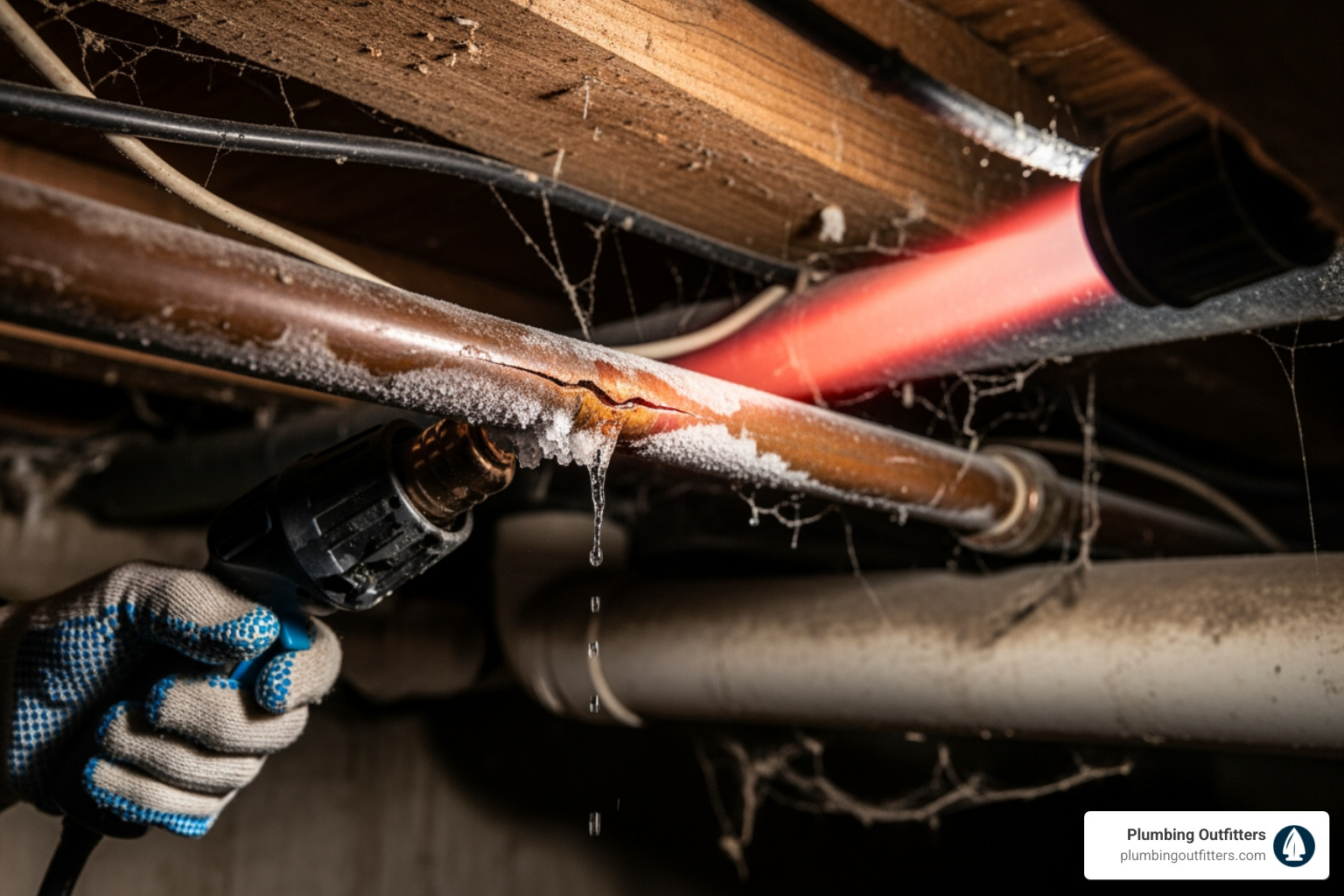
- Visible frost or ice buildup: Look for frost on the outside of pipes. This is a clear sign that the water inside has frozen solid.
- Condensation: Excessive condensation on pipes in unheated spaces, even without visible ice, can indicate that the pipe’s exterior is very cold, and the water inside might be close to freezing.
- Pipe locations: Pay special attention to pipes in unheated areas like basements, crawl spaces, attics, and garages. These are typically the first to freeze because they lack the warmth of your home’s main living areas. Pipes running along exterior walls are also particularly susceptible. In West Lake Hills, where homes are often built with less insulation around plumbing in these areas, this inspection becomes even more vital. For more insights on this, you can visit our page on frozen pipes.
Beyond these direct observations, listen for unusual sounds like gurgling from your drains or pipes, which can sometimes indicate partial blockages from ice. You might also notice strange smells coming from your faucets or drains, potentially due to water becoming stagnant behind an ice blockage. In more severe cases, damp drywall or ceilings could indicate that a pipe has already burst and is leaking, which means you’re no longer dealing with just a frozen pipe, but a full-blown plumbing emergency.
The First 2 Steps to Take for a Frozen Pipe Emergency
Finding a frozen pipe can be alarming, but don’t panic! Taking immediate, decisive action can make all the difference in preventing extensive damage to your West Lake Hills home. Here are the crucial first steps we recommend.
3. Locate and Shut Off the Main Water Supply
This is arguably the most critical step you can take if you suspect a frozen pipe, especially if you fear it might burst.
- Preventing floods: If a frozen pipe bursts, turning off the main water supply will stop the flow of water into your home, preventing a catastrophic flood. A single burst pipe can release 4-8 gallons of water per minute, turning your home into an indoor swimming pool in no time.
- Minimizing water damage: By shutting off the water, you greatly reduce the potential for structural damage, ruined belongings, and the rapid growth of mold.
- Main valve location: Your main water shut-off valve is usually located where the main water line enters your home. This could be in your basement, crawl space, near your water heater, or outside near your water meter. We highly recommend every homeowner in West Lake Hills know exactly where this valve is and how to operate it before an emergency strikes. If you’re unsure, now is the time to find it and even “flag” it for easy identification.
4. Attempt a Safe Thaw (If Possible)
Once the main water supply is off (or if you’re certain the pipe hasn’t burst yet), you can attempt to thaw the frozen section. The key here is safe thawing.
- Open the faucet: Make sure the faucet connected to the frozen pipe is open. This allows melted ice to escape and helps relieve pressure in the pipe as it thaws.
- Safe thawing tools:
- Hair dryer: This is a great tool for gently thawing exposed pipes. Keep it moving to distribute heat evenly.
- Heating pad: Wrap a heating pad around the frozen section.
- Warm towels: Soak towels in hot water and wrap them around the pipe. Replace them as they cool.
- Portable space heater: Position a small space heater (never unattended) a safe distance from the frozen pipe to warm the surrounding area.
- Never use open flames: We cannot stress this enough: DO NOT use a blowtorch, propane heater, or any other device with an open flame to thaw pipes. This is an extreme fire hazard and can cause serious damage to your pipes, potentially leading to immediate bursting or weakening them for future issues.
- Patience is key: Thawing can take time. Continue applying heat until water flow is restored. Once it is, you can slowly turn your main water supply back on and check for any leaks.
If you can’t locate the frozen section, it’s inside a wall, or you’re simply uncomfortable attempting the thaw yourself, that’s when it’s time to call in the professionals for emergency frozen pipe repair West Lake Hills TX.
The Dangers of Delaying Emergency Frozen Pipe Repair in West Lake Hills TX
When temperatures plummet in West Lake Hills, frozen pipes are more than just an inconvenience—they’re a ticking time bomb. Delaying professional intervention can turn a manageable problem into a catastrophic event for your home. We’ve seen the devastating consequences, and we want to help you avoid them.
Why You Need a Professional for Emergency Frozen Pipe Repair in West Lake Hills TX
While some minor frozen pipe issues can be addressed with DIY methods, many situations warrant immediate professional attention. We pride ourselves on offering “Texas Class Service” and a trustworthy, neighborly experience, especially during emergencies.
- Inaccessible pipes: Often, the frozen section of a pipe is hidden behind walls, under floors, or deep within your home’s structure. Our experienced plumbers have specialized equipment to locate these hidden freezes without tearing apart your home.
- Hidden leaks: Even if you manage to thaw a pipe, there might be micro-fractures or weakened joints that could lead to leaks later. We can thoroughly inspect your plumbing system for any hidden damage.
- Professional thawing equipment: While hair dryers are great for exposed pipes, we use advanced, safe, and efficient thawing equipment for more stubborn or deeply frozen sections.
- Water damage assessment: If a pipe has burst, even a small leak can cause significant water damage. We can assess the extent of the damage, dry out affected areas, and help prevent secondary issues like mold growth.
- Preventing further damage: Our expertise ensures that thawing is done safely and effectively, minimizing the risk of a burst pipe during the process and preventing future issues from poorly executed repairs.
When should a plumber be called for frozen pipes in West Lake Hills, TX? Immediately, if you suspect a burst pipe, cannot locate the frozen section, or are unable to thaw it yourself safely. For any plumbing emergency, don’t hesitate to reach out to our emergency plumber team.
The Risk of a Burst Pipe
The primary danger of a frozen pipe is its potential to burst. This isn’t just a minor leak; it can be a torrent of water with severe repercussions.
- Water pressure buildup: When water freezes, it expands. This expansion creates immense pressure within the pipe. This pressure doesn’t just push outwards; it also pushes back towards the nearest faucet, creating pressure between the ice blockage and the closed faucet.
- Ice expansion: The sheer force of expanding ice can overwhelm the structural integrity of both metal and plastic pipes.
- Weakened pipe joints: Even if the pipe wall itself doesn’t burst, the weakest points—joints, elbows, and connections—are highly susceptible to cracking under pressure.
- Catastrophic failure: The average amount of time it takes for pipes to freeze and burst without a heating source is about four to five hours in temperatures of 20 degrees Fahrenheit or below. Once a pipe bursts, the consequences are immediate and severe. Just one burst pipe can cause a building to lose 4-8 gallons of water a minute. This rapid water loss translates directly into thousands of dollars in repairs, not just for the pipe itself, but for the extensive water damage it causes.
Water damage can lead to structural damage, weakening your home’s foundation and framework. It also creates a breeding ground for mold, which can start growing within 24-48 hours in damp conditions, posing significant health hazards to your family.
5. How to Prevent Future Frozen Pipe Problems
Prevention is always better than cure, especially when it comes to the headaches and expenses of frozen pipes. As your trusted plumbing experts in West Lake Hills, we believe in empowering our neighbors with the knowledge to protect their homes. Taking proactive steps now can save you from an emergency frozen pipe repair West Lake Hills TX later.
Proactive Winterization for Your West Lake Hills Home
Given that Texas homes, including many in West Lake Hills, are often built for heat rather than extreme cold, proactive winterization is crucial. Our plumbing systems are more vulnerable because water lines might be shallower underground or run along exterior walls, in attics, or crawl spaces without adequate insulation.
- Insulate pipes: This is your number one defense. Focus on pipes located in unheated areas like your garage, attic, and crawl spaces. Use foam pipe insulation, heat tape, or even old towels and blankets in a pinch. The goal is to create a barrier against the cold.
- Disconnect garden hoses: Before freezing temperatures hit, disconnect all garden hoses from outdoor spigots. Leaving them attached can cause water in the spigot and connecting pipes to freeze and burst.
- Cover outdoor spigots: Invest in insulated hose bib covers (those little foam domes) for all exterior faucets. These are inexpensive and provide a vital layer of protection.
- Seal drafts: Inspect your home for any cracks or openings in foundations, walls, or around windows and doors that could allow cold air to reach pipes. Seal them with caulk or weatherstripping. Pay particular attention to areas where pipes enter your home.
- Water heater lines: Insulate the water lines connected to your water heater, especially if it’s in an unheated garage or utility space. This helps maintain efficiency and prevents freezing in vulnerable areas.
- Drain sprinkler systems: If you have an irrigation system, ensure it’s properly drained and winterized according to manufacturer instructions. This often involves blowing out the lines with compressed air.
For more detailed guidance on how to protect your plumbing, check out our article on frozen pipes.
Smart Habits During a Freeze for Emergency Frozen Pipe Repair in West Lake Hills TX
Even with the best winterization efforts, extreme cold snaps in West Lake Hills require some day-of adjustments to keep your pipes safe.
- Let faucets drip: During severe freezes, let a few faucets (especially those on exterior walls) drip slowly. A continuous, slow drip, often described as a “walking tempo,” keeps water moving through the pipes, making it much harder for ice crystals to form and build up.
- Open cabinet doors: For sinks located on exterior walls, open the cabinet doors underneath to allow warmer air from your home to circulate around the pipes. This can provide just enough heat to prevent freezing.
- Maintain consistent thermostat setting: Avoid drastically lowering your thermostat at night or when you leave the house during a freeze. Keeping your home consistently warm (at least 65 degrees Fahrenheit) ensures that the ambient temperature around your pipes stays above freezing.
- Keep garage doors closed: If you have water supply lines in your garage, keep the garage door closed, especially overnight or when temperatures are at their lowest.
By combining proactive measures with smart habits during a freeze, you significantly reduce the risk of needing emergency frozen pipe repair West Lake Hills TX.
Frequently Asked Questions about Frozen Pipes
We often get asked common questions about frozen pipes, especially when the weather takes an unexpected turn in West Lake Hills. Here are some of the most frequent inquiries we receive:
How long does it take for pipes to freeze?
The time it takes for pipes to freeze can vary, but generally, pipes are in danger when the temperature drops below 20 degrees Fahrenheit. The speed at which they freeze depends heavily on their insulation. Well-insulated pipes might take about 6 hours to freeze, while poorly insulated pipes can freeze in as little as 3 hours. In West Lake Hills, where homes are often not built with the same level of pipe insulation as colder climates, this timeframe can be even shorter, increasing the urgency of preventative measures. The average amount of time it takes for pipes to freeze and burst without a heating source is about four to five hours in temperatures of 20 degrees Fahrenheit or below.
What causes pipes to freeze in a climate like West Lake Hills, TX?
West Lake Hills, like much of Central Texas, experiences unique challenges that make pipes susceptible to freezing, even if we don’t have prolonged sub-zero temperatures.
- Sudden temperature drops: Our climate can swing from mild to freezing very quickly, catching homeowners off guard.
- Lack of insulation: Texas homes are typically designed to keep heat out, not necessarily to protect against extreme cold. This means pipes in unheated areas like attics, crawl spaces, garages, and even within exterior walls may lack adequate insulation.
- Pipes in unheated areas: Any pipe running through an unconditioned space is at high risk.
- Exterior wall plumbing: Pipes located within exterior walls are more exposed to the cold, especially if the wall insulation is insufficient or if there are unsealed openings.
- Wind chill factor: High winds during a freeze can dramatically lower the effective temperature around exposed pipes, accelerating the freezing process.
Should I turn off my water if I suspect a frozen pipe?
Yes, absolutely. Turning off your main water supply is one of the most crucial immediate steps you can take if you suspect a frozen pipe. This action prevents potential flooding and minimizes water damage if the frozen pipe has already burst or bursts during the thawing process. Once the main water supply is off, you can then proceed with safe thawing methods or call a professional for assistance. It’s the first critical step to controlling the situation and protecting your West Lake Hills property.
Your Partner in West Lake Hills Plumbing Emergencies
Dealing with frozen pipes can be a stressful and damaging experience for any homeowner in West Lake Hills. We understand the unique challenges our local climate presents, and we’re dedicated to helping our community prepare for and recover from winter plumbing emergencies.
At Plumbing Outfitters, we believe in the importance of prevention and quick action. Our experienced plumbers are equipped with the knowledge and tools to provide “Texas Class Service” for all your plumbing needs, including emergency frozen pipe repair West Lake Hills TX. We offer upfront pricing and a trustworthy, neighborly experience, ensuring you’re informed every step of the way. While costs associated with emergency repairs can vary widely depending on the extent of the damage, the type of pipe, and the location of the freeze, our team will always provide clear communication and reliable solutions.
Don’t let a frozen pipe turn into a flood. If you suspect your pipes are frozen, or if you’re looking for expert advice on how to better prepare your home for the next cold snap, we’re here to help.
For all your plumbing emergencies and maintenance needs in the West Lake Hills area, please don’t hesitate to contact us for emergency plumber west lake hills tx services. We’re your neighbors, and we’re ready to serve.