


Is Your Floor Having a Heat Wave? How to Spot a Slab Leak
Recognizing the Warning Signs of a Slab Leak
How do I know if I have a slab leak? Here are the most common warning signs to check right now:
- Unexpectedly high water bill with no change in usage
- Sound of running water when all faucets and appliances are off
- Warm or damp spots on your floor — especially on tile or hardwood
- Low water pressure across multiple fixtures
- Musty odors or visible mold near baseboards or flooring
- Cracks in walls or your foundation
- Water meter moving even after you shut off all water in the home
If you’re noticing one or more of these, there’s a good chance water is escaping from a pipe beneath your concrete slab — and the longer it goes unaddressed, the worse the damage gets.
A slab leak happens when a pipe running underneath your home’s concrete foundation starts leaking. Because those pipes are buried beneath the slab, you can’t see the problem directly. Water has nowhere to drain, so it either pushes upward through your floors or migrates into your walls. By the time you notice something obvious, the leak may have already been going on for weeks.
Homes built on concrete slab foundations — which make up the majority of homes in Central Texas — are especially vulnerable. The region’s expansive clay soil shifts with every rain and drought cycle, putting constant stress on underground pipes. Add in hard water that slowly corrodes pipe walls from the inside, and it’s easy to see why slab leaks are one of the most common plumbing problems homeowners here face.
The good news: there are clear signs you can look for right now, and early detection makes a real difference in how much damage you’re dealing with.
Understanding the Hidden Threat Under Your Foundation
To understand why a slab leak is so serious, we first have to look at how your home was built. In the Greater Austin area, slab-on-grade foundations are incredibly popular. In fact, statistics show that about 95.6 percent of new homes in the Southwest region are built on these concrete slabs.
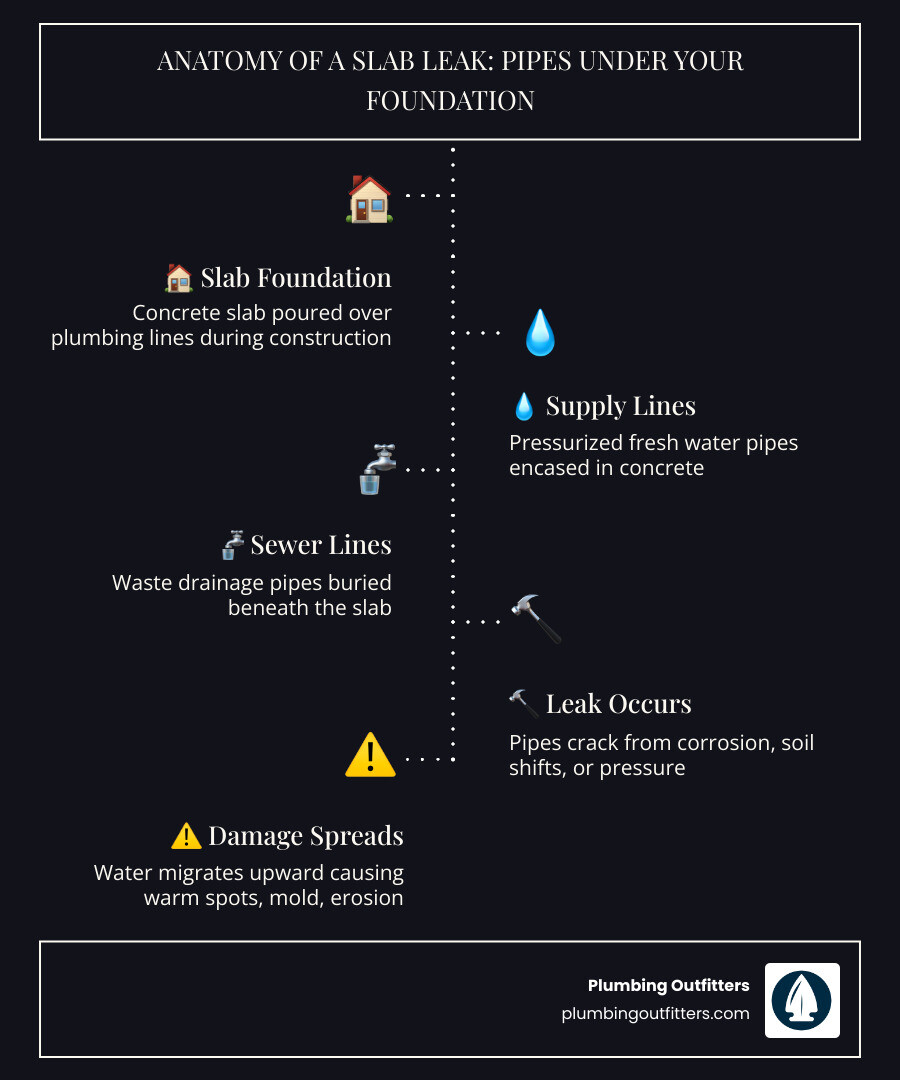
When your house was constructed, the plumbing lines were laid in the ground first, and then the concrete was poured right over them. This means your pressurized supply lines (the ones bringing fresh water in) and your sewer lines (the ones taking waste out) are literally encased in or buried under inches of heavy concrete.
Because these pipes are hidden, a leak isn’t as obvious as a dripping faucet. Instead, it’s a “silent foundation killer.” When a pipe breaks, the water has nowhere to go but into the soil or up through the slab. This leads to Slab Leak Signs that can manifest as structural issues.
In Central Texas, we deal with “expansive clay” soil. This soil acts like a sponge; it swells up when we get those heavy spring rains in Taylor or Hutto and shrinks into deep cracks during a hot August drought. This constant “heaving” puts immense pressure on your foundation and the pipes underneath it. Over time, this movement can cause pipes to crack, or even cause foundation erosion where the soil washes away, leaving your slab unsupported.
If you suspect this is happening, you can learn more about our specific Services/Slab Leak/ to see how we tackle these subterranean issues.
How Do I Know If I Have a Slab Leak?
We often get calls from worried homeowners in Austin and Round Rock asking, “how do i know if i have a slab leak before my house starts sinking?” It’s a great question because early detection can save you from a massive headache later on.
One of the first red flags is your water bill. If you see a sudden spike — say your bill jumps by 25 percent or more without you filling a pool or hosting a dozen relatives — that water is going somewhere. Since household leaks can waste nearly 10,000 gallons of water annually, a hidden slab leak can be a huge drain on your wallet.
Another sign is the sound. If the house is quiet at night and you hear the faint sound of rushing water, hissing, or splashing coming from under the floor, but all your taps are closed, that’s a major warning.
You should also keep your nose peeled (if that’s a thing). Musty odors are common because mold loves moisture. If water is trapped between your slab and your flooring (like carpet or hardwood), it creates a perfect breeding ground for mildew. If you’re in Hutto, you can reach out to our team for Hutto Slab Leak Detection And Repair to get a professional eyes-on assessment. Likewise, our experts provide Austin Slab Leak Detection And Repair for those in the city limits.
Signs to Watch for: How Do I Know If I Have a Slab Leak?
Perhaps the most unique sign of a slab leak involves the “Heat Wave” we mentioned in the title. If a hot water line under your slab develops a hole, the heat from that water will transfer through the concrete and into your flooring.
The Barefoot Test: Walk around your home barefoot, especially on tile or hardwood floors. Do you notice a spot that feels unusually warm? If your dog or cat has suddenly claimed a specific, seemingly random patch of floor as their new favorite sleeping spot, they might be enjoying the “underfloor heating” provided by a leak.
Other physical signs include:
- Damp Carpets or Warped Wood: Moisture rising through the slab will eventually hit your floor coverings. You might notice soggy spots in the middle of a room or hardwood planks that are starting to “cup” or buckle.
- Water Heater Activity: Is your water heater running constantly? If a hot water line is leaking, your heater is working overtime to replace the hot water that’s spilling out under your house.
- Foundation Cracks: While some settling is normal in Texas, new or rapidly growing cracks in your foundation, exterior brick, or interior drywall can indicate that a leak is shifting the soil under your home.
Residents in Bastrop should stay vigilant for these signs and can contact us for Bastrop Slab Leak Detection And Repair at the first sign of a warm floor.
How Do I Know If I Have a Slab Leak Using My Water Meter?
If you want to play detective yourself, your water meter is your best friend. It’s the most reliable way to confirm a leak exists, even if you can’t see it yet.
- Shut Everything Off: Ensure every faucet, shower, dishwasher, and washing machine is off. Don’t forget the ice maker and irrigation system.
- Find the Meter: Usually, in our service areas like Taylor or Cedar Park, the meter is in a box near the street.
- Check the Leak Indicator: Most modern meters have a small triangular or circular “leak indicator” dial. If that dial is spinning even slightly while no water is being used in the house, you have a leak.
- The Time Test: If your meter doesn’t have a visible leak indicator, write down the current reading. Don’t use any water for 30 to 60 minutes, then check it again. If the numbers have moved, you’ve got a “hidden” flow.
If your meter confirms your suspicions, we provide specialized Taylor Slab Leak Detection And Repair to pinpoint the exact location of the break.

Common Causes and Prevention Strategies for Central Texas Homes
Why do these leaks happen in the first place? In the Greater Austin area, we have a “perfect storm” of conditions:
- Hard Water Corrosion: Central Texas water is notoriously hard, often ranging between 120-180 ppm. These minerals can build up inside older copper or galvanized steel pipes, leading to “pitting” and pinhole leaks.
- Soil Shifting: As we discussed, the clay soil in places like Georgetown and Pflugerville is constantly moving. This movement can literally snap a pipe or cause it to rub against the abrasive concrete until a hole forms.
- High Water Pressure: If your home’s water pressure is above 80 PSI, it puts immense strain on your pipe joints. Most residential systems perform best between 40-60 PSI.
How can you prevent a slab leak? While you can’t control the soil, you can control your plumbing environment. We recommend checking out the Best Ways To Prevent A Slab Leak. Key strategies include:
- Install a Pressure Reducing Valve (PRV): If your municipal water pressure is too high, a PRV acts as a gatekeeper, keeping the pressure at a safe level for your pipes.
- Water Softeners: Reducing the mineral content in your water can extend the life of your pipes significantly.
- Maintain Proper Drainage: Ensure your gutters and downspouts are clear and that water is directed at least five to ten feet away from your foundation to keep the soil moisture levels consistent.
If you’re in the Georgetown area and worried about your older plumbing, we can help with Georgetown Slab Leak assessments to catch problems before they escalate.
Professional Detection and Modern Repair Options
In the old days, finding a slab leak meant a lot of guesswork and a jackhammer. Today, we use “Texas Class” technology to find leaks with surgical precision. Our pros use:
- Acoustic Equipment: High-powered microphones that “listen” for the specific frequency of water escaping under pressure.
- Thermal Imaging: Cameras that see the heat signature of hot water leaking under the slab.
- Tracer Gas: We can sometimes use a safe, non-toxic gas to find the tiniest leaks.
Once we find it, you have options. We always aim for the least invasive method possible.
| Repair Method | Description | Best For |
|---|---|---|
| Pipe Rerouting | Bypassing the underground pipe by running a new line through the walls or attic. | Older homes with multiple leaks or fragile pipes. |
| Epoxy Lining | A “trenchless” method where a coating is applied to the inside of the existing pipe to seal leaks. | Small pinhole leaks in accessible lines. |
| Targeted Access | Carefully breaking a small hole in the slab to repair a specific section of pipe. | Single, isolated leaks in newer plumbing. |
For a deeper dive into what goes into these fixes, see Slab Leak Repair Costs What Homeowners Need To Know. We also offer dedicated Granger Slab Leak Detection And Repair for our neighbors in the Granger area.
Frequently Asked Questions about Slab Leaks
Can a slab leak go away on its own?
Unfortunately, no. Pipe leaks are not like a scrape on your knee; they don’t heal. In fact, they only get larger. Sometimes mineral deposits might temporarily “plug” a tiny leak, making it seem like it stopped, but the water pressure will eventually blow that plug out, often resulting in an even bigger mess.
Does homeowners insurance cover slab leak repairs?
This is a “maybe.” Generally, most policies cover the damage caused by the leak (like ruined flooring or drywall) and the cost of accessing the leak (tearing out the concrete). However, the actual repair of the pipe itself is often considered “maintenance” and might not be covered. You should always contact your insurance provider as soon as you suspect a leak to understand your specific coverage.
How long does it take to fix a slab leak?
It depends on the method used. A simple spot repair or reroute might take a few hours to a full day. More extensive projects, like a full home re-pipe, can take three to five days. We always provide upfront timelines so you aren’t left in the dark.
Conclusion
A slab leak is a serious issue, but it doesn’t have to be a disaster. By knowing the signs — like that mysterious “heat wave” on your kitchen floor or a water bill that won’t stop climbing — you can take action before your foundation suffers permanent damage.
At Plumbing Outfitters, we’ve seen it all across the Greater Austin area. From the shifting soils of Leander to the historic homes of Bastrop, we bring “Texas Class Service” to every job. We pride ourselves on upfront pricing, neighborly service, and using the best detection technology available to protect your home.
If you’re asking yourself, “how do i know if i have a slab leak?” and the signs are pointing to “yes,” don’t wait. The longer water flows under your home, the more expensive the repair becomes.
Contact us today for professional Slab Leak Detection and Repair Services. Whether you’re in Austin, Round Rock, Georgetown, or anywhere in between, we’re ready to help you get your home back on solid ground.