
Is Hydro Jetting Better Than Snaking for Your Clogged Pipes
Is Hydro Jetting Actually Better Than Snaking for Clogged Drains?
A hydro jetting vs drain snaking comparison comes down to one core question: do you need a quick fix, or a lasting solution? Here’s the short answer:
| Factor | Drain Snaking | Hydro Jetting |
|---|---|---|
| How it works | Flexible cable breaks through clogs | High-pressure water (up to 4,000 PSI) scours pipe walls |
| Best for | Minor, localized clogs (hair, paper) | Grease, roots, buildup, recurring clogs |
| Pipe capacity restored | 60-80% | 95-100% |
| Results last | 6-18 months | 2-4 years |
| DIY possible? | Yes, for shallow clogs | No — professional only |
| Safe for old pipes? | Generally yes | Requires camera inspection first |
One day your drains work perfectly. The next, your kitchen sink is backing up and your shower is draining at a crawl. It’s one of the most common — and most frustrating — problems homeowners in Bloomington-Normal and throughout Central Illinois run into.
When that happens, you’re typically facing a choice between two professional drain cleaning methods: snaking and hydro jetting. Snaking has been a plumbing staple since the 1800s. Hydro jetting is the more powerful, modern alternative. Both clear clogs — but they work very differently, and the wrong choice can mean the same problem comes back in a matter of months.
Understanding which method fits your situation can save you time, money, and repeated service calls. That’s exactly what this guide covers.

Understanding Drain Snaking and How It Works
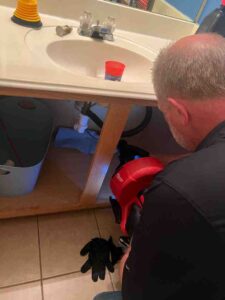
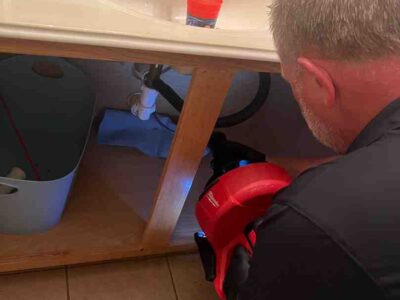
When most people think of professional drain cleaning, they picture a plumbing snake. Also known as a “drain auger,” this tool consists of a long, flexible steel cable with a corkscrew-like tip. The plumber inserts the cable into the drain and rotates it — either manually with a hand crank or with a motor — to navigate through the pipe until it hits an obstruction.
The goal of snaking is straightforward: break through the clog or hook onto it to pull it out. If you have a wad of hair in your shower drain or a bunch of paper towels stuck in a toilet, a snake is often the perfect tool for the job. It’s a physical, mechanical solution that’s been around for over a century because it works well for localized, solid blockages.
However, snaking has its limitations. Think of it like poking a hole through a snowdrift rather than shoveling the whole driveway. The snake clears a path so water can flow again, but it doesn’t actually clean the pipe. It often leaves behind a layer of residue, grease, or biofilm on the pipe walls. This is why snaking typically only restores about 60% to 80% of a pipe’s original flow capacity.
For many homeowners in areas like Leander or Cedar Park, a quick snake job is a great, budget-friendly way to handle a one-time mishap. But if the issue is deep in your main sewer line or caused by years of grease buildup, you might need something with a bit more “oomph.” You can find more info about drain services on our dedicated page if you’re dealing with a stubborn sink.
What is Hydro Jetting and How Does It Restore Pipes?
If snaking is a manual chisel, hydro jetting is a heavy-duty power washer. This method uses highly pressurized water — ranging from 1,500 to 4,000 PSI — to blast away everything in its path.
The process involves a specialized machine, a long hose, and a variety of nozzles tailored to the specific blockage. One jet of water points forward to bore through the clog, while several rear-facing jets propel the hose forward and scour the interior walls of the pipe. It doesn’t just poke a hole; it performs a deep-cleaning “surgical cure” for your plumbing.
Because it uses water at such high pressure, hydro jetting removes 95% to 100% of the debris inside a pipe. It pulverizes tree roots, dissolves hardened grease, and flushes out mineral scale that has been building up for decades. When we finish a hydro jetting session in a home in Pflugerville or Round Rock, the inside of those pipes looks almost as clean as the day they were installed.
For a deeper dive into the mechanics, check out our guide on what is hydro jetting or explore our Hydro Jetting Services Austin Tx Guide for local insights.
Hydro Jetting vs Drain Snaking Comparison: Key Differences
When we perform a hydro jetting vs drain snaking comparison for our neighbors in Central Texas, we look at three main factors: effectiveness, longevity, and what’s actually inside the pipe.
1. Effectiveness and Thoroughness
As mentioned, a snake is great for solid objects but poor at removing sludge. If your kitchen pipes are coated in “FOG” (fats, oils, and grease), a snake will just slide right through it, leaving most of the gunk behind. Hydro jetting, however, emulsifies that grease and washes it away completely. It also handles the “biofilm” — that slimy layer of bacteria and organic matter — that often acts as glue for future clogs.
2. Longevity of the Solution
This is where the value really shows up. Because snaking leaves residue behind, a new clog can start forming immediately. Results from snaking typically last between 6 and 18 months. Hydro jetting results, on the other hand, usually provide relief for 2 to 4 years. In fact, hydro jetting results often provide relief for three to four times longer than the interval provided by a plumbing snake.
3. Impact on Pipe Capacity
Snaking restores flow, but hydro jetting restores capacity. If your 4-inch sewer line has 1 inch of scale buildup all around the edges, a snake won’t fix that. Hydro jetting will, giving you back the full diameter of your pipe.
To see why so many homeowners are making the switch, read about the 5 Advantages of Hydro Jetting or learn how to say goodbye to blockages with hydro jet drain cleaning.
Choosing the Right Method for Your Austin Home’s Plumbing
Choosing between these two isn’t about which one is “better” in a vacuum; it’s about which one is right for your specific pipes. In the Greater Austin area, our soil and vegetation play a huge role in plumbing health.
The first step we always recommend is a professional camera inspection. We don’t want to guess what’s wrong; we want to see it. Whether you’re in a historic home in West Lake Hills or a newer build in Manor, knowing the material and condition of your pipes is vital.
If you’re in a newer home with PVC pipes, they are generally robust enough to handle the 4,000 PSI of a hydro jet. However, if you have older clay or cast iron pipes, we have to be more careful. You can learn more about our specific local approaches on our pages for Hydro Jetting Services In Pflugerville Tx and Hydro Jetting Round Rock Tx.
When to Choose a Hydro Jetting vs Drain Snaking Comparison for Roots
Tree roots are the “final boss” of plumbing clogs. In Central Texas, our beautiful Live Oaks and Silver Maples have incredibly thirsty roots that can sniff out a tiny leak in a sewer line from a mile away.
While a heavy-duty mechanical auger (snake) can cut through some roots, it often just leaves a “haircut” — the roots are still there in the joints, ready to grow back even thicker. Hydro jetting uses specialized root-cutting nozzles that shear the roots off flush with the pipe wall and then wash the debris away. For homeowners in Georgetown, we often recommend this as the only way to truly clear a line. Check out our Hydro Jetting Repair In Georgetown Tx page for more on this.
Long-Term Results: A Hydro Jetting vs Drain Snaking Comparison
If you find yourself calling a plumber every six months for the same drain, you aren’t actually fixing the problem; you’re just paying for a temporary band-aid.
While snaking is often 50-70% less expensive upfront than hydro jetting services, the long-term math favors the jet. If you snake a drain four times over three years, you’ve likely spent more than you would have on a single hydro jetting session that would have kept the line clear the whole time. For our friends in Taylor, we focus on these long-term fixes. See our Hydro Jetting Repair In Taylor Tx page for details.
Why Hydro Jetting is Superior for Recurring Clogs
Recurring clogs are usually a sign of an underlying systemic issue, like mineral deposits or heavy grease accumulation.
In Central Texas, we deal with notoriously “hard” water. Over time, calcium and magnesium deposits (scale) can narrow the diameter of your pipes, much like cholesterol in an artery. A snake will bounce right off this hard scale. Hydro jetting, however, is powerful enough to pulverize those minerals and restore the pipe to “like-new” condition.
This is also why hydro jetting is the gold standard for commercial kitchens and restaurants in Austin and West Lake Hills. These businesses deal with massive amounts of grease that snaking simply cannot handle effectively. For more on how this protects your plumbing, read 5 Reasons Why Hydro Jetting Is Great For The Longevity Of Your Pipes or visit our Hydro Jetting Repair In West Lake Hills Tx page.
Safety Considerations for Older Texas Pipes
We love the character of older homes in Travis County, but their plumbing can be delicate. Pipes installed before 1980 — especially those made of clay, thin-walled PVC, or corroded cast iron — require a gentle touch.
This is where the “comparison” in hydro jetting vs drain snaking comparison gets serious. If a pipe is already cracked or structurally compromised, 4,000 PSI of water pressure could turn a small leak into a major collapse.
This is why we always perform a camera inspection first. If we see that your cast iron pipes are heavily corroded or that you have “Orangeburg” pipes (which are basically tar-paper pipes used decades ago), we may advise against hydro jetting or suggest a much lower pressure setting. In these cases, a traditional snake is the safer, more responsible choice.
Our teams in Taylor and Hutto are experts at evaluating these older systems. You can read more about our process on our Hydro Jetting Cleaning And Clearing and Hutto/Hydro Jetting Cleaning And Clearing pages.
Frequently Asked Questions About Drain Cleaning
Is hydro jetting safe for older or fragile pipes?
Yes, but only if a professional conducts a camera inspection first. For modern PVC or ABS pipes, it’s perfectly safe. For older cast iron or clay, we must assess the structural integrity. If the pipe is too thin or already cracked, hydro jetting could cause further damage. In those cases, we’ll stick to snaking or discuss repair options.
Can homeowners DIY snaking, or is professional service always recommended?
You can certainly DIY a simple hand snake for a shallow clog in a sink or toilet. However, for main line clogs or recurring issues, professional equipment is much safer. DIYers often accidentally scrape the inside of their pipes or push the clog deeper. Hydro jetting, however, should never be DIY. The pressure is high enough to cause serious injury or destroy your plumbing if handled incorrectly.
Should you get a camera inspection before choosing a method?
Absolutely. A camera inspection is the smartest play you can make. It tells us exactly what the clog is made of (is it a toy? grease? roots?) and what condition the pipe is in. This ensures we don’t use a high-pressure method on a pipe that can’t handle it, and it allows us to verify that the job was done 100% correctly when we’re finished.
Conclusion
At the end of the day, both snaking and hydro jetting have their place in a healthy home. If you have a simple hair clog in a bathroom sink, a snake is a fast, effective solution. But if you’re battling recurring backups, tree roots, or years of grease buildup, hydro jetting is the “Texas Class” solution that actually keeps the problem from coming back.
At Plumbing Outfitters, we believe in providing a neighborly experience with upfront pricing and honest recommendations. We won’t sell you a hydro jetting service if a simple snake will fix the problem, but we also won’t give you a temporary fix if we know your pipes need a deep clean.
Whether you’re in Austin, Bastrop, Georgetown, or any of our surrounding communities, we’re here to help you get your life back to normal. Schedule professional drain services today and let us show you the difference that expert care can make for your home.