

Why Texas Pipes Freeze and What It Means for Your Home
If you’re dealing with pipes frozen west lake hills tx, you need to act fast to prevent a burst pipe and costly water damage. Here’s what to do right now:
Immediate Steps:
- Shut off your main water supply at the meter to relieve pressure
- Open all faucets (hot and cold) to allow water to escape as ice melts
- Apply gentle heat to the frozen section using a hair dryer, heating pad, or towels soaked in hot water
- Never use an open flame like a blowtorch, which can damage pipes or start a fire
West Lake Hills homes face a unique challenge during winter cold snaps. Unlike northern states where buildings are designed for sustained freezing temperatures, Texas homes often have water lines running through exterior walls, uninsulated attics, or shallow underground installations. When temperatures drop below 32°F—especially during those rare dips to 20°F or lower—these exposed pipes can freeze in as little as 3-6 hours. As water freezes, it expands by about 9%, creating pressure that can reach up to 40,000 PSI inside your pipes. That’s enough force to crack both metal and plastic plumbing, leading to devastating leaks once the ice thaws.
For comprehensive guidance on winterizing your plumbing system before the next freeze, check out our guide on protecting your plumbing in a freeze. If you’re already dealing with a frozen pipe emergency, contact our West Lake Hills plumbing team for immediate help.
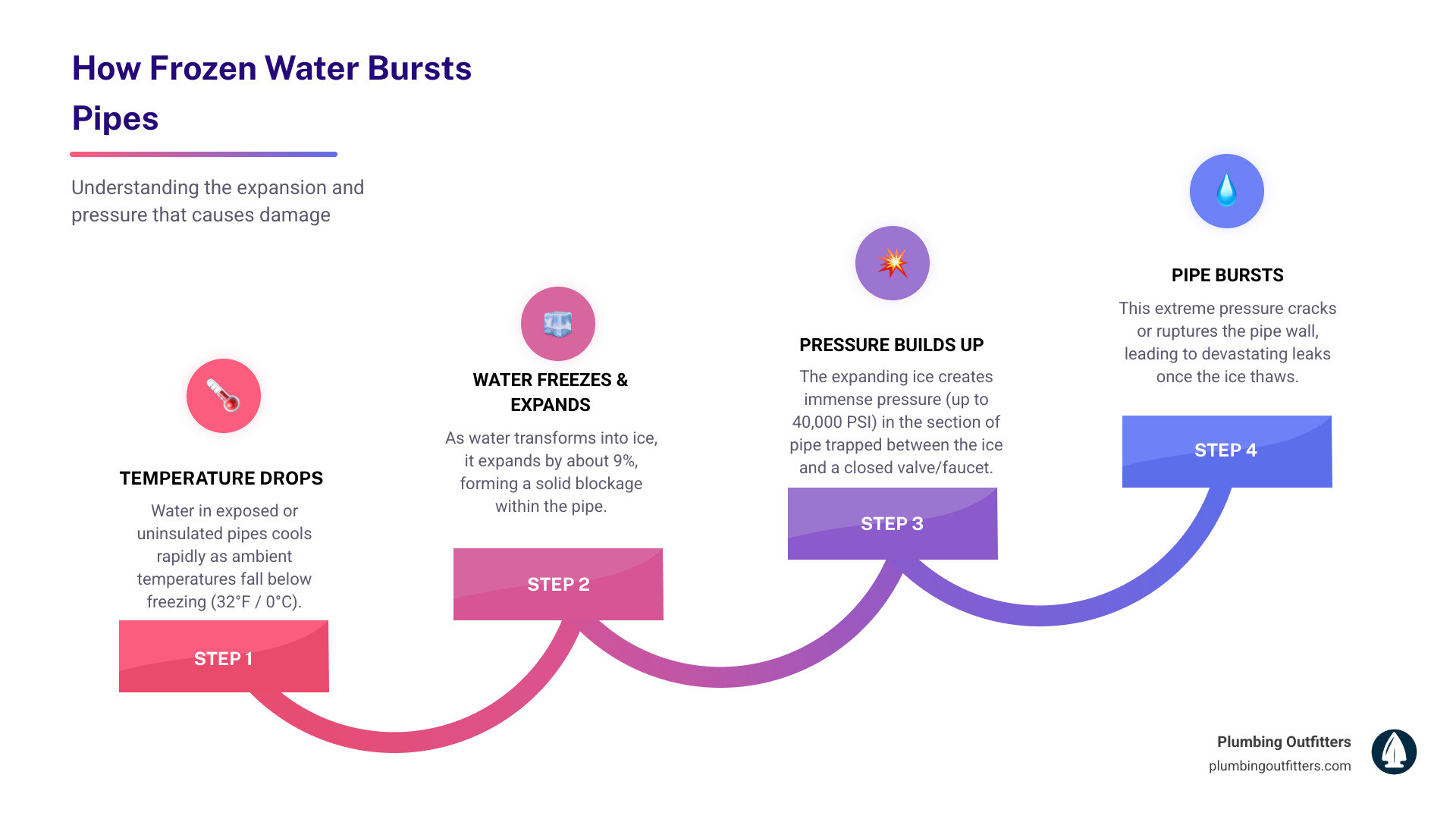
The local climate in West Lake Hills, like much of Central Texas, doesn’t typically experience prolonged periods of extreme cold. This means that homes here are often constructed with less insulation around plumbing than in colder regions. While this is great for energy efficiency during our long, hot summers, it can leave our pipes vulnerable when an unexpected cold front rolls through. When temperatures plummet below 20 degrees Fahrenheit, poorly insulated pipes can freeze in as little as 3 hours, while even well-insulated ones might succumb in about 6 hours. This rapid freezing, coupled with the immense pressure of expanding ice, is the primary cause of burst pipes in our community. Just one pipe burst can cause a building to lose 4-8 gallons of water a minute, leading to extensive damage and costly repairs. It’s a problem Central Texans don’t often worry about, but it’s one we must be prepared for. You can learn more about this issue in our article, Should You Really Be Concerned About Frozen Pipes During Texas Winters?.
Step 1: Identifying the Signs of a Frozen Pipe
Before you can tackle a frozen pipe, you need to know you have one. While a complete lack of water is the most obvious sign, several subtle clues can alert you to trouble brewing in your plumbing system.
Checking Your Plumbing System
The first sign many West Lake Hills residents notice is a sudden and significant reduction in water pressure at one or more faucets. If water is barely trickling out, or if you turn on the tap and nothing comes out at all, it’s a strong indicator that water flow is obstructed by ice.
Another common sign, especially for exposed pipes in unheated areas like garages, crawl spaces, or utility rooms, is visible frost on the pipe’s exterior. If you can safely access these areas, gently feel the pipes; a cold, icy surface confirms your suspicion. Beyond the visual cues, keep an ear out for any unusual sounds. Strange gurgling sounds from drains or toilets can sometimes indicate a partial blockage, which might include ice. Similarly, if you detect foul odors emanating from your drains, it could signal a frozen sewer line, though this is a rarer occurrence as sewer lines are not pressurized like water supply lines.
To help pinpoint the problem, start by checking all the faucets in your home. If some faucets have normal water pressure while others are completely dry, you likely have a localized freeze in a specific branch of your plumbing. If all faucets, both hot and cold, are affected, the issue could be with your main water line or even your water meter. It’s also a good idea to check with your neighbors in West Lake Hills. If they also report a lack of water, the problem might be with the municipal water supply, rather than solely your home’s pipes.
The Dangers of Ignoring the Signs
Ignoring the early signs of pipes frozen west lake hills tx is like ignoring a ticking time bomb. While the immediate inconvenience of no water is frustrating, the potential consequences are far more severe. The most significant danger is a burst pipe. As water expands into ice, it creates immense pressure within the pipe. Even if the ice itself doesn’t cause a rupture, the pressure can build up between the ice blockage and a closed faucet, eventually causing the pipe to split or burst.
Once a pipe bursts, the real nightmare begins. You could face significant water damage to your home’s structure, including walls, ceilings, floors, and insulation. This can lead to costly repairs, not just for the pipe itself, but for everything the water touches. Prolonged dampness from leaks can also lead to mold growth, which poses health risks and requires specialized remediation. In severe cases, a burst pipe can cause flooding, potentially ruining personal belongings and compromising the structural integrity of your home. A single burst pipe can release gallons of water per minute, turning a minor inconvenience into a major disaster in a matter of hours.
Step 2: What to Do When You Have Pipes Frozen in West Lake Hills, TX
Finding you have pipes frozen west lake hills tx can be stressful, but acting quickly and correctly can save you from a far bigger headache. Our immediate steps are designed to mitigate risk and start the thawing process safely.
Immediate Steps for Pipes Frozen in West Lake Hills, TX
The very first thing you need to do, as mentioned in our introduction, is to shut off your main water supply. This is critical! If a frozen pipe has already burst (even if you don’t see water yet), turning off the main supply will prevent flooding once the ice thaws. Your main shut-off valve is typically located on your side of the water meter, often in a smaller valve box 12-18 inches from the meter itself. If you can’t find it, or it’s damaged, you may need to use the City shutoff valve in the meter box, which sometimes requires a water meter key. For renters, please consult your property manager immediately.
Next, open all faucets in your home, both hot and cold. This allows any water remaining in the pipes to drain out and, more importantly, provides an escape route for the expanding ice and water as it thaws. This relieves pressure within the system, significantly reducing the risk of a burst pipe.
Now it’s time to locate the frozen section of the pipe. This is often the tricky part. Look for pipes that are exposed to cold air, such as those in unheated basements, crawl spaces, garages, or cabinets on exterior walls. Once you’ve identified the frozen area, or if you suspect a general freeze and can’t pinpoint it, it’s time to apply gentle heat.
- Hair Dryer: This is one of the safest and most effective methods. Use it on the lowest setting, moving it back and forth along the pipe.
- Heating Pad: Wrap an electric heating pad around the frozen section.
- Hot Towels: Soak towels in hot water, wring them out, and wrap them around the pipe. You’ll need to re-soak them frequently to maintain the heat.
- Portable Space Heater: If the frozen section is in an unheated room, a space heater can help warm the area. Be sure to keep it a safe distance from any flammable materials.
Continue applying heat until water flow is restored. Once water begins to trickle, keep the faucets open to maintain flow and help clear any remaining ice.
What NOT to Do When Thawing Pipes
While urgency is important, safety is paramount. There are several methods you should absolutely avoid when attempting to thaw pipes frozen west lake hills tx:
- Using a blowtorch or any open flame: This is extremely dangerous. The intense, uneven heat can cause the pipe to burst explosively or melt, leading to severe damage. Furthermore, it poses a significant fire hazard, especially if the pipes are near insulation or wooden structures.
- Using a kerosene or propane heater: Similar to blowtorches, these can produce too much heat too quickly and are also a fire risk. They also release dangerous fumes.
- Trying to thaw too quickly: Rapid thawing can put undue stress on the pipe, potentially causing it to crack or burst. Gentle, consistent heat is always the best approach.
- Ignoring a burst pipe: If you suspect a pipe has already burst (even a small crack), don’t try to thaw it without first shutting off the main water supply. Once thawed, even a tiny crack will become a leak, and if the water is still on, you’ll have an immediate flood.
If you cannot locate the frozen section, it’s inaccessible, or your DIY efforts aren’t working, it’s time to call in the professionals.
Step 3: Preventing Future Freezes in Your West Lake Hills Home
The best way to deal with pipes frozen west lake hills tx is to prevent them from freezing in the first place! A little preparation can save you a lot of grief, money, and water.
Long-Term Prevention for Pipes Frozen in West Lake Hills, TX
For lasting peace of mind, especially in a region prone to occasional freezes, consider these long-term preventative measures:
- Insulate Exposed Pipes: This is perhaps the most crucial step. Use foam pipe insulation sleeves (available at any hardware store) on all exposed pipes in unheated areas like attics, crawl spaces, garages, and even under sinks if they’re on an exterior wall.
- Cover Outdoor Faucets: Install insulated covers over all outdoor hose bibs. These inexpensive covers provide a layer of protection against the cold.
- Disconnect Hoses: Always disconnect and drain garden hoses before a freeze. Leaving them connected traps water in the faucet and hose, which can freeze and damage both.
- Seal Drafts: Seal any cracks or openings in your home’s foundation, walls, or around windows and doors that could allow cold air to reach pipes. Even small drafts can significantly lower pipe temperatures.
- Insulate Attics and Crawl Spaces: Improving the overall insulation in these areas will help keep them warmer, indirectly protecting the pipes within.
- Winterize Irrigation Systems: If you have an in-ground sprinkler system, winterize it. This typically involves shutting off the water supply to the system, draining the lines, and insulating any exposed backflow preventers (RPZs).
- Inspect Water Heaters: Ensure your water heater is properly insulated and functioning well. Some newer tankless water heaters have freeze protection functions, but these often require electricity. If you experience a power outage, consider alternative measures or even draining the unit if the outage is prolonged.
For more detailed guidance on these and other methods, explore our comprehensive guide on How to Protect Your Plumbing in a Freeze.
Pre-Freeze Emergency Actions
When a cold snap is imminent, and you haven’t had time for long-term solutions, these immediate actions can make a big difference:
- Dripping Faucets: During freezing temperatures (especially below 28°F for more than four hours), allow one cold-water faucet in your home to drip slowly. A drip rate of about 5 drops per minute, or a “walking tempo,” is usually sufficient. This keeps water moving through the pipes, making it much harder for ice to form. Collect the dripping water for later use to avoid waste!
- Open Cabinet Doors: For sinks located on exterior walls, open the cabinet doors underneath to allow warmer indoor air to circulate around the pipes.
- Maintain Thermostat Temperature: Even if you’re leaving home, set your thermostat to no lower than 55-65 degrees Fahrenheit. This will keep your home warm enough to prevent pipes from freezing, especially those in walls.
- Prepare for Power Outages: Extended power outages during a freeze are particularly dangerous. If you anticipate a prolonged outage (more than 24 hours), you may need to stop dripping faucets and turn off your main water supply to prevent extensive damage. Consider connecting critical systems like water heaters to alternate power sources if possible. Austin Water and Travis County Water District 10 often provide specific guidance during severe weather events, so monitor local alerts.
When to Call a Professional Plumber for Help
While we empower you with knowledge, there are times when a professional plumber is your best bet for pipes frozen west lake hills tx. Knowing when to call us can save you from further damage and stress.
You should always contact us if:
- You have a burst pipe: If you see visible water leaking or spraying from a pipe, or suspect a pipe has burst, immediately shut off your main water supply and call us. This is an emergency, and professional intervention is required to repair the damage.
- You can’t locate the frozen area: Sometimes, the frozen section is hidden behind walls, under floors, or in other inaccessible spots. Our plumbers have specialized tools and expertise to pinpoint these hidden freezes.
- DIY thawing fails: If you’ve tried the gentle thawing methods and water still isn’t flowing after several hours, it’s time for professional help. We can use more advanced, safe techniques to thaw stubborn ice blockages.
- You have recurring freezing issues: If your pipes freeze every winter, it indicates an underlying problem with insulation or pipe placement that needs a permanent solution. We can assess your plumbing system and recommend effective long-term preventative measures.
- You need leak detection: Even after thawing, a small crack might be present, leading to a slow, insidious leak. We offer professional leak detection services to ensure your system is completely sound.
At Plumbing Outfitters, we’re committed to providing the residents of West Lake Hills with reliable, expert plumbing services. You can learn more about our commitment to quality and customer satisfaction on our About Us page.
Frequently Asked Questions about Frozen Pipes
How long does it take for pipes to freeze?
The time it takes for pipes to freeze can vary significantly depending on several factors, primarily the temperature and the level of insulation. If the temperature drops below 20 degrees Fahrenheit, pipes are in considerable danger. Poorly insulated pipes can freeze in as little as 3 hours, while well-insulated pipes might take about 6 hours. However, pipes can start to freeze even at 32 degrees Fahrenheit if there’s no water movement or if they are exposed to wind chill.
Should I drip hot or cold water to prevent freezing?
You should drip cold water from your faucets to prevent freezing. The goal is to keep water moving through the pipe, and a cold-water drip achieves this just as effectively as a hot water drip, without unnecessary use of your water heater. This continuous movement makes it much harder for ice crystals to form and prevents pressure buildup if a partial freeze does occur.
Will my homeowners insurance cover damage from a burst pipe?
Generally, most homeowners insurance policies do cover damage from sudden and accidental burst pipes. However, there are crucial caveats. Insurance providers typically expect homeowners to have taken “reasonable preventative measures” to protect their pipes. This might include maintaining heat in the home, insulating exposed pipes, or shutting off water when away for extended periods during cold weather. If negligence is determined (e.g., leaving a home unheated during a freeze), your claim could be denied or reduced. It’s essential to review your specific policy and document all preventative actions and any damage thoroughly if you experience a burst pipe.
Your Local Experts for Frozen Pipe Emergencies
When you’re facing pipes frozen west lake hills tx, you need a team you can trust. At Plumbing Outfitters, we pride ourselves on delivering “Texas Class Service” to our neighbors in West Lake Hills and across the Greater Austin area. Our experienced plumbers are equipped to handle everything from emergency frozen pipe thawing and repair to comprehensive leak detection and preventative winterization services.
We understand the unique challenges our local climate presents, and we’re here to help you protect your home. Whether you need immediate assistance with a burst pipe or want to discuss long-term solutions to prevent future freezes, our team is ready. We offer upfront pricing and a trustworthy, neighborly experience every time. Don’t let frozen pipes turn into a costly disaster.
Reach out to us today for reliable, professional plumbing service. You can easily Contact Us through our website or learn more about our commitment to the West Lake Hills community. We’re here to ensure your plumbing stays flowing, no matter what the Texas winter throws our way!