
Is a Hidden Leak Quietly Draining Your Water Bill?
How fixing leaks reduces your water bill is simpler than most homeowners expect — and the savings can show up as early as your next billing cycle. The average household loses nearly 10,000 gallons of water every year to leaks alone, according to the EPA. That silent waste adds up fast, and in many cases, fixing those leaks can cut your water bill by around 10% without changing a single habit.
Here is a quick breakdown of how leak repairs translate directly into bill savings:
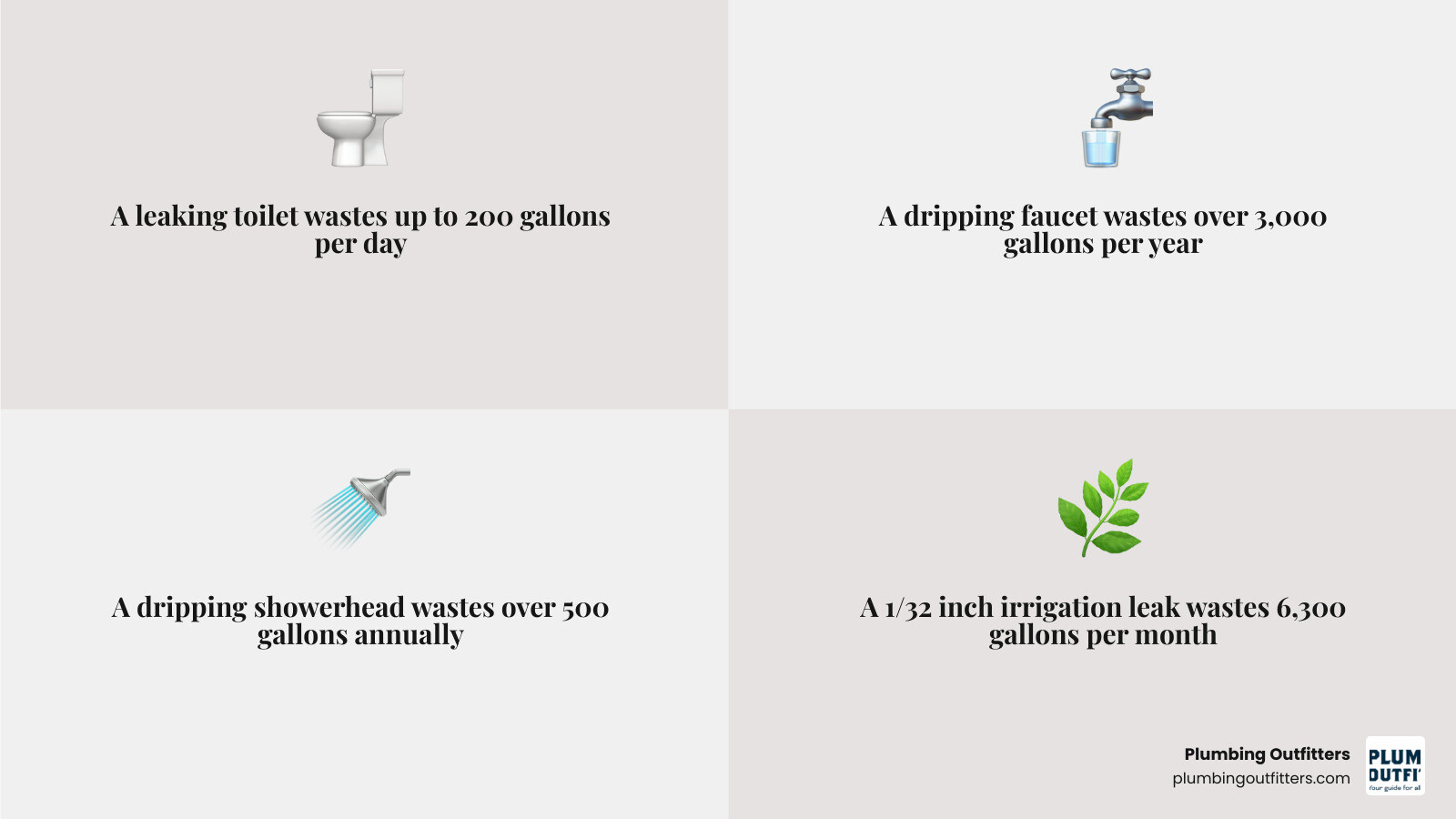
- Toilets are the most common culprit — a leaking toilet can waste up to 200 gallons per day
- Dripping faucets leaking at just one drip per second waste more than 3,000 gallons per year
- Showerheads dripping at 10 drips per minute waste over 500 gallons annually
- Irrigation leaks as small as 1/32 of an inch in diameter can waste around 6,300 gallons per month
- Fixing all of the above can save the average household roughly 10% on their annual water bill
Most of these leaks are invisible — no puddle on the floor, no obvious drip. They drain quietly into your sewer line and straight onto your utility bill, month after month. And because water and sewer charges are billed together, every gallon wasted from a leak gets counted twice.
The good news? Many of the most wasteful leaks are also the easiest and least expensive to fix. Whether you are a homeowner in Bloomington-Normal dealing with a silent toilet leak or noticing your Central Illinois water bill creeping up without explanation, this guide walks you through exactly what to do — from detecting the problem yourself to knowing when to call in a professional.
The Financial Impact: How Fixing Leaks Reduces Your Water Bill
When we talk about saving money on utilities, we often think of major lifestyle changes: taking freezing cold showers, letting the lawn turn brown, or washing dishes by hand in a basin. But understanding how fixing leaks reduces your water bill reveals that the most effective way to save is actually much simpler. It is about stopping paid-for water from slipping down the drain completely unused.
According to the Environmental Protection Agency (EPA), household leaks waste nearly 1 trillion gallons of water nationwide every single year. For an individual family, that equates to roughly 9,300 to 10,000 gallons of wasted water annually. In fact, about 9% of homes have active leaks that waste 50 gallons or more every single day.
By simply identifying and correcting these easily fixed leaks, the average homeowner can instantly shave about 10% off their water bill. When you ignore a leak, you are essentially paying a premium on your monthly utilities for zero benefit. This is why staying on top of plumbing maintenance is one of the smartest financial moves you can make as a homeowner. To learn more about why you should never let a leak linger, check out these 5 Reasons Why Leak Detection Is Crucial to Catch Early On.
Understanding How Fixing Leaks Reduces Your Water Bill Over Time
To truly grasp how much money is slipping away, it helps to look at how municipalities calculate your monthly utility bill. In most areas throughout Greater Austin, Bastrop, Cedar Park, and Pflugerville, your bill is not just based on the physical water you consume. It also includes a sewer or wastewater charge, which is often calculated as a direct percentage of your clean water usage.
This means that if a silent toilet leak wastes 10,000 gallons of clean water in a month, you are billed twice:
- First, for the fresh water delivered to your home.
- Second, for the “wastewater” that allegedly went down your drains (even though the leak simply bypassed your usage entirely).
Because these rates are compounding, a minor plumbing issue can easily double your average water and sewer bill. Over several months or quarters, these charges add up to significant sums of money. By tracking your water meter regularly and tackling repairs early, you stop this financial compounding in its tracks. For a deeper dive into managing your home’s water systems, read our guide on Leak Repair in Austin TX: Everything You Need to Know to Get Your Home Dry Again.
Real-World Savings: How Fixing Leaks Reduces Your Water Bill in Texas
In recent years, utilities across Texas have begun installing Advanced Metering Infrastructure (AMI)—commonly known as smart water meters. These systems allow water companies to track usage hourly and send automated alerts when they detect continuous flow, which almost always indicates a leak.
Research on smart meter rollouts shows incredible real-world results. In households that had an active leak, receiving a simple notification led to an average reduction in water use of 30 gallons per day. Across thousands of homes, over 92% of all water savings achieved through smart meter messaging came directly from homeowners finding and fixing leaks, rather than changing their daily habits.
To help visualize the scale of water waste, here is how common household leaks compare in volume:
| Leak Source | Rate of Leak | Monthly Water Waste (Gallons) | Daily Water Waste (Gallons) |
|---|---|---|---|
| Slow Dripping Faucet | 1 drip per second | 250 Gallons | ~8 Gallons |
| Leaking Showerhead | 10 drips per minute | 40 Gallons | ~1.3 Gallons |
| Seeping Toilet | Moderate internal leak | 900 Gallons | 30 Gallons |
| Leaking Toilet | 1/4 gallon per minute | 10,800 Gallons | 360 Gallons |
| Constantly Running Toilet | Wide open flush valve | 180,000 Gallons | 6,000 Gallons |
| Irrigation System Leak | 1/32-inch hole (dime thickness) | 6,300 Gallons | 210 Gallons |
Preventing Costly Property Damage and Mold
While the immediate drop in your monthly utility bill is a fantastic reward, fixing leaks early protects your wallet in another massive way: preventing catastrophic property damage.
A small, hidden pipe leak behind a wall or beneath your floorboards can rot wood framing, ruin drywall, and destroy flooring. In warm, humid Texas climates, mold colonies can establish themselves in wall cavities within 48 to 72 hours of water intrusion. Remediation for mold and structural wood rot can easily run into thousands of dollars—costs that are rarely fully covered by standard homeowner’s insurance if the leak was neglected over a long period.
Even worse are slab leaks, which occur in the pipes running beneath your concrete foundation. Due to our local weather cycles of extreme heat, drought, and heavy rain, Texas clay soils expand and contract constantly. This shifting soil puts immense pressure on your home’s foundation and the pipes encased within it. If a pipe under the slab breaks, the escaping water can erode the supporting soil, leading to foundation cracks, sinking floors, and structural failure.
Addressing these issues immediately is vital. If you suspect a hidden leak in your plumbing system, explore how we handle these issues with our guide on From Drips to Done: Comprehensive Leak Repair in Pflugerville.
Low-Cost Methods for Detecting Household Leaks

You do not need expensive, high-tech tools to find out if your home is wasting water. Some of the most effective leak detection methods cost next to nothing and take only a few minutes of your time.
The single best tool at your disposal is your home’s water meter. Here is how to perform a simple isolation test (often called the Pin Test) to check for hidden leaks:
- Turn off all water: Ensure no washing machines, dishwashers, sprinklers, or faucets are running.
- Locate your water meter: This is typically in a concrete box near the street curb or close to your property line.
- Check the leak indicator: Many modern meters have a small, rotating triangle, star, or gear icon on the face. If this dial is spinning even slightly when all water is off, you have a leak.
- Try the Pin Test: If your meter does not have a mechanical leak indicator, note the exact position of the main sweep hand. You can mark it on the glass with a dry-erase marker or take a photo with your phone. Wait 30 minutes without using any water. If the hand has moved, water is escaping somewhere in your system.
For more practical strategies to pin down elusive drips, review our list of Top Tips for Detecting a Water Leak.
Testing for Silent Toilet Leaks
Toilets are the single most common source of indoor water leaks, and because they drain directly into the sewer system, they are almost always completely silent. A toilet can waste hundreds of gallons of water a day without making a single sound or leaving a puddle on your bathroom floor.
Fortunately, testing for a toilet leak is incredibly simple and costs less than a cup of coffee:
- The Food Coloring Test: Remove the lid of your toilet tank and add a few drops of dark food coloring or a couple of dye tablets.
- Wait and watch: Put the lid back on and do not flush the toilet. Wait 15 to 20 minutes.
- Check the bowl: Look into the toilet bowl. If you see colored water seeping into the bowl, your flush valve or flapper is leaking.
In most cases, a worn-out rubber flapper is the culprit. Over time, chlorine and minerals in the water degrade the rubber, preventing it from sealing tightly against the flush valve. Replacing a flapper is a quick, inexpensive DIY project. However, if the fill valve or overflow tube is improperly adjusted, you may need professional help. If you live in Williamson County, you can count on us to resolve these issues; see our page on Stop the Drip: Expert Leak Repair Services in Georgetown TX.
Finding Faucet and Showerhead Drips
Faucets and showerheads are highly visible, yet we often ignore their steady drips because we assume a few drops of water do not amount to much. But remember: a faucet dripping once per second wastes over 3,000 gallons of water per year. That is enough water to take more than 180 hot showers!
If you notice a drip, the solution usually involves replacing a few cheap, simple parts:
- Worn-out washers and O-rings: Inside your faucet handle is a cartridge or stem. Over years of twisting the handle on and off, the rubber washers and O-rings wear down. Replacing these small parts usually stops the drip instantly.
- Loose showerhead connections: If water is spraying out of the joint where the showerhead meets the pipe arm, unscrew the showerhead, clean the threads, apply fresh Teflon pipe tape, and screw it back on securely.
If you are trying to track down other subtle signs of plumbing issues around your home, check out our guide on Hidden Water Leak Signs You Might Miss.
Inspecting Outdoor Irrigation Systems
If you have an automatic sprinkler system, it can easily account for 50% to 70% of your home’s total water usage during the hot Texas summer. Because irrigation systems run in the early morning hours when you are asleep, massive leaks can go entirely unnoticed for months.
To keep your irrigation system from draining your bank account, perform a seasonal inspection every spring:
- Run a manual test cycle: Turn on each watering zone individually and walk your yard.
- Look for broken heads: Sprinkler heads that have been run over by lawnmowers or clogged with dirt will spray water unevenly or bubble up like a mini-geyser.
- Watch for soggy spots: If you notice patches of grass that are exceptionally green, muddy, or pooling water when the system is off, you likely have a cracked underground line.
- Adjust your controller: Ensure your irrigation timer is set correctly and that the backup battery is fresh. A malfunctioning controller can reset to factory defaults, causing your lawn to be watered every single day instead of on your designated watering days.
Comparing Leak Repair to Other Water-Saving Habits
When homeowners look for ways to cut down their utility bills, they often start by trying to change their daily habits. While conservation habits are wonderful, it is highly educational to compare the sheer impact of leak repair against typical behavioral water-saving methods.
To see how these strategies fit into a broader regional context, read The Definitive Guide to Water Conservation Tips for Central Texas Homeowners.
Behavioral Changes vs. Fixing Leaks
Let’s look at how much water you save with common lifestyle adjustments:
- Taking shorter showers: Cutting your shower time down by 2 minutes saves roughly 5 gallons of water per shower.
- Turning off the tap while brushing teeth: This simple habit saves about 8 gallons of water per day.
- Running only full loads of laundry: This saves about 15 to 30 gallons per week compared to running partial loads.
These are excellent habits that we highly encourage every household to adopt. However, they require constant daily effort, mindfulness, and occasionally a bit of discomfort.
In contrast, fixing a single leaking toilet flapper saves up to 200 gallons of water every single day—completely in the background, with absolutely zero impact on your lifestyle. You do not have to take shorter showers or change how you wash your dishes to enjoy these massive savings. This is why leak repair should always be your very first step when trying to lower your water bill. For more professional advice on maximizing your household efficiency, read our 10 Plumber-Approved Water Saving Tips.
Payback Periods for Smart Upgrades
If you want to take your water savings to the next level, investing in smart water technology is a fantastic option. These upgrades have surprisingly short payback periods because they prevent waste automatically:
- Smart Irrigation Controllers: These devices connect to local Wi-Fi to monitor real-time weather forecasts. If rain is in the forecast for your neighborhood, the controller automatically skips your scheduled watering cycle. They can cut outdoor water use by up to 30%, often paying for themselves in water bill savings within a single summer season.
- Smart Leak Detection Devices: These systems are installed on your main water line and monitor your home’s water pressure and flow patterns. If they detect a continuous micro-leak or a sudden burst pipe, they can automatically shut off your main water valve and send an alert to your phone. While they require an upfront investment, they can pay for themselves instantly by preventing a single major water damage event. Plus, many insurance companies offer discounts on your homeowner’s premium for installing one.
- WaterSense-Labeled Fixtures: Replacing an old, water-guzzling toilet (which can use up to 3.5 gallons per flush) with a modern, high-efficiency WaterSense model (using 1.28 gallons or less) can save an average family thousands of gallons of water per year. The payback period for these fixtures is typically less than two years.
Frequently Asked Questions About High Water Bills
Navigating water bills and plumbing issues can be confusing. Here are answers to some of the most common questions we hear from homeowners in our community.
What should I do if I cannot afford my water bill?
If you receive an unexpectedly high water bill due to a hidden leak, do not panic. Most municipal water providers in Central Texas have policies designed to help homeowners in this exact situation:
- Leak Adjustment Programs: Many water utilities offer a one-time bill adjustment if you can prove that a leak occurred and was promptly repaired. You will typically need to submit an application along with receipts for parts or a professional plumber’s invoice.
- Payment Plans: Contact your water provider immediately to explain the situation. Most utilities are willing to set up interest-free payment plans to spread the cost over several months.
- Assistance Programs: If you are facing long-term financial hardship, call 2-1-1 or visit your local community action agency. There are federal and state assistance programs, such as the Low Income Household Water Assistance Program (LIHWAP), designed to help eligible households pay their utility bills.
How do I know if a leak is indoors or outdoors?
If your water meter’s leak indicator is spinning, you can easily determine whether the leak is inside your house or out in your yard by performing a simple isolation test:
- Locate your main indoor shut-off valve: This is usually located where the main water line enters your home (often near your water heater, in a garage, or on an exterior wall).
- Turn off the main shut-off valve: This stops all water from entering the interior plumbing of your house.
- Check your water meter: Go back to your meter box and look at the leak dial.
- Interpret the results:
- If the meter dial stops moving, the leak is located inside your home (such as a toilet, faucet, or pipe behind a wall).
- If the meter dial continues to spin, the leak is located outside, in the underground supply line running between the water meter and your house, or within your irrigation system.
Will a minor water leak eventually stop on its own?
Unfortunately, no. Water leaks are physical failures in pipe materials, seals, or joints. Because your home’s plumbing system is under constant water pressure, even the smallest pinhole leak will gradually worsen over time.
As water escapes, it erodes the copper, PVC, or galvanized metal pipe, making the hole larger. Rubber gaskets and seals will continue to decay, turning a minor drip into a steady stream. Ignoring a leak in the hopes that it will resolve itself only guarantees higher water bills and a greater risk of expensive property damage down the road. Immediate repair is always the most cost-effective choice.
Conclusion
At the end of the day, understanding how fixing leaks reduces your water bill is one of the most empowering things you can learn as a homeowner. Stopping silent leaks is a highly effective, low-effort way to keep your hard-earned money in your bank account while conserving our region’s precious water resources.
By combining simple DIY checks—like the toilet food-coloring test or the water meter Pin Test—with timely professional repairs, you can keep your plumbing system running smoothly and efficiently for years to come.
If you suspect your home has a hidden leak, or if you need help upgrading to water-saving fixtures, our team of experienced local plumbers is here to help. We are proud to serve our neighbors throughout Austin, Round Rock, Pflugerville, Georgetown, and the surrounding areas with upfront pricing and reliable service.
Don’t let your money slip down the drain. Schedule professional leak detection and repair services today with Plumbing Outfitters, and let us help you get your utility bills back where they belong!