

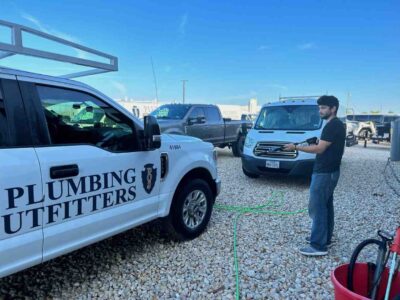
How Hydro Jetting Works to Clear Stubborn Clogs
What Is Hydro Jetting for Drain Cleaning? (The Quick Answer)
What is hydro jetting for drain cleaning is a method professional plumbers use to blast stubborn blockages out of pipes using highly pressurized water — no chemicals, no digging, no guesswork.
Here’s the short version of what you need to know:
- What it is: A professional drain cleaning technique that uses water pressurized between 1,500 and 4,000 PSI to scour the inside of pipes
- How it works: A specialized hose with a multi-directional nozzle is fed into your drain or sewer cleanout, blasting water in all directions to break up and flush out debris
- What it removes: Grease buildup, tree roots, mineral scale, silt, biofilm, and other stubborn blockages
- Who it’s for: Homeowners and businesses dealing with recurring clogs, slow drains, sewage backups, or pipes that need deep cleaning
- Why it’s different: Unlike snaking, which punches a hole through a clog, hydro jetting cleans the entire 360-degree circumference of the pipe wall
If you’ve poured drain cleaner down your sink more times than you can count and the problem keeps coming back, you’re not alone. Most store-bought fixes only address the surface of the problem. Deep, stubborn blockages — the kind caused by years of grease buildup, invading tree roots, or mineral deposits — need a more powerful solution.
That’s where hydro jetting comes in. Used by licensed plumbing professionals, this high-pressure water cleaning process doesn’t just clear a path through a clog. It restores your pipes close to their original condition, giving you a longer-lasting result than traditional methods.
In this guide, Plumbing Outfitters walks you through everything you need to know — how the process works, what it can remove, whether it’s safe for your pipes, and when it’s the right call.

I’m dealing with a major sewer backup. What is hydro jetting for drain cleaning and how does it work?

When you are facing a sewage backup, it feels like a race against time to protect your home. You might wonder, “exactly what is hydro jetting and how can it help my specific situation?” At its core, hydro jetting is the heavy-duty “deep clean” of the plumbing world.
While a standard garden hose might put out about 40 to 60 PSI, a professional hydro jetter generates between 1,500 and 4,000 PSI for residential use. In some commercial applications, these machines can even reach up to 35,000 PSI. We start by locating your sewer cleanout—an access point usually found in your yard or near the foundation.
We insert a heavy-duty, reinforced hose equipped with a specialized nozzle. This nozzle is the “brain” of the operation. It features a forward-facing jet to break through the initial wall of the clog and multiple rear-facing jets. These rear jets serve two purposes: they provide the hydraulic thrust to pull the hose deep into your plumbing system and they spray water at a 360-degree angle to scour the pipe walls. As the water blasts away the gunk, gravity and the water flow carry the emulsified debris down the line and out to the municipal sewer main.
Why high-pressure water is better for pipe longevity in 2026
As we move through May 2026, we are seeing more homeowners opt for hydro jetting over traditional methods because it actually helps pipes last longer. Think of it like the difference between poking a hole in a dusty rug and taking that rug outside for a full professional steam cleaning.
| Feature | Traditional Snaking (Auger) | Hydro Jetting |
|---|---|---|
| Primary Action | Punches a hole through the clog | Scours the entire pipe wall |
| Grease Removal | Minimal; often just smears it | Emulsifies and flushes it out |
| Root Handling | Tears roots; leaves hair-like fibers | Slices roots flush with the pipe wall |
| Residue | Leaves biofilm and sludge behind | Removes biofilm and restores diameter |
| Longevity | Clogs often return in months | Results can last 2 to 5 years |
There are at least 5 reasons why hydro jetting is great for the longevity of your pipes. The most significant is the removal of biofilm. Biofilm is a sticky, microscopic layer of bacteria that coats the inside of your pipes. This “slime” acts like glue, catching hair, soap scum, and food particles. Snaking doesn’t touch biofilm, but hydro jetting obliterates it. By removing this sticky foundation, we prevent new clogs from forming as quickly.
Why what is hydro jetting for drain cleaning is superior to chemicals
Many homeowners in Greater Austin reach for a bottle of liquid drain cleaner when a sink slows down. However, there are 5 advantages of hydro jetting that chemicals simply can’t match.
First, hydro jetting is entirely eco-friendly. It uses nothing but pressurized water. Chemical cleaners are often highly acidic or alkaline; they generate heat that can soften PVC pipes or accelerate the corrosion of old cast iron. Furthermore, chemicals are “liquid clogs” themselves sometimes—they may clear a small path but leave a toxic residue that eventually reaches our local water table. Hydro jetting is safe for septic systems and provides a comprehensive clean that chemicals can’t achieve, especially in large 4-inch sewer mains.
Common blockages removed by professional hydro jetting
One of the best ways to say goodbye to blockages with hydro jet drain cleaning is to understand exactly what this technology can handle. It isn’t just for soft clogs; it’s a powerhouse for structural obstructions.
Common blockages we clear in the Austin area include:
- Invasive Tree Roots: In our dry Texas climate, roots seek out the moisture inside sewer lines. Hydro jetting acts like a high-powered saw, slicing through these roots without the need for digging up your yard.
- FOG (Fats, Oils, and Grease): This is a leading cause of sanitary sewer overflows. Grease enters the pipes as a liquid but cools and hardens into a rock-like substance. Hydro jetting emulsifies this grease, turning it back into a liquid that flushes away.
- Mineral Scale: Austin’s hard water causes calcium and magnesium to build up on pipe walls. Over decades, this scale narrows the pipe’s diameter. Hydro jetting descales the interior, restoring full flow.
- Silt, Sand, and Mud: Especially in area drains and landscaping lines, dirt can settle and compact. The high-volume water flow (up to 18 gallons per minute) washes this sediment away.
- Flushable Wipes and Hygiene Products: Despite the name, these items don’t break down like toilet paper. They snag on pipe imperfections and create massive “rag balls” that only high pressure can break apart.
My home has older plumbing. Is high-pressure cleaning safe for Austin pipes?
This is a question we hear frequently in historic neighborhoods like Clarksville or Travis Heights. If you have a home built between the 1950s and 1970s, you might have clay, cast iron, or even Orangeburg (bituminized fiber) pipes.
According to our hydro jetting services austin tx guide, the safety of the process depends entirely on a video camera inspection. Before we ever turn on the water pressure, we send a high-definition waterproof camera down the line. This allows us to see if your pipes are structurally sound.
If the pipes are severely corroded, cracked, or “bellied” (sagging), the 4,000 PSI of a hydro jet could potentially cause a collapse. However, if the pipes are intact, we can calibrate the pressure to a safer level—for example, using 1,500 PSI for a kitchen line rather than the full 4,000 PSI used for a main sewer line. For older pipes, this “Texas Class Service” approach ensures we clear the clog without compromising the infrastructure.
Identifying when you need what is hydro jetting for drain cleaning
How do you know it’s time to call in the pros? If you are looking for hydro-jetting services in pflugerville tx, watch for these warning signs:
- Multiple Backups: If your shower backups when you flush the toilet, you likely have a main line blockage that a simple snake won’t fix.
- Gurgling Noises: That “glug-glug” sound coming from your drains is air trapped by a buildup of sludge or grease.
- Slow Drains Throughout the House: If every sink in the house is slow, the problem is deep in the sewer lateral.
- Recurring Clogs: If you have to snake your drain every three months, you aren’t removing the clog; you’re just poking a hole in it.
- Sewage Odors: Foul smells near drains or in your yard often indicate a buildup of organic matter or a break in the line caused by roots.
The professional hydro jetting process step-by-step
When you schedule a hydro jetting repair in georgetown tx, we follow a rigorous professional protocol to ensure your home is protected.
- Initial Assessment & Camera Inspection: We never fly blind. We use a camera to identify the location and nature of the blockage (grease vs. roots).
- Access Point Selection: We typically use the “cleanout,” an outdoor pipe that provides a direct path to the main sewer. This keeps the mess and noise outside your home.
- Nozzle Selection: We choose a nozzle based on the job. A “penetrator” nozzle is used for total blockages, while a “rotary” nozzle is used to scrub grease and scale from the walls.
- Pressure Calibration: We set the PSI based on your pipe material. PVC can handle higher pressure than aged cast iron.
- The Jetting Process: We feed the hose into the pipe. The rear jets propel the hose forward while the water scours the walls. We often work from the “downstream” end (the street side) toward the house to ensure debris flows into the larger municipal pipes.
- Post-Cleaning Verification: Once we believe the line is clear, we run the camera through a second time. This is our “quality guarantee” to show you that the pipe is restored to its full diameter.
Frequently Asked Questions about Hydro Jetting
Can hydro jetting damage my pipes?
When performed by a licensed professional, the risk is very low. However, if an amateur uses high-pressure equipment on a pipe that is already cracked or thinning, it can lead to a rupture. This is why we emphasize the importance of a professional assessment and pressure calibration. For those needing hydro-jetting repair in west lake hills tx, we take extra care with the hilly terrain and varied pipe depths to ensure structural integrity is maintained.
How often should I have my sewer lines jetted?
For most residential homes, a preventative clean every 2 to 3 years is sufficient to keep the lines flowing smoothly. However, if you live in an area with mature trees, annual cleaning might be necessary to keep roots at bay. Commercial properties, especially restaurants in Taylor or Hutto, often require quarterly jetting to manage heavy grease loads. If you’re looking for hydro jetting repair in taylor tx, we can help set up a maintenance schedule that fits your property’s needs.
Can I use a pressure washer for DIY hydro jetting?
We strongly advise against this. While a home pressure washer might have high PSI, it lacks the Gallons Per Minute (GPM) flow required to actually move debris out of a 4-inch pipe. Furthermore, DIY attempts often result in the hose getting stuck in the pipe or the high pressure causing personal injury. Professional jetters use specialized hoses with a 4:1 safety factor and specific thrust nozzles that a standard power washer simply doesn’t have. A DIY mistake can turn a simple cleaning into a multi-thousand-dollar emergency pipe replacement.
Conclusion
Understanding what is hydro jetting for drain cleaning is the first step toward a worry-free plumbing system. Whether you are dealing with a stubborn grease clog in Round Rock or invasive tree roots in Bastrop, this technology offers a powerful, eco-friendly, and long-lasting solution.
At Plumbing Outfitters, we bring “Texas Class Service” to every job. Our experienced plumbers serve the Greater Austin area, including Cedar Park, Leander, Georgetown, Pflugerville, and beyond. We don’t just clear your drains; we provide the upfront pricing and neighborly experience you deserve. If your drains are slowing down, don’t wait for a total backup.
Contact Plumbing Outfitters today to schedule your professional camera inspection and hydro jetting service. Let us help you keep your home’s plumbing running as it should.