

Garbage Disposal Maintenance: Keep It Running Smoothly
Your Garbage Disposal Works Hard — Here’s How to Make It Last
How to extend the life of your garbage disposal comes down to a handful of consistent habits that most homeowners overlook until something goes wrong.
Here’s a quick summary of what works:
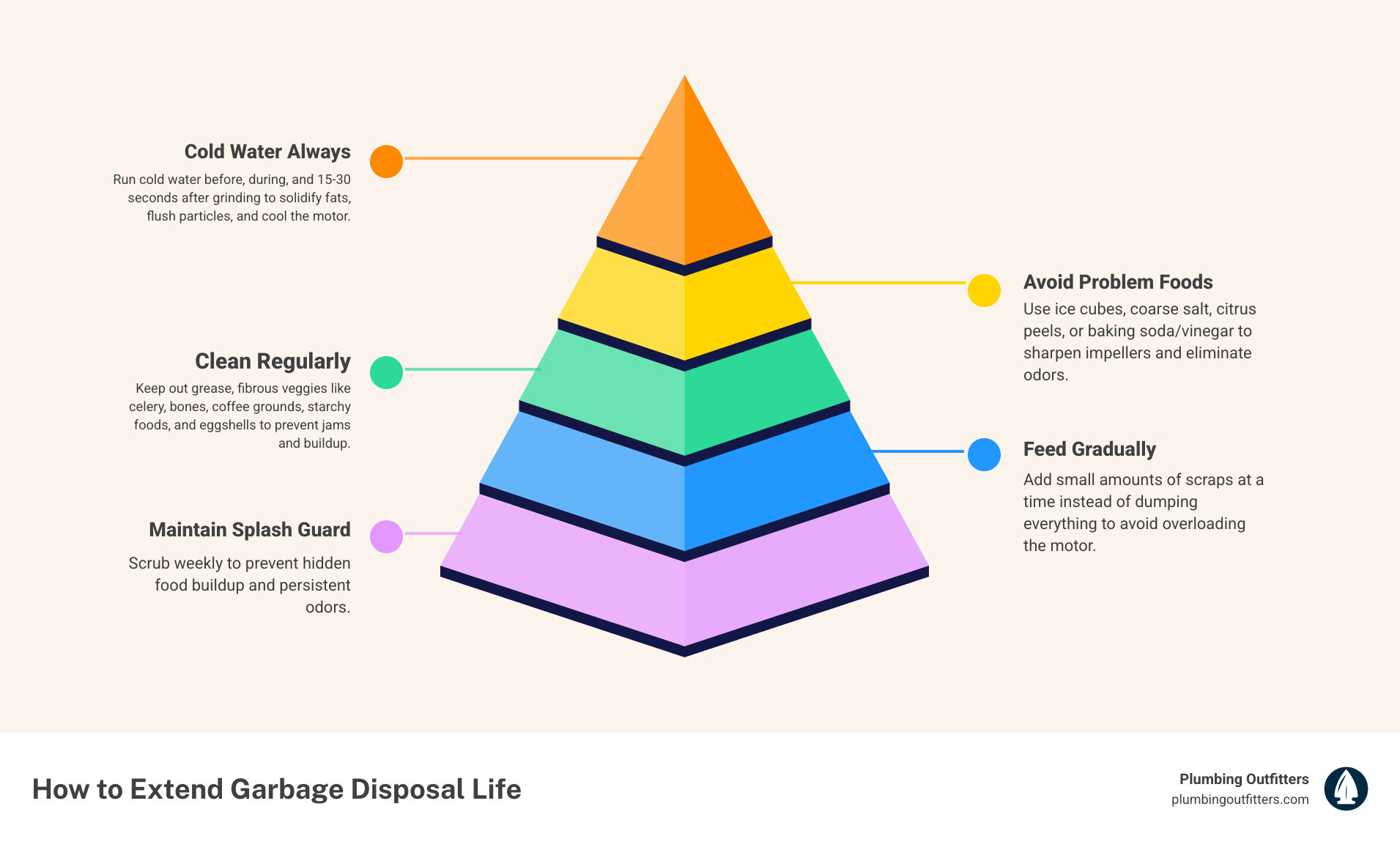
- Always run cold water before, during, and for 15-30 seconds after grinding
- Avoid problem foods — grease, fibrous vegetables, bones, starchy scraps, and coffee grounds
- Clean regularly using ice cubes, coarse salt, citrus peels, or baking soda and vinegar
- Feed scraps gradually in small amounts rather than all at once
- Scrub the splash guard weekly to prevent hidden odor buildup
- Run the disposal regularly — even without food — to prevent rust and corrosion
- Call a pro when you notice persistent humming, leaks, or frequent resets
A well-maintained garbage disposal can last anywhere from 8 to 15 years, and with proper care, some units push close to two decades. Skip the upkeep, and you could cut that lifespan by 40% — meaning an early replacement that costs far more than a few simple habits ever would.
Think of your disposal the way you’d think of any hardworking kitchen appliance: it can handle a lot, but it isn’t a trash can. Knowing the difference is what separates a unit that quits in five years from one that quietly does its job for fifteen.
How to Extend the Lifespan of Your Garbage Disposal

When we talk to homeowners in Austin and Round Rock, one of the most common questions we hear is: “How long should this thing actually last?” According to the International Association of Certified Home Inspectors (InterNACHI), the average lifespan of a garbage disposal is between 12 and 15 years. However, that number is a bit of a sliding scale.
In our experience serving the Greater Austin area, we’ve seen units fail in as little as five years due to neglect, while others are still humming along after two decades. Several factors influence this timeline:
- Build Quality: Units with stainless steel grinding components resist corrosion much better than those with galvanized steel.
- Usage Frequency: A disposal in a large family home in Cedar Park sees more action—and wear—than one in a single-person apartment in West Lake Hills.
- Water Quality: Here in Central Texas, we deal with “hard water.” Austin’s water typically measures between 120-180 ppm (parts per million). This high mineral content can lead to scale buildup on internal seals and washers, causing them to become brittle and leak prematurely.
If you’re noticing your unit struggling, it might be time to look into professional Garbage Disposal Services to see if a repair or a higher-quality replacement is the right move for your home.
The Golden Rule: Use Cold Water for Longevity
If there is one single habit that will how to extend the life of your garbage disposal, it’s the consistent use of cold water. It sounds simple, but the science behind it is vital for your plumbing health.
Many people instinctively reach for the hot water tap, thinking it helps “melt” grease and wash things away. This is actually the opposite of what you want. Hot water liquefies fats, oils, and grease (FOG), allowing them to coat the grinding chamber and move deeper into your pipes. Once that liquid grease hits a cold spot in your sewer line, it solidifies, creating a “fatberg” that leads to nasty clogs.
Cold water, on the other hand, keeps fats in a solid state. This allows the disposal’s impellers to chop them into tiny bits that can be easily flushed through the system. Furthermore, cold water helps keep the motor from overheating during heavy use.
To do it right, follow this sequence:
- Turn on the cold water.
- Turn on the disposal.
- Feed in your food scraps gradually.
- Once the grinding sound stops, keep the water running for another 15-30 seconds.
This final flush ensures that all particles have cleared the “P-trap” under your sink and are well on their way to the main sewer line. If you’ve already skipped this step a few times and find yourself with a backup, check out our guide: Garbage Disposal Clogged? Quick Solutions Inside.
Why Cold Water is Essential to Extend the Life of Your Garbage Disposal
Beyond preventing clogs, cold water protects the mechanical integrity of the unit. High temperatures can cause the motor’s seals to expand and contract, eventually leading to leaks. By sticking to cold water, you ensure that the internal components stay at a stable temperature, which is a key part of how to extend the life of your garbage disposal.
Water Usage Best Practices:
- Never run it dry: Grinding without water creates friction and heat that can burn out the motor and dull the impellers.
- The “Post-Flush”: Running water after the motor is off acts as a transport system, preventing “sludge” from settling in the pipes.
- Flow Rate: Use a steady stream of water, not a trickle, to ensure enough volume to move the ground-up waste.
Prohibited Items: What to Keep Out of Your Sink
One of the biggest myths we encounter is that a garbage disposal is a “bladed” machine that can slice through anything. In reality, disposals use impellers (blunt metal lugs) and centrifugal force to smash food against a stationary grind ring. Because there aren’t actually “knives” down there, certain items can easily jam or damage the mechanism.
To how to extend the life of your garbage disposal, you must treat your sink like a drain, not a trash can. Avoid the following:
- Fats, Oils, and Grease (FOG): These are the number one enemy of drains in Pflugerville and Hutto. They coat the impellers and cause clogs.
- Fibrous Vegetables: Celery stalks, corn husks, onion skins, and asparagus have “stringy” fibers that act like hair in a brush. They can wrap around the motor shaft and seize the unit.
- Coffee Grounds: They look harmless, but they settle in the bottom of your pipes like wet sand, eventually forming a thick paste that stops all drainage.
- Starchy Foods: Pasta, rice, and potato peels expand when they soak up water. A handful of spaghetti can turn into a sticky gel that blocks your pipes.
- Hard Items: Beef bones, peach pits, and unpopped popcorn kernels are too hard for most residential units. They can break the impellers or get wedged, causing the motor to hum and overheat.
- Eggshells: While some say they sharpen the “blades” (which don’t exist), the truth is that the thin membrane inside the shell can wrap around the impellers, and the shells themselves contribute to pipe sediment.
For more on what’s fact and what’s fiction, read our breakdown of the Top Myths About Cleaning Your Garbage Disposal.
Routine Cleaning and Maintenance Habits
A clean disposal is a long-lasting disposal. Food residue that sits in the grinding chamber can become acidic as it decomposes, which can eventually corrode the metal components. Plus, it just plain smells bad.
We recommend a weekly cleaning routine to keep things fresh. One of the best DIY methods involves ice cubes and rock salt. Dropping a cup of ice and a couple of tablespoons of coarse salt into the disposal while running cold water acts as a natural “scrubber.” The ice knocks off stuck-on debris, and the salt provides a mild abrasive to clean the impellers.
Don’t forget the splash guard—the black rubber ring in your sink drain. The underside of those flaps is a breeding ground for bacteria and old food slime. Use an old toothbrush and some dish soap to scrub the underside of the flaps once a week. This is often the hidden source of “mystery” kitchen odors.
For a deeper dive into effective sanitation, check out The Truth About Cleaning Your Garbage Disposal.
Natural Methods to Extend the Life of Your Garbage Disposal
You don’t need harsh chemical drain cleaners to keep your disposal in top shape. In fact, we recommend avoiding chemicals entirely, as they can damage the rubber seals and even corrode the metal over time.
Instead, try these natural methods:
- Citrus Peels: Toss in a few small pieces of lemon, lime, or orange peel. The citric acid helps break down grease, and the natural oils provide a fresh scent.
- Baking Soda and Vinegar: Pour half a cup of baking soda followed by a cup of white vinegar. Let it fizz for 10 minutes to loosen grime, then flush with boiling water (this is the only time we suggest using hot water—when the disposal is off and you are flushing the pipes).
- Regular Use: Even if you don’t have food to grind, run the disposal with cold water every few days. This prevents rust from forming on the moving parts and keeps the motor from seizing up due to inactivity.
Stay updated on all things kitchen plumbing by browsing our Garbage Disposal Category.
Recognizing Warning Signs and When to Call a Pro
Even with the best maintenance, mechanical parts eventually wear out. Knowing the warning signs can help you catch a problem before it leads to a flooded kitchen cabinet in Leander or Georgetown.
Watch out for these symptoms:
- The Humming Sound: If you turn the switch and hear a “hum” but no grinding, the unit is jammed. Turn it off immediately to avoid burning out the motor.
- Frequent Resets: If the small red button on the bottom of the unit keeps “tripping,” it’s a sign that the motor is drawing too much power, often due to an internal obstruction or an aging motor.
- Persistent Odors: If cleaning the splash guard and using citrus doesn’t fix the smell, food may be trapped in a failing seal or the unit may have internal buildup that requires professional attention.
- Leaks: Water dripping from the bottom of the disposal housing usually means an internal seal has failed. This is often caused by Austin’s hard water corroding the metal over time.
- Slow Draining: If the sink takes forever to clear even when the disposal is off, you likely have a clog further down the line or the impellers are no longer grinding food finely enough.
If your unit is making strange noises, you’ll want to read Garbage Disposal Buzzing? Here’s What You Should Do Now to troubleshoot safely.
Frequently Asked Questions about Garbage Disposal Care
How long should I run the disposal after the food is gone?
You should continue running the disposal and the cold water for about 15 to 30 seconds after the grinding sound stops. This ensures that all the tiny particles are flushed completely through the P-trap and into the larger drain lines, where they are less likely to cause a blockage.
Can I put lemon peels in my garbage disposal?
Yes! In fact, we encourage it. Small pieces of citrus peel are excellent for deodorizing the unit and the natural oils help cut through minor grease buildup. Just be sure to cut them into small pieces first so they don’t cause a jam, and always run plenty of cold water.
Why is my garbage disposal making a humming sound?
A humming sound usually means the motor is receiving power but the impellers are stuck. This is often caused by a foreign object (like a stray spoon) or a piece of hard food (like a fruit pit) getting wedged between the impeller and the grind ring. Turn off the power immediately. You can often free the jam by using a hex wrench (Allen wrench) in the hole at the very bottom of the unit to manually rotate the motor shaft.
Conclusion
Learning how to extend the life of your garbage disposal doesn’t require a degree in engineering—just a few smart habits and a bit of “Texas Class Service” for your own appliances. By sticking to cold water, avoiding the “no-go” foods, and keeping the unit clean, you can easily double the lifespan of your disposal.
At Plumbing Outfitters, we’ve seen it all, from the “bag of potato peels” disaster in Taylor to the “stray wedding ring” emergency in Liberty Hill. We are proud to serve our neighbors across Greater Austin, including Manor, Elgin, and Hutto, with honest, upfront pricing and expert care.
Whether you need a quick repair to get your kitchen back in order or you’re looking for a high-performance replacement that can handle the rigors of a busy Texas household, we’re here to help. For reliable, professional Garbage Disposal Services, give us a call today. We’ll make sure your kitchen plumbing stays as smooth as a Hill Country sunset.