


Why Austin Pipes Freeze and How to Spot Trouble
Frozen pipe repair Austin TX is a critical concern during winter cold snaps, when temperatures drop unexpectedly and catch homeowners off guard. Here’s what you need to know right away:
Quick Answer for Frozen Pipe Emergencies:
- Immediate Action: Shut off main water supply, open faucets to relieve pressure, and locate the frozen section
- Signs of Freezing: No water flow, reduced pressure, frost on exposed pipes, or strange gurgling sounds
- When to Call a Pro: Pipe has burst, frozen section is inaccessible (in walls/under foundation), or DIY thawing fails
- Prevention: Insulate exposed pipes, let faucets drip during freezes, seal drafts, and keep cabinet doors open
Austin sits in an unusual climate zone where freezing temperatures are infrequent but still dangerous for your plumbing. Texas homes aren’t typically built for prolonged cold—many pipes run through uninsulated attics, crawl spaces, or against exterior walls. When a rare freeze strikes, these vulnerable pipes can freeze in as little as 3 hours if poorly insulated, according to research from local plumbing professionals. Add Austin’s expansive clay soil into the mix, which shifts and stresses underground pipes, and you’ve got a perfect storm for plumbing emergencies.
The signs of trouble are usually obvious: turn on a faucet and get nothing but a trickle, or worse, find water pooling where it shouldn’t be. Frost forming on visible pipes is your clearest warning sign. When water freezes inside a pipe, it expands with enough force—over 2,000 pounds per square inch—to crack even metal pipes. A single burst pipe can release up to 250 gallons of water per hour into your home, causing thousands of dollars in damage to walls, floors, and belongings. Mold can start growing within just 24 to 48 hours after water damage occurs, turning a plumbing problem into a health hazard.
For more guidance on protecting your home during Austin’s unpredictable winters, check out our article on protecting your plumbing in a freeze, and if you’re facing an emergency, contact us for immediate professional help.
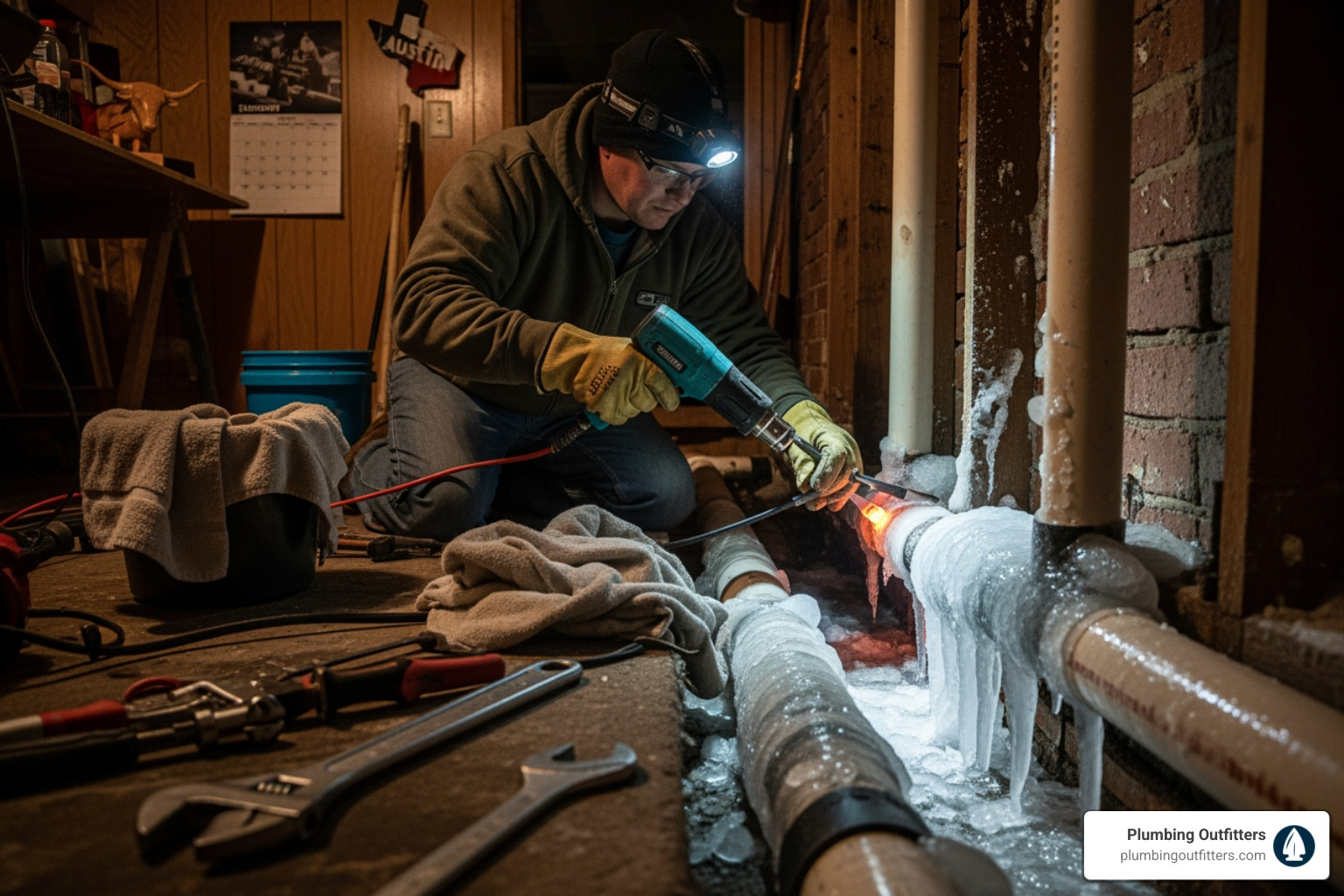
Basic frozen pipe repair Austin TX terms:
While Austin isn’t known for its harsh winters, the occasional cold snap can be devastating for homes and businesses not prepared for freezing temperatures. Our specific climate, characterized by sudden, dramatic temperature drops, combined with typical Texas home construction, makes pipes particularly vulnerable. Many homes in our service areas, including Austin, Bastrop, Cedar Park, Georgetown, Hutto, Leander, Pflugerville, and Round Rock, may have pipes in unheated spaces like garages, crawl spaces, attics, or even against exterior walls with insufficient insulation. These are prime targets for freezing.
Beyond the cold, Austin’s expansive clay soil also plays a significant role in plumbing vulnerability. This soil expands when wet and contracts when dry, causing ground movement that can stress underground pipes. Even small shifts can weaken pipe joints or create tiny cracks, making them more susceptible to bursting when water freezes and expands inside. It’s a double whammy: external cold, and internal stress from the very ground your home sits on.
Recognizing the signs of a frozen pipe early can save you a lot of headache and expense. The most common indicator is a sudden reduction or complete absence of water flow from your faucets. If you turn on a tap and only get a trickle, or no water at all, especially during or after a cold night, a frozen pipe is likely the culprit. You might also notice frost or ice on the exterior of exposed pipes, or hear strange gurgling sounds when you turn on a faucet. These sounds are often the water struggling to push past an ice blockage.
If things progress to a burst pipe, the signs become more alarming. You might hear the distinct sound of rushing water, even when no appliances are running. Water pooling in unexpected areas, damp or discolored patches on walls, ceilings, or floors, and a sudden, unexplained spike in your water bill are all critical indicators of a burst pipe and significant water damage. Swift action is paramount to mitigate the damage.
What to Do Immediately for a Frozen or Burst Pipe
Finding a frozen or, worse, a burst pipe can be a homeowner’s nightmare. But don’t panic! Taking immediate, decisive action can significantly reduce damage and repair costs.
Here’s what we recommend you do right away:
- Shut Off the Main Water Supply Immediately: This is the absolute first step. Every second counts. Find your home’s main water shut-off valve and turn it off. This will stop the flow of water and prevent further flooding if a pipe has burst or is about to. In Austin, many main shut-off valves are located near the water meter at the front of your property, in a basement, or near the water heater.
- Open Faucets: Once the main water supply is off, open all the faucets in your home, both hot and cold. This helps to relieve pressure in the system and allows any water remaining in the pipes to drain out, reducing the risk of further freezing and expansion.
- Drain the System: If possible, flush your toilets to help drain water from the tanks and bowls. This further empties the system and minimizes water that could freeze or leak.
- Locate the Frozen Area: Begin a careful inspection of your pipes. Look for sections that are exposed to cold, such as those in unheated basements, crawl spaces, attics, garages, or against exterior walls. You might spot frost, ice, or a slight bulge on the pipe. Pay close attention to areas where water flow is restricted.
- Contain Leaks (If Applicable): If you’ve found a burst pipe and water is actively leaking, try to contain it as best you can. Use buckets, towels, or even a wet/dry vacuum to minimize water spread. This is a temporary measure until a professional arrives.
- Turn Up the Heat: Increase the thermostat setting in your home, especially if the frozen pipe is in an interior wall or an unheated area. Open cabinet doors under sinks to allow warmer air to circulate around the pipes.
- Document Damage for Insurance: As soon as it’s safe, take photos and videos of any water damage, including affected walls, floors, furniture, and the frozen or burst pipe itself. This documentation will be crucial for any insurance claims you might need to file.
Emergency Steps for a Burst Pipe:
- Step 1: Locate and turn off the main water supply valve.
- Step 2: Open all faucets (hot and cold) to relieve pressure and drain the system.
- Step 3: Identify the location of the burst pipe or water leak.
- Step 4: Contain the water as much as possible using buckets, towels, or a wet/dry vacuum.
- Step 5: Turn up your home’s thermostat, especially in affected areas.
- Step 6: Document all damage with photos and videos for insurance purposes.
- Step 7: Call a professional plumber immediately for expert *frozen pipe repair Austin TX.*
Swift action can prevent a minor inconvenience from turning into a major catastrophe.
Your Guide to Frozen Pipe Repair Austin TX
When it comes to frozen pipe repair Austin TX, the key is often gentle, gradual thawing. Applying heat too quickly or using inappropriate methods can cause more harm than good, potentially leading to further damage or even fire hazards. Safety is our top priority, both for your home and your family.
Safe DIY Methods for Thawing a Frozen Pipe
If you’ve identified a frozen pipe and it’s accessible, there are several safe DIY methods you can try:
- Hair Dryer Method: This is one of the safest and most effective DIY approaches. Set a hair dryer to a low or medium heat setting and wave it back and forth along the frozen section of the pipe. Keep the hair dryer moving to ensure even heating and prevent overheating any single spot. Make sure to keep the faucet open while thawing, as this allows the melting water to flow out and relieves pressure.
- Electric Heating Pad: Wrap an electric heating pad around the frozen pipe. Set it to a low or medium setting. This provides consistent, gentle heat to slowly thaw the ice. Again, keep the faucet open.
- Warm Towels: Soak several towels in hot water, wring them out, and wrap them around the frozen pipe. Replace the towels as they cool to maintain warmth. This method is effective for smaller, more localized frozen sections.
- Space Heater (with caution): A portable space heater can be used to warm up a larger area, such as a basement or garage where pipes are frozen. However, never leave a space heater unattended, and ensure it’s placed a safe distance from any flammable materials. Open cabinet doors to allow the warm air to reach pipes under sinks.
What to Avoid:
While DIY methods can be helpful, it’s crucial to know what not to do. Using the wrong tools or techniques can lead to severe consequences:
- Open Flames: Never, under any circumstances, use open flames like propane torches, blowtorches, or even a charcoal grill to thaw pipes. This poses a serious fire hazard to your home and can cause the pipe to burst violently due to rapid, uneven heating.
- Boiling Water (poured directly on pipes): While warm towels are fine, pouring boiling water directly onto a frozen pipe can cause sudden temperature shock, potentially cracking or bursting the pipe, especially if it’s PVC.
- Leaving Heating Devices Unattended: Always supervise any heating device you use for thawing.
For more detailed advice on protecting your plumbing from freezing, refer to our comprehensive guide on how to protect your plumbing in a freeze.
When to Call a Professional for frozen pipe repair Austin TX
While DIY methods are great for accessible, minor freezes, there are critical situations where you should always call a professional for frozen pipe repair Austin TX. Ignoring these signs can lead to extensive damage and costly repairs.
- The Pipe Has Burst: If you’ve already finded a burst pipe or suspect one (e.g., water actively leaking, significant water damage), shut off your main water supply immediately and call us. A burst pipe requires expert repair or replacement to prevent further damage and restore your plumbing system safely.
- Inaccessible Pipes: If the frozen pipe is located inside a wall, under your foundation, in a crawl space that’s difficult to reach, or in any other inaccessible area, it’s time to call the pros. Attempting to access these pipes yourself could cause structural damage to your home or injury. Our experienced plumbers have specialized tools, like thermal imaging cameras, to locate hidden frozen sections without unnecessary demolition.
- DIY Methods Fail: If you’ve tried safe DIY thawing methods for 30-60 minutes and the water flow hasn’t returned, or you can’t get the pipe to thaw, don’t keep trying. Prolonged freezing increases the risk of a burst.
- You Suspect a Leak: Even if you successfully thaw a pipe, it’s crucial to check for leaks afterward. Freezing can weaken pipes, leading to hairline cracks that might not be immediately obvious. If you notice any dripping, dampness, or a lingering smell of mildew, a professional inspection is warranted.
- For Professional *Frozen Pipe Repair Austin TX:* When in doubt, it’s always safer to err on the side of caution. Our licensed and experienced plumbers in Austin, Bastrop, Cedar Park, Georgetown, Hutto, Leander, Pflugerville, and Round Rock are equipped to handle any frozen pipe scenario, from thawing to full repair and replacement. We can ensure the job is done safely, effectively, and according to local codes.
A Homeowner’s Checklist for Preventing Frozen Pipes
Prevention is always better than cure, especially when it comes to frozen pipe repair Austin TX. Taking a few proactive steps before cold weather hits can save you from the stress and expense of dealing with burst pipes. Here’s our comprehensive checklist for Austin homeowners:
- Insulate Exposed Pipes: This is perhaps the most crucial step. Pipes in unheated areas like attics, crawl spaces, basements, garages, and under sinks against exterior walls are highly vulnerable. Use foam pipe sleeves, insulating tape, or UL-listed heat tape/cables on these pipes. These materials are inexpensive and easy to install.
- Seal Drafts and Cracks: Cold air infiltration is a major culprit. Inspect your home for any cracks or holes in walls, floors, or your foundation, especially near plumbing lines. Use caulk or weatherstripping to seal these openings, preventing cold air from reaching your pipes. Don’t forget openings to attics and basements.
- Open Cabinet Doors: During a freeze, open the cabinet doors under sinks in your kitchen and bathrooms. This allows warmer air from your home to circulate around the pipes, keeping them above freezing temperatures.
- Let Faucets Drip: When temperatures are expected to drop below freezing, especially overnight, let both hot and cold water faucets trickle slightly. A constant drip, even a slow one, keeps water moving through the pipes, making it much harder for ice to form. While it might seem like a waste, it’s a small price to pay compared to a burst pipe.
- Winterize Outdoor Spigots and Hoses: Disconnect and drain all garden hoses from outdoor faucets. Store them away for the winter. For the spigots themselves, either install insulated covers (readily available at hardware stores) or, if your home has separate shut-off valves for outdoor spigots, turn them off and drain the outdoor lines.
- Drain Sprinkler Systems: If you have an in-ground sprinkler system, drain it completely before a freeze. Many systems have a drain valve for this purpose, or you might need to use an air compressor to blow out the lines.
- Maintain Consistent Thermostat Settings: During a cold snap, avoid turning your thermostat down too low or off, even if you leave your home for a short period. Keep your home’s thermostat set to at least 55 degrees Fahrenheit, day and night. This ensures enough ambient heat to protect interior pipes.
- Insulate Water Storage Units: If you have a water heater or water storage tank in an unheated area, consider insulating it to protect it from freezing and improve efficiency.
For more helpful tips on preparing your plumbing for winter storms, consult resources like Winter Storms: Preventing & Thawing Frozen Pipes. These preventative measures are your best defense against the headache and expense of frozen pipe repair Austin TX.
Frequently Asked Questions about Frozen Pipes in Austin
We understand you have questions about protecting your home from winter’s chill. Here are some of the most common inquiries we receive regarding frozen pipes in Austin and the surrounding areas:
How long does it take for pipes to freeze in Austin?
The time it takes for pipes to freeze can vary significantly depending on several factors, but the critical temperature threshold is generally considered to be below 20 degrees Fahrenheit. If temperatures drop to this level, pipes are in danger.
- Poorly Insulated Pipes: Pipes with little to no insulation, especially those exposed to outside elements or in unheated areas, can freeze surprisingly quickly—sometimes in as little as 3 hours when temperatures are below 20°F.
- Well-Insulated Pipes: Even well-insulated pipes aren’t immune but can withstand colder temperatures for longer, potentially taking up to 6 hours or more to freeze under similar conditions.
- Other Factors: Wind chill, pipe material, and whether water is flowing (even a trickle helps!) all play a role. The colder it gets and the longer it stays cold, the higher the risk.
What are the long-term consequences of ignoring a frozen pipe?
Ignoring a frozen pipe is like playing Russian roulette with your home’s foundation. While the immediate concern is the lack of water, the long-term consequences can be severe and far-reaching:
- Catastrophic Water Damage: The most immediate and common consequence. When a frozen pipe thaws, the ice expands, creating immense pressure. This pressure can cause the pipe to burst. A single burst pipe can release hundreds of gallons of water per hour, leading to widespread flooding throughout your home.
- Structural Rot and Damage: Prolonged water exposure from a burst pipe can lead to wood rot in framing, subflooring, and other structural components. This compromises the integrity of your home.
- Mold Growth: Mold thrives in damp conditions and can begin to develop within just 24 to 48 hours after water damage occurs. Mold can spread rapidly, causing unpleasant odors, further property damage, and significant health risks, especially for individuals with allergies or respiratory issues.
- Health Risks: Beyond mold, standing water can attract pests and create unsanitary conditions, posing other health concerns.
- Weakened Pipes and Reduced Lifespan: Even if a frozen pipe doesn’t immediately burst, the freeze-thaw cycle puts immense stress on the pipe material. This can weaken pipes over time, making them more susceptible to future leaks, cracks, and bursts, ultimately reducing their overall lifespan. This means you could face repeat issues down the line.
Can I just let a frozen pipe thaw on its own?
While it might seem like the easiest option, letting a frozen pipe thaw on its own is a high-risk strategy that we strongly advise against. Here’s why:
- High Risk of Bursting: The primary danger of a frozen pipe is the immense pressure that builds up as water expands into ice. This pressure doesn’t just disappear. If you wait for the pipe to thaw naturally, that pressure can remain trapped, and as the ice melts, it can still cause the pipe to burst. Many pipes that freeze don’t actually burst until they begin to thaw.
- Water Damage Potential: If the pipe does burst during the natural thawing process, you might not be home to immediately shut off the water, leading to extensive and rapid water damage. A burst pipe can spill several hundred gallons of water per hour.
- Unknown Damage: You won’t know if the pipe has already suffered micro-fractures or weakened areas until it thaws and potentially leaks. Proactive, controlled thawing allows you to monitor the situation.
Instead of waiting, we recommend actively and safely thawing the pipe using the DIY methods we outlined earlier, or calling a professional if the situation is beyond your comfort level or expertise. Proactive thawing is always the safer approach to minimize the risk of costly frozen pipe repair Austin TX.
Your Trusted Partner for Austin Plumbing Needs
As we’ve explored, dealing with frozen pipes in Austin, Bastrop, Cedar Park, Georgetown, Hutto, Leander, Pflugerville, Round Rock, and other surrounding areas can be a significant challenge, especially with our region’s unique climate and soil conditions. But you don’t have to face it alone.
At Plumbing Outfitters, we believe prevention is key, and we’re dedicated to helping you protect your home from the risks of winter freezes. We encourage you to act fast at the first sign of trouble and to know your limits when it comes to DIY solutions. While some minor freezing issues can be tackled with safe home methods, others absolutely require professional intervention.
Our team of experienced plumbers provides “Texas Class Service,” ensuring a trustworthy, neighborly experience with upfront pricing and reliable solutions. From emergency frozen pipe repair Austin TX to comprehensive preventative maintenance, we’re here to keep your plumbing system running smoothly, no matter what the Central Texas weather throws our way.
Don’t let a cold snap catch you off guard. For professional plumbing services in Austin and the surrounding areas, contact us today! We’re ready to serve you with the expertise and care you deserve.