
Don’t Panic, Here’s What to Do First
Clogged toilet repair is a common and stressful plumbing problem for Austin homeowners, but the good news is that most clogs are fixable with the right tools and techniques.
Quick Fix Guide for Clogged Toilets:
- Turn off the water supply – Twist the valve behind the toilet clockwise to prevent overflow.
- Try plunging first – Use a flanged toilet plunger with a tight seal and vigorous up-and-down motion.
- Use hot water and dish soap – Pour hot (not boiling) water mixed with dish soap, and let it sit for 20 minutes.
- Try baking soda and vinegar – Pour 1 cup of baking soda, then 1 cup of vinegar, and wait 10 minutes.
- Use a toilet auger – For stubborn clogs deeper in the drain.
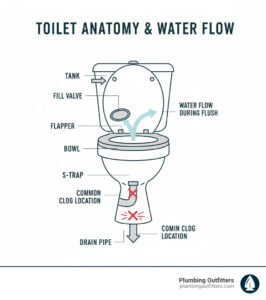
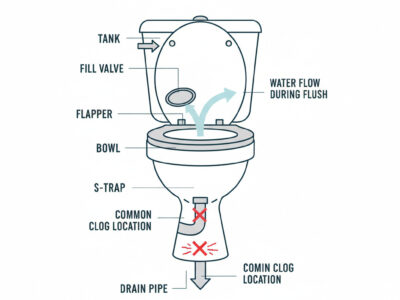
Understanding how your toilet works can help. When you flush, water rushes from the tank into the S-shaped trap—a curved pipe designed to hold water and block sewer gases. This trap is where most clogs happen, usually from too much toilet paper or non-flushable items. For more serious issues, check our guide to common plumbing issues or schedule a professional inspection if DIY methods fail.
Before you start, turn off the water supply valve behind the toilet. Have towels ready for spills and wear rubber gloves for hygiene.

Before You Begin: Gather Your Tools
When your toilet’s backing up, taking five minutes to gather the right tools will save you frustration and prevent a bigger mess. Proper preparation is key to successful clogged toilet repair.
First, focus on safety and cleanliness. Grab a pair of rubber gloves to protect your hands from germs. Lay down towels or newspaper around the base of the toilet to catch any splashes. Keep a bucket handy to remove excess water from the bowl if it’s too full.
Next, assemble your unclogging tools. This is where many people go wrong.
Plunger Types
A flat-bottomed standard sink plunger is designed for flat drains and is less effective on a toilet. You need a flanged toilet plunger. It has a rubber ring (the flange) that extends from the cup, creating a tight seal in the toilet’s drain opening. This seal is crucial for generating enough force to clear the clog.

For stubborn clogs, a toilet auger (or closet auger) is your best bet. This tool has a flexible cable with a corkscrew tip and a crank handle. Its protective sleeve keeps the metal cable from scratching your toilet’s porcelain, a risk you run with a regular drain snake.
Finally, have some common household items ready for gentler methods: baking soda, white vinegar, and dish soap. With your toolkit assembled, you’re ready to tackle that clog.
Your Guide to DIY Clogged Toilet Repair: 5 Proven Methods
A clogged toilet can disrupt your household, but most blockages are fixable without calling a professional. Before you reach for the phone, try these five proven methods for clogged toilet repair. With the right approach, you can get your toilet flowing freely again.
Method 1: Master the Plunger for Clogged Toilet Repair
The plunger is your first line of defense, but using the correct technique is crucial. Use a flanged toilet plunger, not a flat sink plunger, to create a proper seal.
Before you begin, ensure the plunger’s bell is completely submerged in water. If the bowl is low, add water from the sink. If it’s threatening to overflow, use a bucket to remove some water first.
Insert the plunger into the bowl at an angle to let air escape from the cup. Push down slowly to create a seal, then use vigorous strokes. The real power comes from the pulling motion, which creates a vacuum that dislodges the clog. Push down firmly, then pull up sharply. Repeat 15-20 times. If the water drains, you’ve succeeded. If not, repeat the process. Once clear, flush carefully.
For more tips, see our detailed guide on how to plunge a toilet.

Method 2: The Hot Water & Dish Soap Trick
If plunging doesn’t work, try this kitchen-based solution. Dish soap lubricates the clog, and hot water helps soften it. It’s a gentle approach that’s much safer for your pipes than harsh chemical drain cleaners.
If the bowl is full, remove water until it’s about halfway. Pour about a quarter cup of liquid dish soap into the bowl. Then, pour in about a gallon of hot tap water (not boiling) from waist height to add a little force. Boiling water can crack the porcelain bowl.
Let the mixture sit for at least 20-30 minutes (or even overnight). The soap and hot water will work to soften and lubricate the blockage. Afterward, try flushing. This method works well for clogs caused by organic waste or too much toilet paper. If you’re considering chemical cleaners, first read about the trouble with liquid drain cleaners and why you should avoid them.
Method 3: The Natural Fizz: Baking Soda & Vinegar
The fizzing reaction from a baking soda and vinegar mixture is a natural and safe way to break down organic clogs. It’s harmless to all pipes and septic systems.
Remove excess water from the bowl if needed. Pour one cup of baking soda into the toilet, followed immediately by two cups of white vinegar. The resulting fizzing action will agitate and break apart the clog.
Let the mixture work for at least 15-30 minutes, or even a few hours for tougher clogs. Afterward, pour a gallon of hot (not boiling) water into the bowl and try flushing. This method is great for breaking down toilet paper. For more quick solutions, see our guide on what to try first when you have a clogged toilet.
Method 4: Using a Toilet Auger for Stubborn Clogged Toilet Repair
When other methods fail, it’s time for a toilet auger (or closet auger). This tool reaches deeper into the toilet’s trapway to physically break up or retrieve obstructions. Its protective sleeve prevents the metal cable from scratching your porcelain bowl.
Carefully insert the curved end of the auger into the drain hole. Push the cable down until you feel the clog. Then, crank the handle clockwise to bore through or hook onto the blockage. You may need to push and pull a few times to clear the drain.
Once you’ve worked through the clog, gently pull the auger back out. Be prepared for a mess. Clean the auger and flush the toilet to ensure it’s draining properly.

A toilet auger is especially effective for dense clogs or those caused by foreign objects.
Method 5: The Power Method: Using a Wet/Dry Vacuum
For very stubborn clogs, especially those caused by a foreign object, a wet/dry vacuum can be surprisingly effective. Important: Only use a vacuum specifically rated for wet pickup (like a Shop-Vac). A regular household vacuum is not safe for this task and will be ruined.
First, use the vacuum to remove all water from the toilet bowl. Then, place the vacuum hose into the drain opening, using an old towel to create a tight seal around it for maximum suction.
Turn on the vacuum and let it run for a minute. The powerful suction can often pull the clog out of the trapway. Turn off the vacuum, remove the hose, and check the canister for the obstruction. Flush the toilet to confirm the drain is clear. This method is great for physically removing small objects that were accidentally flushed.
How to Prevent Future Toilet Clogs
Preventing clogs is better than repairing them. Most toilet clogs are entirely preventable with a little awareness about what gets flushed. Your toilet is not a trash can.
Common Causes of Toilet Clogs: The Usual Suspects
Many items that seem flushable can cause serious blockages. Avoid flushing the following:
- “Flushable” wipes: Despite marketing claims, these do not break down like toilet paper and are a primary cause of clogs.
- Paper towels and tissues: They are designed to be absorbent and strong, so they won’t dissolve in water.
- Feminine hygiene products: These expand in water and can cause major obstructions.
- Cotton balls, swabs, and dental floss: Cotton clumps together, and floss can tangle with debris to create a net-like blockage.
- Hair: Tangles with other materials and catches on pipes.
- Cooking oil and grease: These solidify in pipes, creating a sticky trap for other debris.
- Food scraps, medications, and foreign objects: None of these belong in your plumbing system.
Proper Toilet Paper Usage
Even toilet paper can cause clogs if used excessively. Be mindful of how much you use per flush, especially with older, low-flow toilets. If you have a septic system, choosing the right paper can also help. See our guide on the Best toilet paper for septic tanks.
Educating Your Household
If you have children, explain what can and cannot be flushed. Placing a small trash can next to the toilet provides a convenient alternative and a helpful visual reminder.
Older Low-Flow Toilets
If you have a low-flow toilet from the mid-1990s, it may be the source of your problems. These early models often lack the flushing power to clear the trapway effectively. Modern high-efficiency toilets (HETs) are much more effective. If you’re constantly battling clogs, consider installing a low-flow toilet that saves water and flushes powerfully.
For more tips, see our article on the Best ways to prevent clogged drains.
When to Skip the DIY and Call a Professional Plumber
While many clogs are a simple DIY fix, some signs indicate a more serious problem that requires a professional. Recognizing when to call for help is a smart decision that can save you time, money, and stress.
Call a professional plumber if you notice these warning signs:
- Recurring clogs: If your toilet clogs repeatedly despite your efforts, it often points to a persistent obstruction deep in the drain line or even tree roots in your sewer pipes.
- Multiple drains are affected: When your toilet backs up and your shower or sink drains slowly, you’re likely dealing with a main sewer line blockage.
- Gurgling sounds: Hearing gurgling from other drains when you flush the toilet means air is trapped in your pipes due to a downstream blockage.
- Foul odors: A persistent sewage smell can indicate a sewer line problem, a broken vent pipe, or a compromised wax ring at the base of your toilet. Sewer gases can be hazardous.
- Water backing up in sinks or showers: If flushing the toilet causes water to back up into your tub or shower, you have an urgent main line blockage.
If you’ve tried all the DIY methods and the clog won’t budge, it’s time to call in an expert with specialized equipment. A consistently clogged toilet can lead to water damage and health hazards. Our guide on Local Plumber or DIY: When to Call a Professional can help you decide. For more on serious issues, read about 5 Common Signs You’re Having Sewer Problems.
Frequently Asked Questions About Clogged Toilets
Here are answers to some of the most common questions we get from Austin homeowners about clogged toilet repair.
Why does my toilet keep clogging?
Recurring clogs are a sign of an underlying issue. Common causes include flushing inappropriate items (like “flushable” wipes), using too much toilet paper, an older low-flow toilet with a weak flush, or a partial blockage in the trap. More serious causes can be main drain line problems like grease buildup or tree root intrusion, hard water mineral deposits narrowing the pipes, or a blocked toilet vent pipe on your roof. Identifying the root cause is key to a lasting solution. For a deeper dive, read Why does my toilet keep clogging? Expert tips on what might be happening.
What if my toilet won’t flush but it’s not clogged?
If the water level isn’t rising, the problem is likely inside the toilet tank, not the drain. Check for a broken or disconnected lift chain that connects the handle to the flapper. The flapper itself might be worn out and failing to create a seal. A faulty fill valve could prevent the tank from filling with enough water for a proper flush. Other causes include a low water level in the tank or a broken flush handle. Most of these are simple DIY fixes. Our guide, Toilet won’t flush but not clogged?, walks you through troubleshooting these issues.
Can a clogged toilet fix itself?
In rare cases, a very minor clog made only of toilet paper might dissolve on its own over several hours. However, we strongly advise against waiting. A partial clog can easily worsen, and flushing again risks a messy, unsanitary overflow. A persistent clog could also signal a deeper plumbing problem that won’t resolve itself. It’s always best to take action immediately using one of the effective DIY methods. For immediate steps, check out Toilet backed up? Immediate steps to take at home.
Need an Expert Hand in the Austin Area?
This guide should give you the confidence to tackle most common clogged toilet repair challenges. However, we know that not every clog is a DIY job. When you’re dealing with recurring clogs, water backing up in multiple drains, or other signs of a main sewer line issue, it’s time to bring in the professionals.
Attempting to fix complex plumbing issues without the right experience can make things worse, potentially leading to damaged pipes or sewage backups. Sometimes, the smartest move is knowing when to call for help.
At Plumbing Outfitters, we’re proud to serve our neighbors throughout Greater Austin with “Texas Class Service.” Our experienced plumbers use specialized equipment to diagnose and fix the root cause of your plumbing problems, providing lasting solutions with upfront pricing. We serve the entire Greater Austin area, including Austin, Bastrop, Cedar Park, Elgin, Georgetown, Granger, Hutto, Leander, Liberty Hill, Manor, Pflugerville, Rockdale, Round Rock, Taylor, Temple, and West Lake Hills.
If your DIY efforts haven’t solved the issue, or if you’d simply prefer to leave the work to the experts, we’re here to help during normal business hours Monday through Friday. Don’t let a persistent plumbing problem disrupt your home any longer.
Schedule a service with us today and get your plumbing flowing smoothly again!