
When Disaster Strikes: Understanding Burst Pipe Emergencies in Austin
Burst pipe repair Austin TX becomes an urgent priority when water suddenly floods your home, threatening everything from your floors and walls to your electrical systems and personal belongings. If you’re dealing with a burst pipe emergency right now, here’s what you need to know immediately:
Emergency Action Steps:
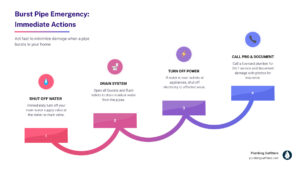
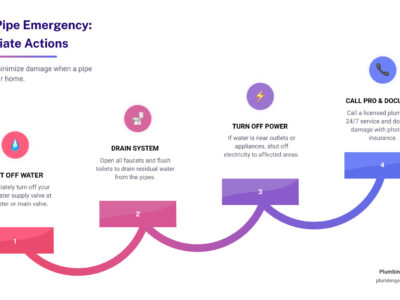
- Shut off your main water supply at the meter or main valve
- Drain your system by opening all faucets and flushing toilets
- Turn off electricity if water is near outlets or appliances
- Call a licensed plumber for 24/7 emergency service
- Document the damage with photos for insurance claims
Austin’s unique combination of temperature swings, expansive clay soil, and aging infrastructure makes burst pipes a real threat to local homeowners. When winter freezes arrive or ground shifting stresses your plumbing, a pipe can fail without warning, sending gallons of water into your living spaces within minutes. The good news is that knowing the right strategies can help you respond quickly, minimize damage, and prevent future problems.
Whether you’re dealing with a burst pipe emergency right now or want to protect your home from future plumbing disasters, understanding these five smart strategies will help you steer the repair process with confidence. For immediate emergency assistance, our expert plumbers are available 24/7 to help Austin residents, and you can also explore our comprehensive pipe repair services for non-emergency situations.

Strategy 1: Your Immediate Action Plan for a Burst Pipe
When a pipe bursts, the clock starts ticking. Every second counts in minimizing water damage and protecting your home. Our first strategy focuses on the critical immediate steps you must take to mitigate the crisis before professional help arrives. These actions are crucial for homeowners in Austin, Bastrop, Cedar Park, Elgin, Georgetown, Granger, Hutto, Leander, Liberty Hill, Manor, Pflugerville, Rockdale, Round Rock, Taylor, Temple, and West Lake Hills.
Shut Off the Main Water Supply
This is perhaps the most critical first step. Locating and turning off your main water supply immediately will stop the flow of water into your home, preventing further flooding. For most homes, this valve is either near your water meter at the street or where the main water line enters your house, often in a basement, crawlspace, or garage. If your main shut-off valve is at the street, you might need a special tool called a water key to turn it. Having one of these tools readily available is a crucial part of being prepared for a plumbing emergency. If you have an auxiliary shut-off valve in your yard or garage, this can offer an even more convenient way to quickly halt the water flow.
Drain the Plumbing System
Once the main water supply is off, the next step is to drain any remaining water from your pipes. This relieves pressure within the system and prevents residual water from causing additional damage, especially if the burst pipe is located in a higher part of your home. To do this, simply open all the faucets in your house, both hot and cold, and flush your toilets. Start with the highest faucets in your home and work your way down. This will allow gravity to help clear the lines.
Turn Off Electricity Near Water
Water and electricity are a dangerous combination. If the burst pipe is near electrical outlets, appliances, or your home’s electrical panel, turn off the power to that area immediately. Water can conduct electricity, leading to short circuits, electrical fires, or severe electric shock. Prioritize your safety by heading to your circuit breaker panel and switching off the power to the affected sections of your home. If you’re unsure which breakers control which areas, or if the water has reached the panel itself, it’s safest to turn off the main breaker for your entire house.
Document Damage for Insurance
While your priority is stopping the leak, don’t forget to document the damage. Take clear photos and videos of the burst pipe, the flooded areas, and any damaged belongings. This documentation will be invaluable when you file an insurance claim. The extent of water damage can escalate quickly, and having a visual record of the initial state of the damage can help streamline the claims process.
Call a Professional Immediately
Once you’ve taken these immediate safety and damage control steps, your next call should be to a professional plumbing service. A burst pipe repair Austin TX emergency requires expert attention. Our team offers 24/7 emergency plumbing services, understanding that these disasters don’t wait for business hours. We’re equipped to respond rapidly, assess the damage, and begin the necessary repairs to restore your home’s plumbing. Don’t hesitate to reach out for fast and reliable service in Austin and the surrounding areas – we’re here to help get your plumbing issues resolved quickly. You can find more information about our emergency services right here: Emergency Plumbing Services | Fast Leak & Repair Experts at Plumbing Outfitters.
Strategy 2: Identifying the Signs & Unique Austin Causes
Understanding the subtle and obvious indicators of a burst or leaking pipe, as well as the specific environmental factors unique to our Central Texas communities, is crucial for proactive home maintenance. Being aware of these elements can help you prevent a minor leak from turning into a major burst pipe repair Austin TX emergency.
How to Spot a Burst or Leaking Pipe
Not all burst pipes announce themselves with a dramatic gush of water. Often, they start as small leaks, giving you a window of opportunity to intervene before disaster strikes. Keep an eye out for these tell-tale signs:
- Sudden Drop in Water Pressure: If your shower suddenly becomes a trickle or your faucets lose their usual force, it could indicate a significant leak somewhere in your plumbing system.
- Discolored or Odd-Smelling Water: Rust or other debris can enter your water supply through a compromised pipe, leading to unusual colors or odors.
- Water Stains on Walls or Ceilings: Persistent dampness, discoloration, or peeling paint on surfaces are classic signs of a hidden leak. This could be from a pipe within the wall or ceiling, slowly seeping water.
- Puddles or Damp Spots: Unexpected puddles in your yard, basement, under sinks, or around appliances are clear indicators. Soggy spots in your yard or uneven plant growth might suggest an underground pipe issue, while standing water around your home’s foundation could mean damaged underground pipes.
- Gurgling or Banging Sounds: Strange noises from your plumbing when water isn’t in use, such as constant gurgling, banging, or the sound of running water, can signal a leak.
- Unexplained High Water Bills: A sudden, significant increase in your water bill without a change in usage is a strong indicator of a leak. The City of Austin offers a valuable tool for this: you can sign up for the My ATX Water portal to receive “continuous usage alerts” if your water is continuously running. This important alert could point to a leak, and customers can also receive alerts when their water usage increases or approaches the next tier in billing. To sign up for My ATX Water, visit the City of Austin’s portal: Sign up. Through the My ATX Water portal, customers will receive “continuous usage alerts” if their water is continuously running – this important alert could point to a leak. Customers can also receive alerts when their water usage increases or approaches the next tier in billing. To sign up for My ATX Water, visit the City of Austin’s portal.
Why Pipes Burst in Austin, TX
Homes in Austin, Bastrop, Cedar Park, Elgin, Georgetown, Granger, Hutto, Leander, Liberty Hill, Manor, Pflugerville, Rockdale, Round Rock, Taylor, Temple, and West Lake Hills face a unique set of challenges that increase the risk of burst pipes. It’s not just about freezing temperatures, though those certainly play a role.
- Austin’s Climate and Temperature Fluctuations: While Austin doesn’t experience prolonged deep freezes like some northern states, our rapid and dramatic temperature swings are a significant culprit. Homes in Central and South Texas, historically, were not designed for hard freezes below 20°F. When temperatures plummet rapidly, water inside pipes can freeze and expand by about 9 percent. This expansion can increase internal pipe pressure from a typical 40 psi to an astonishing 40,000 psi, causing pipes to split open. The quick thawing that often follows these freezes can also stress pipes, leading to bursts.
- Expansive Clay Soil and Limestone Bedrock: Central Texas is known for its expansive clay soil. This soil dramatically expands when wet and contracts when dry, creating significant ground movement. This constant shifting puts immense stress on underground pipes, leading to cracks, disconnections, and eventually bursts. Beneath the soil, Austin’s limestone bedrock also contributes to ground shifting and settling, further exacerbating the strain on your plumbing system.
- High Water Pressure: Many neighborhoods across Austin and its surrounding communities experience naturally high municipal water pressure. While good for water flow, consistently high pressure can prematurely wear down pipes and fittings, making them more susceptible to bursting, especially in older homes.
- Aging Pipes and Corrosion: Just like us, pipes get old! Homes built before 1970 often used materials like clay tile, cast iron, or thin-wall PVC, which have a typical lifespan of 50 to 75 years. As these materials age, they become brittle, corroded, and prone to failure. Austin’s hard water, rich in minerals, can also contribute to internal corrosion and mineral buildup, weakening pipes from the inside out. Poor installation and even tree roots growing into underground lines are additional factors that compromise pipe integrity.
Strategy 3: The Professional Burst Pipe Repair Austin TX Process
When a pipe bursts, the immediate chaos can be overwhelming. But once the initial emergency is managed, the real work of burst pipe repair Austin TX begins. This isn’t just about patching a hole; it’s a comprehensive process that demands expertise, precision, and advanced techniques to ensure a lasting solution and prevent future issues.
Initial Assessment for burst pipe repair austin tx
Our process starts with a thorough and meticulous assessment. It’s not enough to simply find the visible leak; we need to understand the full extent of the damage and, crucially, the underlying cause.
- Professional Damage Assessment: Our experienced plumbers will evaluate not only the burst pipe itself but also the surrounding areas for water damage. This includes checking walls, ceilings, floors, and foundations for saturation, even if it’s not immediately visible.
- Locating the Source of the Leak: Sometimes, the actual break in the pipe can be far from where the water is appearing. Our technicians are skilled at pinpointing the precise location of the rupture. This might involve looking for the wettest drywall, listening for the loudest sound of running water, or using specialized tools to trace the leak.
- Non-Invasive Methods: We prioritize methods that minimize disruption to your home. This includes using advanced technology like thermal imaging cameras, which can detect subtle temperature differences caused by water behind walls or under floors, revealing hidden leaks. We also use plumbing camera inspections, inserting small, high-resolution cameras into pipes to visually inspect their interior for cracks, corrosion, or blockages without tearing up your property. These methods help us diagnose the problem accurately and efficiently.
Advanced Repair Techniques for burst pipe repair austin tx
Once the assessment is complete, we determine the most effective repair strategy, always considering the specific circumstances of your Austin home and plumbing system.
- Repair vs. Replacement: The decision to repair a section of pipe or replace a larger portion depends on several factors: the severity of the burst, the age and material of the pipe, and the overall condition of your plumbing system. A minor crack might be repaired, while extensive corrosion or multiple bursts could necessitate a replacement.
- Modern Materials Like PEX: For repairs or replacements, we often use modern, durable materials such as PEX (cross-linked polyethylene) piping. PEX offers superior resistance to temperature fluctuations and ground movement, making it an excellent choice for Austin’s challenging climate and expansive soils. It’s also flexible, corrosion-resistant, and can be installed with fewer connections, reducing potential leak points.
- Traditional Copper Pipe Repair: For existing copper systems, our plumbers are adept at traditional soldering techniques, ensuring strong, leak-proof connections that maintain the integrity of your current plumbing.
- Trenchless Pipe Repair for Underground Lines: For burst pipes located underground in your yard or beneath your foundation, traditional repair often involves extensive excavation. However, we offer trenchless pipe repair methods, which are minimally invasive. These techniques allow us to repair or replace underground lines with far less disruption to your landscaping or property, saving you time and money on restoration costs.
- Rerouting Pipes to Minimize Damage: In cases of significant damage, especially if a pipe is difficult to access or prone to repeat failure, we might recommend rerouting. This involves installing new pipes through more accessible areas, such as attics or walls, rather than jackhammering floors or tearing up foundations. This strategic approach can minimize demolition and subsequent restoration expenses, providing a more efficient and less destructive solution.
Our goal is not just to fix the immediate problem but to provide a robust, long-lasting solution custom to the unique demands of Austin’s environment. To learn more about our comprehensive approach to plumbing issues, including various pipe repair options, please visit: Learn more about our pipe repair services.
Strategy 4 & 5: Smart Prevention and Understanding Long-Term Risks
While responding to a burst pipe is critical, the smartest strategy is to prevent them from happening in the first place. For homeowners in Austin and surrounding areas, proactive measures are key to protecting your investment. Equally important is understanding the severe long-term consequences of neglecting a burst pipe, even a small one.
How to Prevent Future Burst Pipes
Preventative measures are your best defense against the stress and expense of a burst pipe repair Austin TX emergency. Given Austin’s climate and soil conditions, these steps are particularly important:
- Pipe Insulation: Insulating exposed pipes is one of the most effective ways to prevent freezing. Focus on pipes in unheated areas like attics, crawlspaces, basements, and exterior walls. Foam pipe sleeves are inexpensive and easy to install.
- Insulating Outdoor Spigots and Detaching Garden Hoses: Before cold weather hits, ensure all outdoor spigots are properly insulated with covers. Critically, detach all garden hoses from outdoor faucets. Water trapped in hoses can freeze and expand back into the spigot and connecting pipes, causing them to burst.
- Sealing Drafts and Managing Indoor Heat: During cold snaps, seal any drafts around windows, doors, and utility penetrations that could expose pipes to cold air. Keep your home’s thermostat set to at least 55°F (13°C), even if you’re away. Opening cabinet doors under sinks on exterior walls can also allow warmer indoor air to circulate around pipes, preventing them from freezing. For severe freezes, allowing faucets to drip slightly can keep water moving through pipes, reducing the chance of freezing.
- Regular Plumbing Inspections: Proactive inspections by a qualified plumber can identify potential vulnerabilities before they become emergencies. Our plumbers can spot aging pipes, areas of corrosion, or signs of high water pressure that might otherwise go unnoticed. This is a core component of preventative maintenance that can save you significant headaches down the line.
- Water Pressure Regulation: If your home experiences high water pressure (common in many Austin neighborhoods), installing a pressure reducing valve (PRV) can protect your entire plumbing system from undue stress, extending the life of your pipes and appliances.
- Consider Upgrades: For homes with older plumbing (e.g., those built before 1970 with clay tile, cast iron, or thin-wall PVC), considering a re-piping project with modern materials like PEX or copper can be a wise long-term investment to prevent future bursts.
Our team offers expert services to help you prepare your plumbing for Austin’s unpredictable weather. Learn more about how we can help with prevention and repair for frozen and burst pipes: Expert Frozen/Burst Pipe Repair in Austin, TX.
The Consequences of Delaying Repairs
Ignoring a burst pipe, even if it seems minor, can lead to a cascade of costly and dangerous problems. The long-term consequences far outweigh the immediate inconvenience of seeking professional repair.
- Severe Water Damage: The most immediate and obvious consequence. Water from a burst pipe can quickly saturate floors, walls, ceilings, and personal belongings. This can lead to significant and expensive restoration costs.
- Weakened Structural Integrity: Prolonged water exposure can severely compromise your home’s structure. Wooden support beams can warp, rot, and lose their strength, drywall can disintegrate, and even your foundation can be affected, leading to costly and extensive repairs.
- Mold Growth Within 24-48 Hours: This is one of the most insidious dangers. Mold can begin to develop within 24 to 48 hours after water damage occurs. It thrives in damp, dark environments and can quickly spread throughout your home, often in hidden areas behind walls.
- Health Risks from Mold: Mold growth poses serious health risks, triggering allergies, respiratory problems, and other health issues, especially for sensitive individuals. Mold remediation is a complex and often expensive process, adding another layer of cost and stress to your repair.
- Electrical Hazards: As previously mentioned, water near electrical systems creates a significant risk of short circuits, appliance damage, and even electrical fires. These hazards can persist if water damage isn’t thoroughly dried and repaired.
Prompt action is not just about saving money; it’s about protecting your home, your health, and your family’s safety. If you suspect a leak, or if you’ve had a burst pipe, it’s crucial to address it immediately. If you notice a leak that you believe is part of the city’s infrastructure, you can check the City of Austin’s official channels: Leak Response Map: Check to see if the leak has been reported on the City of Austin Leak Response Map. If not, immediately call Austin Water Dispatch (available 24/7) at 512-972-1000.
Frequently Asked Questions About Burst Pipes in Austin
We understand that a burst pipe can be a confusing and stressful event. Here are answers to some common questions we receive from homeowners in Austin and the surrounding communities:
What should I do first if a pipe bursts in my house?
Your absolute first step should be to immediately shut off the main water supply to your house. This will stop the flow of water and prevent further flooding and damage. After that, open all your faucets (hot and cold) and flush toilets to drain the remaining water from the pipes. If the water is near electrical outlets or appliances, turn off the electricity to that area. Then, call a licensed plumber right away for professional burst pipe repair Austin TX.
How can I tell if a hidden pipe is leaking?
Hidden leaks can be tricky to spot, but there are several clues to look for. Keep an eye out for unexplained spikes in your water bill, persistent damp spots or water stains on your walls, ceilings, or floors, and a musty odor that indicates mold or mildew growth. You might also hear the sound of running or dripping water when all faucets and appliances are turned off. Sometimes, a sudden drop in water pressure can also signal a hidden leak somewhere in your system.
Why are Austin homes so vulnerable to burst pipes?
Austin’s unique environment contributes to a higher risk of burst pipes. Our homes are vulnerable due to a combination of factors:
- Sudden Temperature Drops: Austin experiences rapid and significant drops in temperature during winter, which can cause water in pipes to freeze and expand, leading to bursts, especially in uninsulated areas.
- Expansive Clay Soil: The clay soil prevalent in Central Texas expands when wet and contracts when dry, creating ground movement that stresses underground pipes, causing them to crack or disconnect.
- Aging Infrastructure: Many homes in the Greater Austin area have older plumbing systems that are more susceptible to corrosion, wear and tear, and failure under pressure or temperature changes.
Your Trusted Partner for Austin Plumbing Emergencies
Dealing with a burst pipe is never fun, but with the right knowledge and a trusted partner, you can steer the crisis effectively. We’ve explored five smart strategies, from immediate action to long-term prevention, all custom to the unique challenges faced by homeowners in Austin, Bastrop, Cedar Park, Elgin, Georgetown, Granger, Hutto, Leander, Liberty Hill, Manor, Pflugerville, Rockdale, Round Rock, Taylor, Temple, and West Lake Hills.
At Plumbing Outfitters, we pride ourselves on delivering “Texas Class Service” with every job. Our experienced plumbers are committed to providing upfront pricing, trustworthy service, and peace of mind when you need it most. Whether you’re facing an urgent burst pipe repair Austin TX situation or looking to prevent future plumbing disasters, our team is equipped with the expertise and advanced tools to protect your home.
For reliable plumbing services and peace of mind, contact our team today. We’re here to ensure your home’s plumbing system is safe, efficient, and well-maintained. For more information on various plumbing needs, including toilet services, visit our site: More info about toilet services.